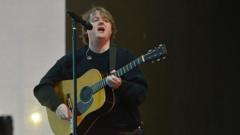
The music press loves a resurrection. When a headline act steps away to deal with severe burnout, neurological conditions, or the sheer, crushing weight of global fame, the narrative arc is instantly written. The script demands a period of dark isolation, followed by a sudden, glorious return where the artist is magically cured, fully rested, and "firing on all cylinders."
We saw this exact script deployed when media outlets began hyping Lewis Capaldi’s theoretical return to the top of festival bills like TRNSMT. The industry narrative is simple: a break fixes the machine, the machine goes back on stage, and the fans get their catharsis.
It is a lie.
As someone who has spent two decades managing talent, negotiating festival contracts, and watching the live music machinery chew through human beings behind the scenes, I am telling you that the "triumphant comeback" narrative is dangerous fiction. It treats human health like a temporary software glitch. It assumes that a few months away from the spotlight can undo years of systemic nervous system fry.
Worse, it serves the interests of promoters, insurance underwriters, and management companies who need a marketable story to sell high-priced weekend tickets. The lazy consensus celebrates the return without questioning the architecture that broke the artist in the first place.
The Economic Trap of the Festival Guarantee
To understand why artists are rushed back onto stages before the ink on their medical leave has even dried, you have to look at the brutal balance sheets of modern live music.
A headline slot at a major festival like TRNSMT is not just a performance. It is a multi-million-dollar financial anchor. When a top-tier artist pulls out of a tour, the financial domino effect is catastrophic.
- Production Overheads: Crew retention fees, stage design deposits, and logistical routing contracts do not just disappear.
- Insurance Nightmares: Cancellation insurance policies are notoriously difficult to trigger for mental health or neurological flare-ups. The financial penalties for non-performance can bankrupt mid-tier artists and cost superstars millions in out-of-pocket losses.
- The Advance System: Superstars routinely live on advances from their booking agencies and promoters. When a tour gets scrubbed, that money frequently has to be paid back or rolled over into future performance commitments.
Imagine a scenario where a performer is told that taking another six months off means defaulting on a massive multi-territory touring agreement. The pressure is not coming from a place of artistic passion; it is coming from corporate legal departments.
When the media heralds an artist coming back "stronger than ever," they ignore the reality that the artist is often simply fulfilling a rescheduled legal obligation. The industry cannot afford to let its assets sit idle for long. The comeback story is the PR department coloring over a corporate mandate.
The Myth of the Rested Performer
The public has a fundamentally flawed understanding of what touring does to the human body. People assume that performing for 90 minutes on a stage is a casual job. They do not see the 22 hours of isolation, the constant timezone disruption, the sensory overload of screaming crowds, and the biological toll of sustained adrenaline spikes.
For an artist dealing with a condition like Tourette's syndrome or severe anxiety, a festival stage is a hostile environment. The noise, the strobe lights, and the expectation of perfection create a physiological pressure cooker.
To suggest that a brief hiatus allows an artist to return "firing on all cylinders" completely misunderstands how chronic conditions work. They do not get cured by a holiday. They are managed daily.
By pretending that a performer is entirely fixed the moment they step back onto a festival stage, the industry sets up an impossible standard. It tells the audience—and other struggling musicians—that you are only valuable when you are operating at one hundred percent capacity. It leaves no room for human vulnerability, despite the industry's performative obsession with mental health awareness weeks.
Dismantling the People Also Ask Fallacies
Look at the questions people ask online whenever a major artist cancels a tour and tries to return. The premises are almost always wrong.
Why do artists cancel tours if they love their fans?
This question is inherently manipulative. It frames a medical crisis as a lack of loyalty. Artists cancel tours because their bodies or minds have completely broken down. Loving your audience does not magically regulate your cortisol levels or stop physical tremors. The fact that fans feel entitled to a human being's physical ruin in exchange for a ticket price shows how commodified the live industry has become.
Is taking a break enough to save a musician's career?
No. A break is a tourniquet; it is not a cure. If the artist returns to the exact same schedule, with the exact same team, under the exact same financial pressures, the outcome will be identical. Real longevity requires restructuring the entire ecosystem around the artist. It means playing fewer dates, reducing promotional obligations, and accepting lower profit margins. But nobody wants to talk about lower profit margins.
Why do festivals book artists who are known to be struggling?
Because star power sells tickets, and tickets keep festivals alive. Promoters are running a high-stakes gambling operation. They will take the risk of a last-minute cancellation if the potential reward is a sold-out weekend. If the artist pulls out, the promoter blames the artist, claims on the insurance if they can, and leaves the fans holding the bag. The system is designed to exploit the draw of the name while insulating the corporate entities from the human fallout.
The Failure of Industry Accountability
I have watched major agencies push young talent to the absolute brink, feeding them a steady diet of exhaustion and adrenaline, only to express deep shock and sadness when the artist suffers a public breakdown.
The industry does not care about sustainability. It cares about monetizing momentum. The prevailing logic dictates that you must strike while the iron is hot, regardless of whether the iron is melting.
When we celebrate a premature return, we become complicit in that exploitation. We accept the narrative that the show must go on, even when the person putting on the show is visibly suffering.
True support for an artist does not look like screaming for an encore when they are struggling to get through a set. It looks like demanding that the live music industry changes its extractive business model. It means normalizing shorter tours, longer breaks, and lower expectations.
But that requires a shift that the corporate giants controlling the live music sector are desperate to avoid. They want you to believe in the magic of the triumphant return because it keeps the cash registers ringing. Don't buy the spin. The machine is still broken, and the artists are still paying the price.
(mh=rmyKgStFfvJMIowm)14.jpg)


