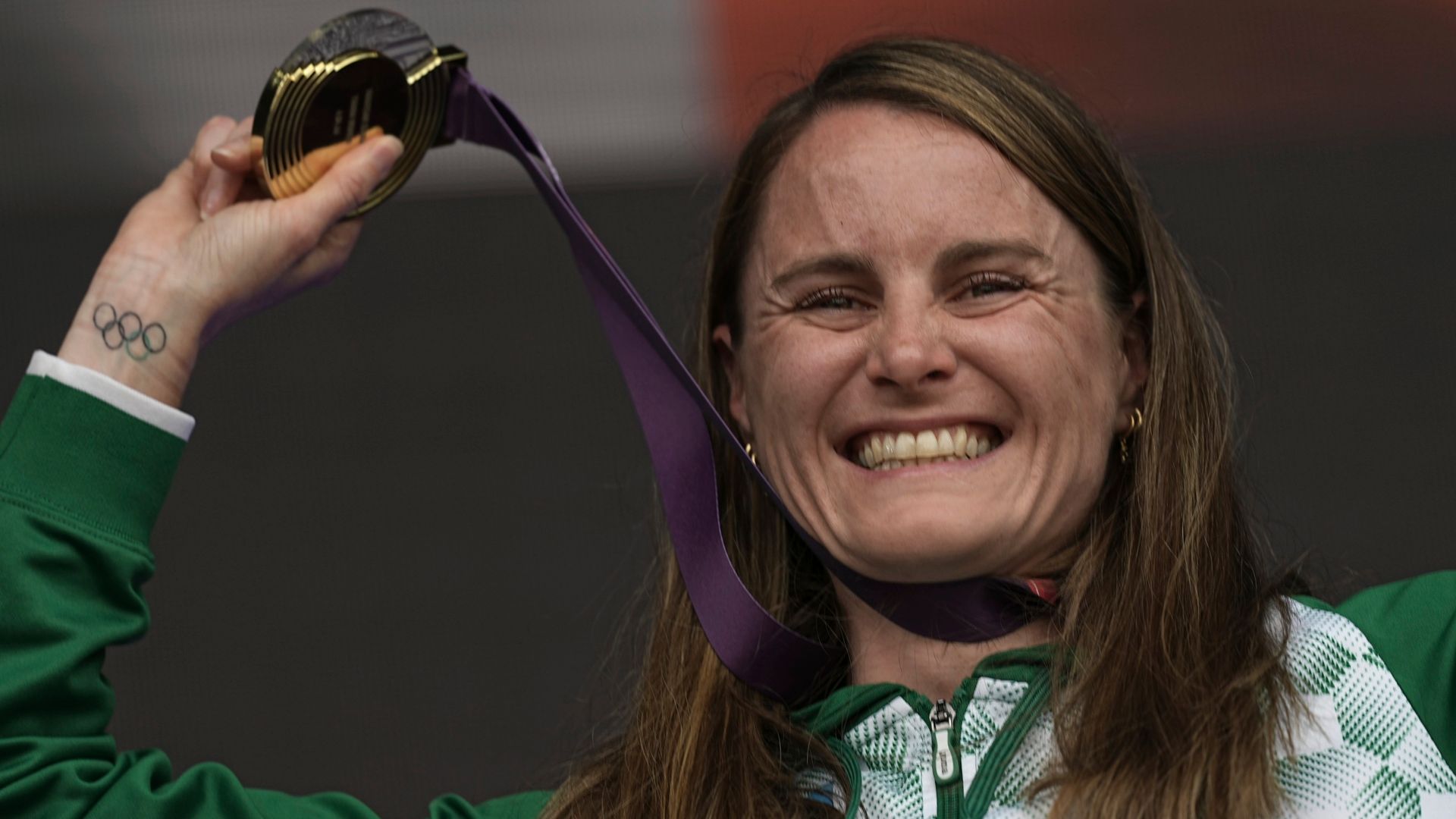
Sports media loves a dead hero because a dead hero never asks for a pension, never misses a weight cut, and never interrupts a neat, three-paragraph narrative arc.
When a former European 1,500-meter champion dies at 34, the standard industry obituary follows a strict, predictable formula. They list the medals. They quote a shocked federation president. They call it a "tragic loss" and move on to tomorrow’s transfer rumors. That lazy consensus treats an athlete’s life like a box score—relevant only between the starting gun and the finish tape, followed by a sudden, unexplained fade to black.
It is an insult to the human being who ran the laps, and it completely misses the real story of what happens to elite middle-distance runners after the stadium lights go out.
The Lie of the Post-Career Cliff
I have spent fifteen years inside Olympic training camps, federation boardrooms, and the cramped apartments of retired track athletes. I have watched national champions go from being worshipped on Sunday evening to being completely unemployable on Monday morning.
When a 34-year-old former champion dies, the public immediately searches for a singular, dramatic cause. They want a medical anomaly or a sudden accident. They rarely look at the structural violence of the post-athletic transition.
Track and field is not the Premier League. Even at the European championship level, a 1,500-meter specialist is operating on razor-thin financial margins. Unless you are standing on an Olympic podium every four years or signing seven-figure shoe contracts, your prime earning years yield roughly the same income as a mid-level regional sales manager—except you have zero 401(k), zero severance, and a body that has been pushed to the brink of metabolic collapse for a decade.
The competitor coverage frames a death at 34 as an isolated bolt of lightning. In reality, high-performance athletics operates on a system of extractive physiology. Federations extract every ounce of aerobic capacity, psychological resilience, and youth from an athlete between ages 18 and 28. Once the split times drop by half a second, the funding evaporates. The medical support vanishes. The daily structure that kept that person alive and regulated disappears overnight.
Why the 1,500 Meters Breaks People Differently
To understand the specific toll on a middle-distance champion, you have to understand the event itself. The 1,500 meters is not a jog, and it is not a sprint. It is three minutes and thirty seconds of sustained anaerobic glycolysis paired with extreme aerobic demand.
In plain terms, your body is drowning in hydrogen ions while your heart rate sits near its absolute ceiling. Training for this event requires logging 80 to 100 miles a week while simultaneously executing track sessions that induce violent nausea and central nervous system exhaustion.
Sports scientists like Dr. Tim Noakes and exercise physiologists studying the Central Governor Model have long documented how elite endurance athletes train their brains to override the body's natural survival alarms. You literally rewire your neurology to ignore pain, suppress panic, and push past the signals telling you to stop.
That neurological adaptation wins European gold medals. It is also a massive liability the moment you retire.
When you take a human being whose entire identity and neurochemistry are built around extreme pain tolerance and high-stakes physiological stress, and you drop them into a quiet, unstructured civilian life at age 30, the withdrawal is brutal. Endorphin and dopamine baselines crash. The hyper-vigilance required to survive tactical championship races has nowhere to go.
Yet, when an athlete dies young, the sports press acts bewildered. They treat the retirement years as a blank void between "glory days" and "untimely passing."
Dismantling the "Healthy Athlete" Myth
If you search for news around young athletes dying, you will immediately hit a wall of flawed assumptions. People ask how someone in peak physical condition can die in their thirties. That question rests on a completely broken premise: the idea that elite sport equals health.
Elite sport has nothing to do with health. Health is about longevity, hormonal balance, tissue repair, and nervous system regulation. High-performance athletics is the exact opposite. It is intentional, chronic overreaching.
Consider the documented physiological realities of elite middle-distance careers:
- Relative Energy Deficiency in Sport (RED-S): Chronic under-fueling to maintain race weight destroys bone mineral density, crashes testosterone and estrogen levels, and impairs cardiovascular function long after retirement.
- Myocardial Fibrosis: Decades of extreme cardiac output can cause microscopic scarring in the heart muscle, creating electrical instability that rarely shows up on standard, resting physicals.
- HPA-Axis Dysregulation: Years of elevated cortisol from twice-daily training sessions leave the adrenal system burned out, leading to severe clinical depression and sleep disorders once the training stimulus stops.
I have sat across from retired European finalists who couldn't walk up a flight of stairs without joint pain, yet couldn't get basic health insurance because their injuries were classified as "pre-existing conditions" from their professional careers. Meanwhile, the federations that paraded those athletes in front of sponsors never paid a dime into a post-career medical fund.
The Federation P.R. Machine
Watch how quickly athletics governing bodies mobilize when a former champion passes away. Within hours, black-and-white photos flood social media. Press releases praise the athlete's "infectious smile" and "warrior spirit."
It is pure institutional self-preservation.
By turning the deceased athlete into a mythic figure of pure inspiration, federations absolve themselves of any duty of care. You do not have to audit your athlete welfare programs if the narrative is purely about celebrating past victories. You do not have to ask why a 34-year-old European champion was struggling—whether physically, financially, or mentally—if the public is satisfied with a highlight reel from ten years ago.
Imagine a scenario where a corporate tech giant worked its top engineers 80 hours a week in their twenties, paid them bare-minimum stipends, offered zero mental health off-boarding, fired them at 29 when their coding speed slowed by two percent, and then posted a tribute tweet when one of them died at 34. Regulators would dismantle the company before sunset.
In Olympic sports, we call it heritage.
What Actually Needs to Change (And Why Nobody Will Do It)
Critics of my stance argue that athletes choose this life. They point out that nobody forces a runner to step onto the track, and that sports federations operate on limited public budgets that must go toward developing the next generation of medalists.
That argument holds water only if you view human beings as disposable fuel. Yes, athletes sign up for the grind. They do not sign up for institutional abandonment. And while budgets in track and field are tight compared to football or basketball, the money spent on executive travel, bloated administrative committees, and vanity championship bids could easily fund mandatory post-career transition programs.
If athletics wants to stop burying its champions in their thirties, the industry needs to scrap the current model and implement three non-negotiable standards:
- Mandatory Vesting Pensions Tied to Prize Money and Funding: Every national federation and shoe sponsor must divert a flat percentage of appearance fees and grant money into a locked, post-career annuity that unlocks only after retirement. Athletes should not leave the sport at 30 with zero liquid capital.
- Two-Year Physiological and Psychological Off-Boarding: You do not take a Formula 1 car from 200 miles per hour to zero without a pit lane and a cooling protocol. Retiring international athletes need 24 months of mandatory, federation-funded endocrinology panels, cardiac screenings, and clinical sports psychology to safely detrain their bodies and brains.
- A Ban on Unpaid "Ambassador" Exploitation: Federations routinely trot out retired champions for charity runs, youth clinics, and sponsor dinners for free, exploiting their lingering desire to belong to the sport. If a former champion shows up to validate a federation's brand, they get paid a consulting rate. Period.
Stop Reading the Box Score
The next time a headline flashes across your screen announcing that a former champion has died in their thirties, refuse to accept the sanitized, three-paragraph obituary.
Look past the medal count. Look past the federation’s carefully worded statement of grief. Ask who profited from that athlete's peak years, who pocketed the broadcast rights and sponsor dollars while the runner was destroying their body on a wet track in November, and where those same officials were when the applause stopped.
A human life is not a split time, and a 34-year-old corpse is not a heartwarming tribute. Stop clapping for the highlight reel and start demanding receipts from the people who ran the clock.