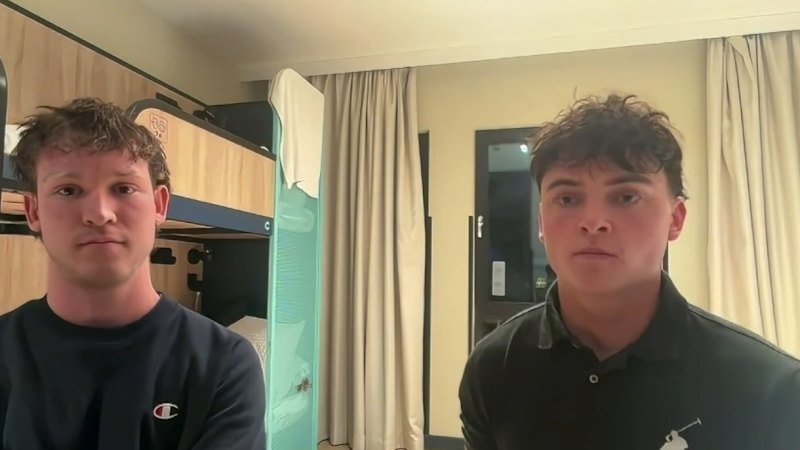
When reports break of a Melbourne student caught up in a shooting in Poland, the initial headlines follow a predictable, frantic script. Local outlets scramble to confirm the individual's identity, contact family members back in Victoria, and piece together fragmented eyewitness accounts from halfway across the globe. Yet beneath the immediate shock of an Australian citizen surviving or witnessing gun violence in Central Europe lies a much deeper, largely unexamined story about international student mobility, regional security shifts in Eastern Europe, and the fragile safety nets protecting travelers when crisis strikes abroad.
The standard news cycle treats these incidents as isolated strokes of terrible luck. That framing is lazy. To understand what happens when a young person from Melbourne finds themselves in the crossfire in Warsaw, Krakow, or a smaller Polish university town, you have to look at two converging trends that rarely share the same column space. First, the massive post-pandemic surge of Australian students seeking affordable, English-taught degrees and exchange semesters outside traditional destinations like the United Kingdom and North America. Second, the quiet transformation of Poland's domestic security environment following years of geopolitical upheaval on its eastern border.
The Illusion of the Safe European Exchange
For decades, European study programs were marketed to Australian families as the ultimate low-risk adventure. Unlike the United States, where campus lockdowns and gun violence are baked into the cultural consciousness of international students, continental Europe carried an implicit guarantee of public safety. Poland, in particular, boasted some of the lowest violent crime rates in the European Union. Strict firearm ownership laws meant that the average exchange student from Melbourne was far more worried about pickpockets on a tram or navigating Polish bureaucracy than dodging bullets.
That perception still drives recruitment. Australian universities have aggressively expanded bilateral exchange agreements with institutions in Warsaw, Wroclaw, and Gdansk. The pitch is straightforward. Students get European Union mobility, a fraction of the living costs found in Melbourne or Sydney, and a rich historical backdrop.
What the brochures omit is how rapidly baseline security assumptions can shift. Even in countries with stringent gun control—where civilian firearm ownership hovers around 2.5 guns per 100 residents, one of the lowest rates in the developed world—illegal weapons circulation and localized criminal disputes do not vanish. When a shooting does occur in a Polish city center or nightlife district, the shock is magnified precisely because the public infrastructure and the bystanders themselves are completely unconditioned for active shooter scenarios.
Consider the psychological mechanics of a crisis in an unfamiliar city. A student from Melbourne hears loud bangs outside a cafe or apartment building. Because gun violence is an statistical anomaly in both Victoria and Poland, the brain defaults to normalcy bias. People assume it is fireworks, a car backfiring, or construction noise. Those lost seconds of hesitation are often what place bystanders directly in harm's way.
How Consular Support Actually Works When Shots Are Fired
There is a persistent myth among travelers that holding an Australian passport guarantees an immediate, cinematic rescue when things go wrong overseas. The reality of the Department of Foreign Affairs and Trade (DFAT) consular apparatus is far more bureaucratic and constrained.
When an incident involving an Australian citizen occurs in Poland, the immediate response does not come from Canberra. It comes from local Polish emergency services—the Policja and municipal paramedics—who operate entirely in Polish and follow strict domestic investigative protocols. Australian diplomatic staff in Warsaw cannot override local police cordons, demand immediate access to crime scenes, or bypass Polish hospital privacy laws without explicit patient consent.
If a Melbourne student is injured, detained as a witness, or simply caught in the immediate perimeter of a shooting, several critical bottlenecks emerge instantly:
- Language barriers in high-stress triage: While younger Poles and medical specialists in major cities frequently speak English, first responders and administrative clerks at regional hospitals often do not. Explaining medical histories, allergies, or witness statements under acute trauma becomes an immediate obstacle.
- Information blackouts: Polish prosecutors routinely impose strict media and information freezes during active criminal investigations, especially if the shooting involves organized crime or cross-border smuggling networks. Families in Australia often learn less from official diplomatic channels during the first 24 hours than they do from fragmented social media posts.
- Insurance fine print: Standard university travel insurance policies cover acute medical emergencies, yet many contain murky exclusions or delays regarding psychological trauma evacuation, prolonged legal representation for witnesses, or emergency family flights unless the victim is in critical, life-threatening condition.
The Changing Security Landscape in Central Europe
To analyze a shooting in Poland without acknowledging the broader regional context is to miss half the picture. Since 2022, Poland has transformed into the primary logistical, humanitarian, and military transit hub for neighboring Ukraine. Millions of people have crossed the border. Billions of dollars in equipment and aid have moved through Polish rail lines and highways.
While Polish intelligence and law enforcement agencies have done a remarkable job maintaining domestic order under extraordinary pressure, no country absorbs that level of geopolitical friction without side effects. European law enforcement agencies, including Europol, have repeatedly warned about the long-term risks of illicit firearms trafficking across Eastern European corridors. Historically, following every major regional conflict in Europe—most notably the Balkan wars of the 1990s—unregistered weapons eventually filter into criminal networks in neighboring states.
For the average resident or visiting student in Krakow or Warsaw, daily life remains overwhelmingly peaceful. Walking down the street at midnight in Warsaw is still statistically safer than in many major Western capitals. However, the nature of violent incidents when they do occur has shifted. Disputes involving organized criminal elements, illicit border networks, or isolated radicalized individuals carry a higher probability of involving high-powered firearms than they did a decade ago.
Why Local Headlines Miss the Systemic Flaws
When a Melbourne student gets caught in the middle of such an event, Australian journalism tends to zoom in entirely on human interest. We get the tearful interview with parents in the suburbs. We get the timeline of the student's gap year or exchange semester. Then, within forty-eight hours, the story disappears from the front page.
This coverage model leaves glaring systemic questions unanswered. Universities collect substantial tuition fees and administrative levies from students participating in international exchange programs, yet pre-departure safety briefings remain stuck in the early 2000s. Students are handed generic PDFs advising them to watch their drinks, register on the Smartraveller website, and keep photocopies of their passports.
Almost zero practical instruction is given on situational awareness in foreign urban environments, how to navigate foreign emergency dispatch systems, or what legal rights a foreign national holds when questioned by European police as a witness to a violent felony.
Let us look at a hypothetical example to see how this gap plays out on the ground. Imagine a twenty-one-year-old commerce student from Melbourne living in an apartment in central Poznan. Shots are fired in the courtyard below during a targeted criminal hit. The student is unharmed physically, but their apartment building is locked down as an active crime scene for seventy-two hours. Their passport, laptop, and prescription medications are inside, inaccessible behind police tape. Local officers take the student to a precinct for six hours of questioning through an exhausted court-appointed translator. Because the student is not hospitalized and has not been arrested, they fall into a consular gray zone. They have no shelter, no access to funds, and no clear understanding of whether they are considered a witness or a suspect.
That scenario requires zero gunfire hitting the student to completely upend their life, yet standard university risk assessments rarely plan for non-injury crisis displacement.
What Students and Families Must Demand Before Departure
Relying on destination reputation is no longer a viable safety strategy. Whether a student is heading to Poland, France, Germany, or anywhere else in Europe, treating a Westernized economy as synonymous with total immunity from violent crime is a mistake.
If you or someone in your family is preparing for an extended stay or university exchange in Central Europe, several concrete safeguards matter far more than generic travel insurance:
- Verify direct consular reach and emergency protocols: Registering with Smartraveller is mandatory, not optional, yet it is passive. Students must store the direct twenty-four-hour emergency duty officer number for the Australian Embassy in Warsaw—not just the general switchboard—alongside the pan-European emergency number 112, which connects to English-capable dispatchers faster than legacy local police numbers.
- Audit university duty-of-care obligations: Before signing exchange agreements, demand written clarification on what logistical support the home university provides if a student is displaced by a security incident without suffering physical injury. Institutions that profit from international mobility programs must bear financial responsibility for emergency accommodation and legal translation when a host city experiences a crisis.
- Maintain physical and digital redundancy: Never leave primary identification, backup bank cards, and emergency cash in a single location. In active crime scene lockdowns, residents are frequently barred from re-entering buildings for days while forensic teams work.
- Understand local legal standing: In many European jurisdictions, witnesses to severe violent crimes can be compelled to remain in the country or provide formal depositions before a magistrate before being cleared to travel. Having access to independent legal counsel—rather than relying solely on state-provided translators—protects a frightened young traveler from inadvertently signing inaccurate statements.
The headline about a Melbourne student caught up in a Poland shooting serves as a stark reminder that geography no longer insulates anyone from sudden, unpredictable violence. The borders between quiet academic hubs and volatile geopolitical fault lines have grown thinner, and the institutions sending young Australians out into the world have yet to catch up to that reality.