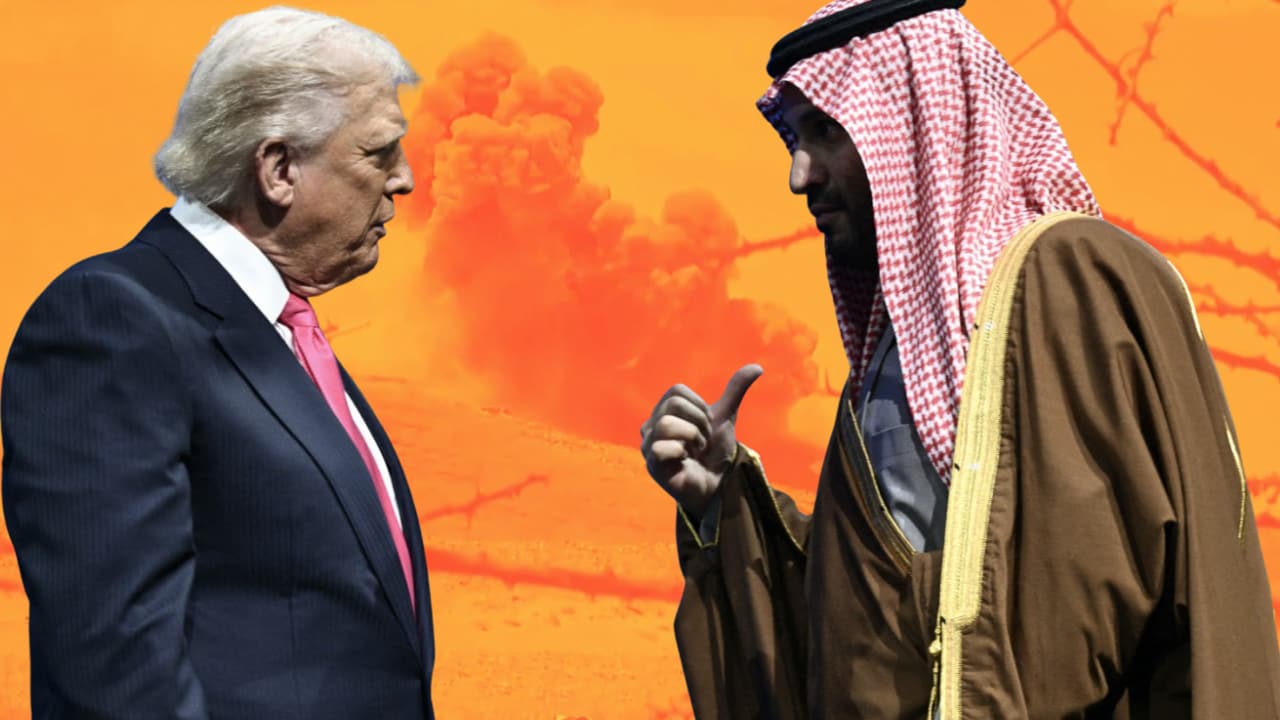
The foreign policy establishment in Washington is having another collective meltdown. Whenever a headline drops claiming the United States pulled back from a strike on the Houthis after a frantic phone call from Saudi Crown Prince Mohammed bin Salman, the Beltway pundits recite the exact same script. They call it appeasement. They call it erratic leadership. They claim Donald Trump blinked, leaving an ally hanging out to dry while Iranian-backed militants run wild in the Red Sea.
That narrative is lazy, historically illiterate, and completely detached from basic military economics.
The mainstream coverage treats geopolitics like a bar fight where the biggest guy in the room has to throw a punch every time someone spills a drink, just to prove he isn't scared. If you actually look at the ledger—the literal cost of ordnance, the geography of northern Yemen, and the strategic traps Iran sets for Western powers—calling off a strike isn't a sign of weakness. It is the only rational move left on the board.
The $2 Million Dollar Math Problem Nobody Mentions
Let’s look at the numbers the cable news panels conveniently ignore. When the U.S. Navy intercepts a Houthi one-way attack drone or a cheap ballistic missile in the Red Sea, it isn't swatting flies with a rolled-up newspaper. It is firing SM-2, SM-6, or Aster surface-to-air missiles.
A single SM-6 interceptor costs roughly $4.3 million. An SM-2 runs north of $2 million. Meanwhile, the Iranian-designed Shahed-style drones and basic anti-ship missiles launched out of Sanaa cost anywhere from $2,000 to $20,000 to assemble in a garage.
Do the math. Every time the Pentagon engages in a tit-for-tat exchange with Ansar Allah—the formal name of the Houthi movement—the United States loses the exchange ratio by a factor of at least one hundred to one.
I have sat in enough defense briefings and watched enough procurement cycles over the last fifteen years to know how this ends. You cannot win an attrition war when your defensive ammunition costs more than a suburban neighborhood and your enemy is shooting flying lawnmowers. If the U.S. launches a massive retaliatory strike on Yemen after a call from Riyadh, what happens next? The Houthis scatter into the mountains, absorb the hits, and launch fifty more cheap drones the next morning. Washington burns through its high-end naval interceptor stockpiles—stockpiles meant to deter China in the Taiwan Strait—just to play whack-a-mole in the desert.
Trump’s supposed "U-turn" wasn't a failure of nerve. It was an instinctive refusal to buy a losing ticket at a rigged casino.
Why Riyadh Wanted Washington To Pull The Trigger
To understand why the media got this backward, you have to understand what Mohammed bin Salman actually wanted.
Saudi Arabia spent nearly a decade fighting a brutal, inconclusive war in Yemen starting in 2015. Despite possessing some of the most expensive Western hardware money can buy—F-15s, Patriot batteries, Abrams tanks—Riyadh could not dislodge the Houthis from Sanaa. By 2022 and 2023, the Saudis realized they needed an exit ramp. They entered quiet, direct negotiations with the Houthis to secure a permanent ceasefire, protect Saudi oil infrastructure like Abqaiq from drone swarms, and pivot back to Vision 2030.
When regional tensions flare up and the Houthis start flexing, Riyadh faces a dilemma. If the Saudis strike back directly, their fragile truce collapses, and Aramco facilities become targets again. If they get Washington to do the dirty work, the United States absorbs the retaliatory blowback, keeps the Red Sea lanes open for Saudi exports, and lets Riyadh keep its hands clean for ongoing peace talks.
Look at how the media framed it: "US Was Ready To Attack Houthis After MBS' Call For Help."
Think about what that actually means. Riyadh wasn't begging for help because the U.S. was failing to lead; Riyadh was trying to subcontract its security enforcement to the Pentagon so Saudi Arabia wouldn't have to risk its own ceasefire. Calling off that strike wasn't abandoning an ally. It was refusing to let an ally outsource its risk onto American taxpayers and American sailors.
The Myth Of Deterrence Through Bombing
The biggest misconception in modern defense journalism is the belief that dropping bombs automatically equals "restoring deterrence."
Pundits throw the word deterrence around like a magic spell. They assume that if the U.S. hits thirty radar sites and weapons depots in Yemen, the Houthis will suddenly wake up, apologize, and become peaceful maritime neighbors.
History laughs at that assumption.
- Operation Decisive Storm: Saudi Arabia and a coalition of regional states dropped tens of thousands of precision-guided munitions on Yemen over seven years. The Houthis emerged stronger, better armed, and more politically entrenched than when the war started.
- The Red Sea Campaigns: Repeated U.S. and U.K. strikes against Houthi launch sites degraded their immediate stockpiles, yet commercial shipping through the Bab el-Mandeb Strait still plummeted, forcing vessels to reroute around the Cape of Good Hope.
- The Terrain Factor: Northern Yemen is a mountainous fortress. Mobile launchers can be hidden in caves, trucks, and civilian infrastructure within minutes. You cannot bomb an insurgency into submission from 30,000 feet without committing hundreds of thousands of ground troops—a non-starter for any American president.
As military theorist Carl von Clausewitz pointed out two centuries ago, war is the continuation of politics by other means. When your military strikes have no political endgame, they aren't strategy. They are just expensive fireworks designed to make politicians look tough on television.
What Everyone Gets Wrong About The Houthi Playbook
If you want to understand why a sudden halt in U.S. military action drives the Houthis crazy, stop viewing them as a conventional state actor and start viewing them as an ideological insurgency that thrives on external enemies.
The Houthi leadership faces massive domestic problems. Yemen is experiencing one of the worst humanitarian and economic crises on earth. Salaries go unpaid. Infrastructure is crumbling. Local populations in areas under Houthi control have plenty of reasons to resent their rulers.
Nothing unites a fractured, impoverished population faster than a superpower dropping bombs on their soil.
Every time the United States conducts an airstrike in Yemen, Houthi recruitment surges. Their domestic propaganda machine turns internal economic failures into a heroic resistance narrative against Western imperialism. By pulling back from a large-scale strike, Washington denies the Houthis the exact external threat they need to justify their authoritarian grip at home.
It forces them to govern, rather than just fight. And governing is the one thing militant movements are terrible at.
Dismantling The Bad Questions
Whenever a story like this breaks, the public is fed the wrong questions. Let's look at what people are actually asking—and why the premises are broken.
"Doesn't calling off a strike make America look weak to Iran?"
Tehran doesn't measure American strength by how many empty warehouses in Yemen get blown up. Iran measures American strength by the lethality of U.S. intelligence, the resilience of our supply chains, and whether Washington gets baited into draining its own resources on peripheral conflicts. Iran wants the U.S. bogged down in the Red Sea. Every missile fired at a Houthi drone is one less missile available in the Indo-Pacific or Eastern Europe. Refusing to take the bait isn't weakness; it's discipline.
"If we don't strike them, who protects global shipping?"
Look at a map of who actually uses the Suez Canal and the Red Sea. Overwhelmingly, the commercial traffic moving through that corridor goes between Asia and Europe. The United States is largely energy-independent and relies far more on Pacific and Atlantic trade routes than the Bab el-Mandeb Strait. Yet Washington has historically footed the bill to police waters that primarily benefit European consumers and Chinese exporters. Stepping back forces regional powers and European navies to finally step up and pay for their own maritime security.
"Isn't unpredictability dangerous in foreign policy?"
Washington insiders worship predictability. They love white papers, rigid escalation ladders, and telegraphed red lines. The problem with predictability is that adversaries study it and build around it. If Tehran and Sanaa know that an attack on Tuesday guarantees a proportional U.S. strike on Thursday, they simply clear out their facilities on Wednesday. Unpredictability—being willing to strike massively when nobody expects it, and abruptly walking away when everyone assumes you'll attack—breaks the enemy's decision cycle.
The Real Downside To Restraint
Let’s be brutally honest about the trade-offs here. A contrarian approach isn't magic, and pretending there are no downsides would be dishonest.
When Washington pauses or cancels a planned strike, there is an immediate short-term cost in perceived reliability. Allies in the Gulf—already nervous about shifting U.S. priorities—will hedge their bets. They will sign more trade deals with Beijing, keep diplomatic channels open with Moscow, and quietly pursue their own independent defense arrangements.
Furthermore, commercial shipping companies don't care about grand strategy; they care about insurance premiums. If naval deterrence appears inconsistent, maritime insurers hike rates, ships take the long way around Africa, and global supply chains feel subtle inflationary pressure.
Those are real costs. The question a leader has to ask isn't whether restraint is free. It's whether the cost of restraint is lower than the cost of an endless, unwinnable bombing campaign that drains the U.S. Navy of multi-million-dollar interceptors while leaving the underlying political problem completely unsolved.
How Washington Should Actually Handle The Red Sea
If dropping expensive bombs on cheap targets is a sucker's game, what does an effective, unsentimental strategy actually look like?
- Shift From Attrition To Interdiction: Stop playing goalie at the end of the supply chain. Instead of burning $4 million missiles shooting down drones over the water, focus covert intelligence, naval blockades, and cyber operations on the Iranian smuggling networks moving components into Yemen before they ever reach a launch pad.
- Enforce Burden-Sharing: Make maritime protection in the Red Sea conditional on regional and European participation. If European capitals want their supply chains protected, European destroyers need to be burning their own fuel and firing their own interceptors.
- Target Leadership Logistics, Not Empty Dirt: When kinetic force is actually necessary, abandon the theater of hitting radar sites and storage sheds. Target the financial networks, illicit fuel shipments, and high-level command logistics that keep the Houthi war economy running.
- Let Riyadh Own Its Neighborhood: Support Saudi-Houthi diplomatic settlements without inserting American troops or endless air campaigns as a permanent security blanket. Regional stability only lasts when the countries living in the neighborhood have to pay the price for maintaining it.
Stop Confusing Noise With Strategy
The foreign policy blob in Washington equates action with competence. To them, launching Tomahawk missiles proves you care, while holding fire proves you're lost.
That mindset gave America twenty years in Afghanistan, a trillion-dollar quagmire in Iraq, and a string of interventions that left the Middle East more fractured than before. Real power isn't measured by how fast you pull the trigger when an ally calls. It is measured by having the discipline to walk away from a bad fight, keep your powder dry for adversaries that actually matter, and refuse to let minor regional actors dictate the price of American security.
Next time the pundits scream that calling off a strike is a betrayal of American leadership, check the price tag on the missiles—and ask yourself who is actually getting played.