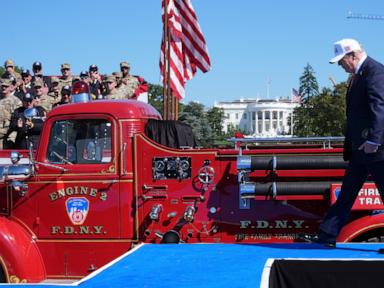
Nearly a quarter century has passed since a bright Tuesday morning shattered the American psyche, yet the scars left by the September 11 attacks remain raw. President Donald Trump took to the Ellipse just outside the White House to honor the victims of that tragic day, anchoring a solemn nationwide reflection. Spearheaded by the Tunnel to Towers Foundation, the gathering centered around a massive, 21-foot, nearly 17,000-pound steel beam pulled directly from the South Tower of the World Trade Center. This artifact spent months traversing the country on the Steel Across America tour, bringing tangible history face-to-face with communities far from New York City.
When leaders stand before a battered piece of skyscraper skeleton, the gesture goes beyond mere politics. It touches a collective nerve. "This battered piece of steel here today on the Ellipse is a reminder that America is blessed with a strength no fire can consume, no evil can conquer and no terror can destroy," Trump told the crowd. That sentiment cuts straight to why these commemorations still hold weight twenty-five years later. Millions of younger Americans only know the tragedy through textbooks and documentaries, while millions of others still carry the phantom ring of a final phone call or the image of ash-choked Manhattan streets. Don't forget to check out our previous coverage on this related article.
Honoring Individual Valor
Big national ceremonies often risk feeling detached from reality, but the Ellipse event leaned heavily into specific, human stories. Trump paid special tribute to two figures who embodied absolute selflessness during the chaos. One was Jeffrey Palazzo, a New York City firefighter and Coast Reserve member. The other was Welles Crowther, a young equities trader widely known across the nation as the "man in the red bandanna" who guided multiple survivors to safety before perishing in the collapse.
To honor Crowther permanently, the administration awarded him the Presidential Medal of Freedom, accepting it through his mother, Alison, and sister, Paige. Bringing these specific names into the light prevents the day from shrinking into an abstract statistic of nearly 3,000 dead. It reminds everyone watching that the towers didn't just fall on concrete and steel; they fell on fathers, sons, daughters, and neighbors who chose courage in their final moments. If you want more about the context here, USA Today offers an in-depth breakdown.
The Heavy Toll on First Responders and Families
You cannot talk about 9/11 without looking at the ongoing toll borne by first responders. Roughly 150 firefighters and emergency personnel from New York, Washington, and Pennsylvania stood in attendance at the Ellipse. Many of these men and women spent weeks digging through toxic rubble, fighting health battles that linger decades later.
Frank Siller, CEO of the Tunnel to Towers Foundation and brother of fallen firefighter Stephen Siller, emphasized that the steel beam represents the absolute best of the country. That message resonates because the registry of illnesses tied to the dust of Ground Zero continues to claim lives years after the initial impact. Remembering the fallen isn't just about a single Tuesday in September; it is about sustaining the families and survivors who wake up every day missing a piece of their world.
Looking Ahead to the Week of Commemorations
The Ellipse ceremony kicked off a dense week of memorials leading up to the official anniversary date on Friday. Future events include solemn tributes at the Pentagon and Shanksville, ensuring that all three crash sites remain central to the national conscience. As political divisions pull the country in a dozen different directions, standing before a piece of World Trade Center steel offers a rare, unifying anchor point. The pledge to never forget is easy to print on a banner, but seeing it enacted through medals, monuments, and survivor stories proves that the memory of 2001 still commands absolute reverence. Take a moment this week to talk to someone who lived through it, read the names of the victims, and keep the human element alive in a world that moves entirely too fast.