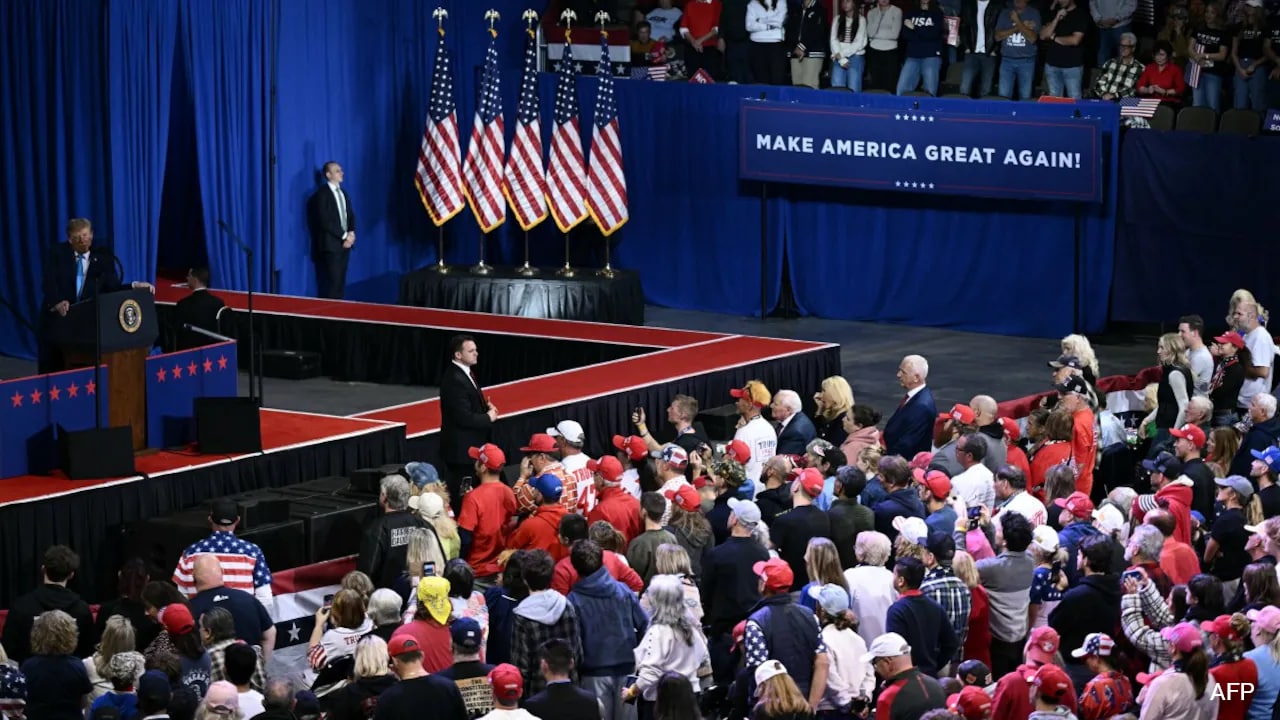
During the stretch of the 2026 midterm election campaign, political strategists expected sharp arguments over inflation, healthcare costs, and border policy. Donald Trump took a completely different path on the campaign trail. At rallies across key battleground states, he spent considerable time dissecting the physical appearance of Republican candidates.
He openly praised Ohio Senator Jon Husted, recounting how he looked over his physical build, jawline, and stature. In Georgia, he called Senate contender Mike Collins a "good-looking man" who was "all man," while labeling opponent Jon Ossoff with cartoonish insults. In Texas, he poked fun at Ken Paxton's suit fits while simultaneously mocking Democratic candidate James Talarico by comparing him to MAD Magazine's Alfred E. Neuman.
Media commentators immediately dismissed the remarks as a bizarre, off-script distraction from core economic messaging. But brushing it off as random chatter misses the calculated psychological machinery behind how modern political campaigns project dominance.
The Strategy Behind Physical Appraisals in Modern Campaigns
Traditional political communication relies heavily on policy platforms, white papers, and curated economic statistics. That traditional playbook often fails to break through the endless noise of short-form social media and fragmented cable news.
Trump's focus on candidate appearance isn't an accident. It taps into long-standing psychological principles of leadership projection.
- Central Casting Appeal: Decades of television experience taught Trump that voters form immediate, subconscious judgments based on visual presence. By framing a candidate as someone who looks like they stepped out of "central casting," he establishes baseline authority before a word of policy is spoken.
- Dominance and Framing: Publicly evaluating another politician's physical traits—whether giving a compliment or a jab—instantly positions the speaker as the ultimate arbiter. It establishes a clear hierarchy on stage.
- Disrupting Standard Media Cycles: Standard speeches about economic indicators rarely make headlines. Publicly commenting on a senator's glutes or jawline virtually guarantees viral coverage across major cable networks, social feeds, and digital outlets.
When a speech sparks millions of online impressions, the underlying policy message becomes secondary to pure reach and brand retention.
How Opponents Fail to Respond
Democratic strategists routinely fall into the same trap when confronting this style of campaign rhetoric. They attempt to counter personal commentary with detailed statistical counterpoints on policy.
That approach creates a fundamental mismatch in political communication. Trying to fight visceral, visual branding with policy technicalities rarely shifts voter perception. Voters remember vivid caricatures far longer than they recall specific legislative proposals.
Why Appearance Driven Politics Continues to Resonate
Visual presentation in leadership isn't a new concept. The 1960 televised presidential debate between John F. Kennedy and Richard Nixon demonstrated how physical presence can shift public perception overnight. Modern digital platforms have simply magnified that reality tenfold.
Political campaigns operate in a short-form video ecosystem. Clips under thirty seconds dominate voter feeds. In that environment, sharp visual assessments, humor, and memorable physical descriptions travel much faster than structured debates over budget caps.
Praising a candidate's jawline or mocking an opponent's features gives audiences an easily digestible narrative. It turns complex political contests into personal, relatable theater.
The lesson for future political campaigns is simple: policy matters for governing, but visual narrative and dominance branding frequently decide who gets the opportunity to govern in the first place.
The video below shows how news outlets reported on these campaign remarks during the midterms.
To analyze how campaign messaging impacts voter engagement, track candidate media mentions alongside polling shifts immediately following major rally speeches. Look specifically at social media engagement metrics rather than relying solely on traditional press releases to gauge true audience reach.
This reporting provides direct context on how political figures use physical appraisals and personal branding strategies to command audience attention during national campaign cycles.