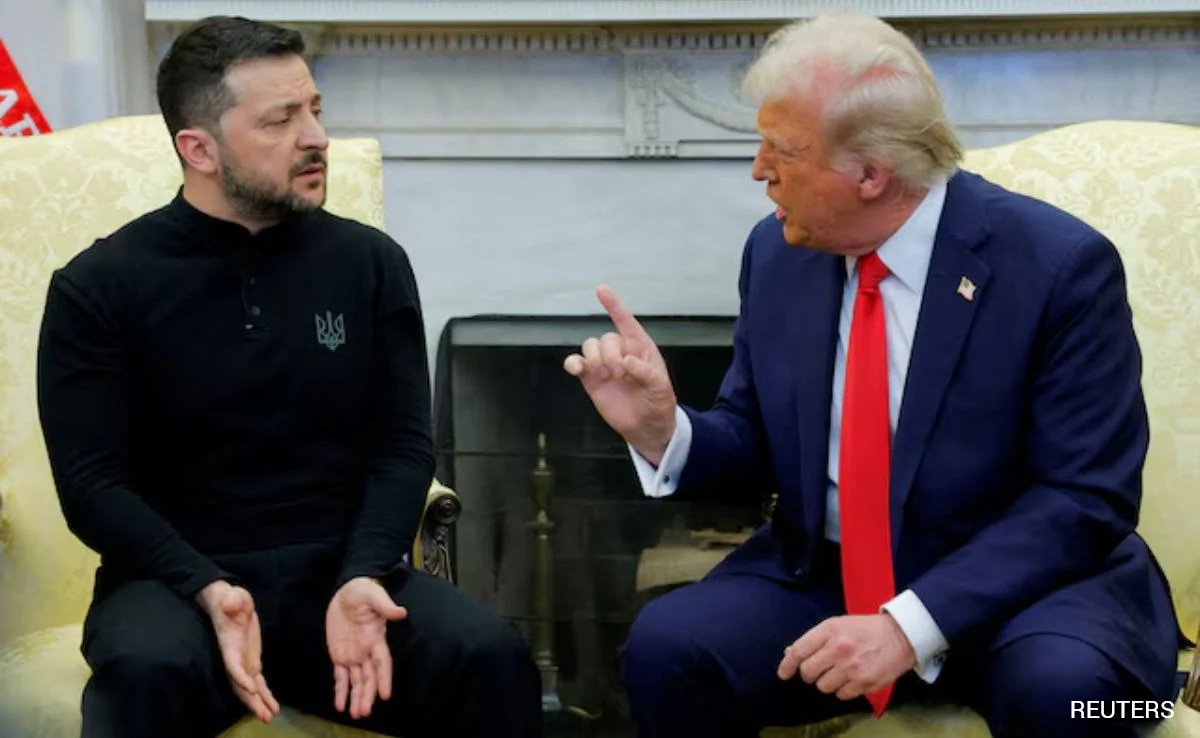
When President Donald Trump told reporters in October 2026 that "it's time for Ukraine to get a new president," the headline exploded across global news feeds within minutes. Most coverage treated the remark as a sudden emotional outburst against Ukrainian President Volodymyr Zelensky. That's a superficial read. If you follow how Washington, Kyiv, and Moscow have been negotiating energy supplies and ceasefire frameworks, Trump's call for a new Ukrainian leader isn't just rhetoric—it's a calculated pressure tactic tied directly to global diesel prices, oil refinery strikes, and stalled peace talks.
Let's unpack what actually happened behind those remarks, why domestic fuel economics are driving U.S. foreign policy right now, and how Kyiv and European allies are pushing back.
Why Trump Said Ukraine Should Get a New Leader
According to reporting from CBS News and The Independent, Trump made his comments on Saturday, October 10, 2026, while venting frustration over the lack of a negotiated settlement in the Russia-Ukraine war. "I suggest they get a new leader who can make a deal because he could have made many deals and for some reason he never does," Trump said of Zelensky.
Trump didn't stop at questioning Zelensky's willingness to negotiate. Days later in an October 16 interview with Newsmax, Trump went even further, calling Zelensky "not a good guy for us to deal with" and claiming he found the Ukrainian president "more difficult to deal with than Putin". During Oval Office remarks on October 20, Trump framed American involvement in purely transactional terms, arguing that the United States has given a massive amount to Ukraine and gotten "absolutely nothing back except grief, death, tremendous monetary loss".
Notice the pattern here. Whenever peace talks hit a wall, Trump shifts focus from Russian territorial aggression to Zelensky's personal leadership and perceived obstinacy. Back in February 2025, during a heated Oval Office clash alongside Vice President JD Vance, Trump famously told Zelensky, "You don't have the cards right now". By late 2026, that argument evolved from questioning Ukraine's battlefield leverage to openly suggesting Kyiv needs a different negotiator at the table.
The Real Trigger Was Global Diesel Prices
Here's the detail many quick news summaries gloss over. Trump's sharpest anger wasn't triggered by a frontline battle in Donbas—it was triggered by Ukrainian drone strikes on Russian oil refineries.
In the run-up to the 2026 U.S. midterm elections, high domestic fuel prices became a major political headache for the White House. As CBS News reported, Trump sought to blame record U.S. diesel prices on Ukrainian strikes against Russian energy infrastructure rather than broader global disruptions like the conflict in Iran. To bring fuel costs down, the Trump administration brokered a controversial U.S.-Russian arrangement involving diesel supplies and pushed for an "energy ceasefire" halting strikes on energy facilities.
Kyiv refused to play along. Zelensky argued that Russian attacks on Ukraine's own power grid had never actually stopped, citing deadly strikes in places like Kharkiv and Zaporizhzhia. From Ukraine's perspective, hitting Russian refineries—such as the Samara oil pipeline station—is one of the few asymmetric tools Kyiv has to choke off Moscow's war revenue.
Trump saw that defiance as direct sabotage of his domestic economic agenda. "We said you can do whatever you want to Russia. Don't hit the refineries because that's a world problem that's caused," Trump said on October 10, adding bluntly of Zelensky, "He better damn well stop!"
How Kyiv and European Allies Responded
If the White House hoped public pressure would isolate Zelensky politically, the immediate reaction in Kyiv and European capitals went the opposite direction.
Ukrainian officials rejected both the call for new leadership and the U.S.-Russian diesel arrangement. Ukrainian Foreign Minister Andrii Sybiha pushed back directly on Trump's suggestion that Ukraine replace its president, stating that Zelensky "has the support of the Ukrainian people, and they have the right to decide. Statements from abroad only confirm that he is doing his job well".
Zelensky himself didn't mince words about Washington's diesel deal with Moscow. Calling it a "weak decision" and not how partners should treat one another, Zelensky wrote on social media that "gifts to Putin will not bring peace or any benefit to the civilised world".
European partners echoed those concerns. According to CBS News, Canadian Prime Minister Mark Carney backed the concept of an energy ceasefire during a call with Zelensky, yet explicitly denounced the U.S.-Russian diesel deal, warning it undermined European stability and efforts to end the war. Across European capitals, officials raised alarms that buying Russian diesel effectively funnels cash straight back into the Kremlin's military budget.
Can Ukraine Actually Hold a Presidential Election Right Now
Whenever Trump or his allies suggest Ukraine needs a new president, a practical question immediately pops up in search trends and political debates—why hasn't Ukraine held elections?
Zelensky's original five-year term was scheduled to end in May 2024, following his 2019 landslide victory. However, Ukraine has been under martial law since Russia launched its full-scale invasion in February 2022. Under Ukraine's constitution and national legislation, presidential and parliamentary elections cannot legally be held while martial law remains in effect.
Even if lawmakers amended the law tomorrow, running a credible nationwide vote in wartime faces massive logistical obstacles:
- Millions of displaced voters: Roughly six million Ukrainians live abroad as refugees, and millions more are internally displaced from eastern and southern regions.
- Active combat zones: Hundreds of thousands of Ukrainian soldiers are deployed on the front lines, where setting up secure polling stations is nearly impossible.
- Russian missile threats: Large gatherings at voting centers across Ukrainian cities would become immediate targets for long-range drone and missile strikes.
Independent polling inside Ukraine over the course of the war has consistently shown that a solid majority of Ukrainians oppose holding elections until active hostilities end and security guarantees are in place. In other words, even Zelensky's domestic political rivals largely agree that wartime elections would fracture national unity and risk Russian interference.
Where Peace Negotiations Actually Stand in Late 2026
Strip away the sharp personal insults between Washington and Kyiv, and you see a much more complicated diplomatic picture unfolding behind closed doors.
Despite Trump's public attacks on Zelensky, U.S. envoys—including Jared Kushner—have remained actively engaged in multi-party diplomacy. In mid-November 2026, Abu Dhabi hosted a second round of three-way discussions involving American representatives alongside Ukrainian and Russian delegations, focusing on prisoner-of-war exchanges and potential security frameworks.
At the same time, fundamental sticking points remain unresolved. According to Associated Press reporting from November 14, 2026, U.S. negotiators floated whether Kyiv would consider withdrawing from parts of the eastern Donbas region not currently occupied by Russia in exchange for NATO membership and a recovery package. Zelensky flatly ruled out surrendering territory or enshrining permanent neutrality in Ukraine's constitution, insisting that any real peace sequence requires a verified ceasefire first, followed by binding security guarantees from NATO and the European Union.
How to Read Future Headlines on US-Ukraine Relations
Political rhetoric around the war moves fast, and taking every press conference quote at face value will mislead you. When evaluating upcoming reports on Trump, Zelensky, and peace negotiations, watch three concrete indicators instead of the verbal sparring:
- Energy infrastructure strikes: Track whether Ukraine continues hitting Russian oil depots and pipelines or pauses strikes in exchange for U.S. intelligence sharing and air-defense interceptors.
- Written security guarantees: Look past vague talk of "deals" to see whether Washington and European NATO members put binding defense commitments on paper.
- Congressional aid and sanctions enforcement: Watch actual funding approvals and oil sanctions enforcement in Washington, which reveal far more about U.S. policy than campaign-style soundbites.


