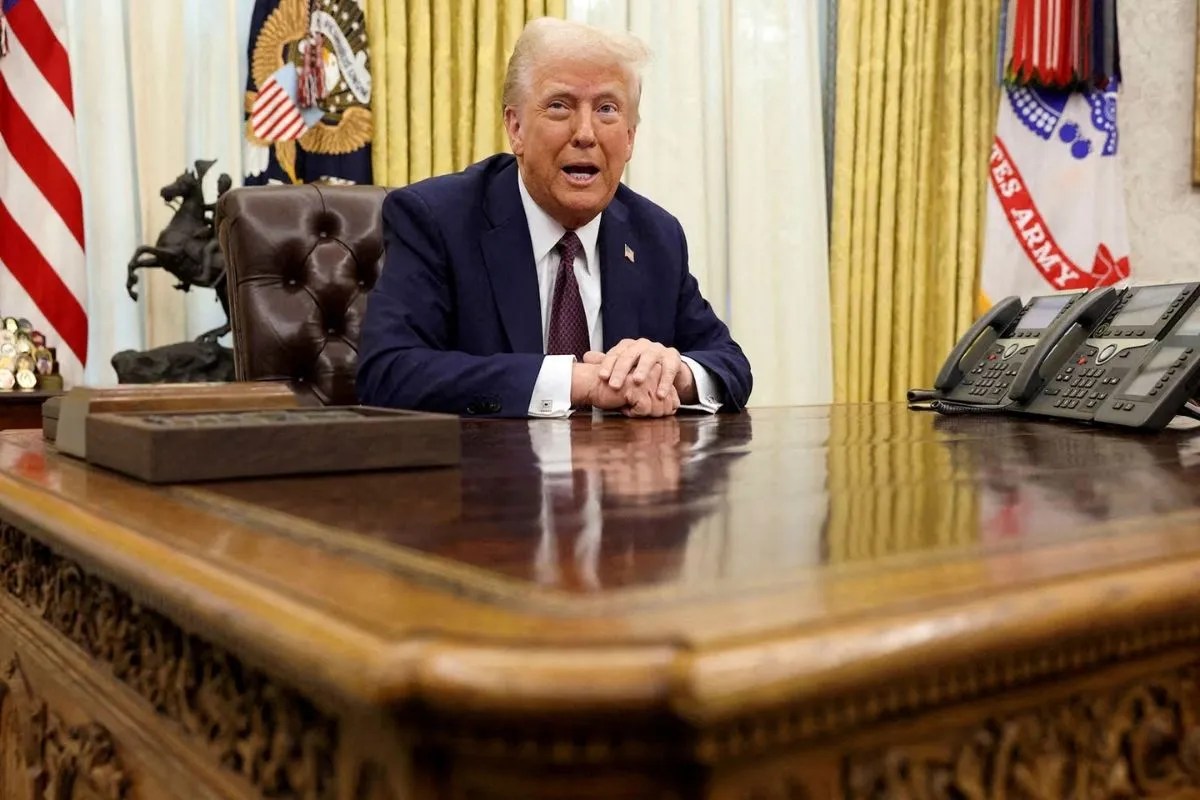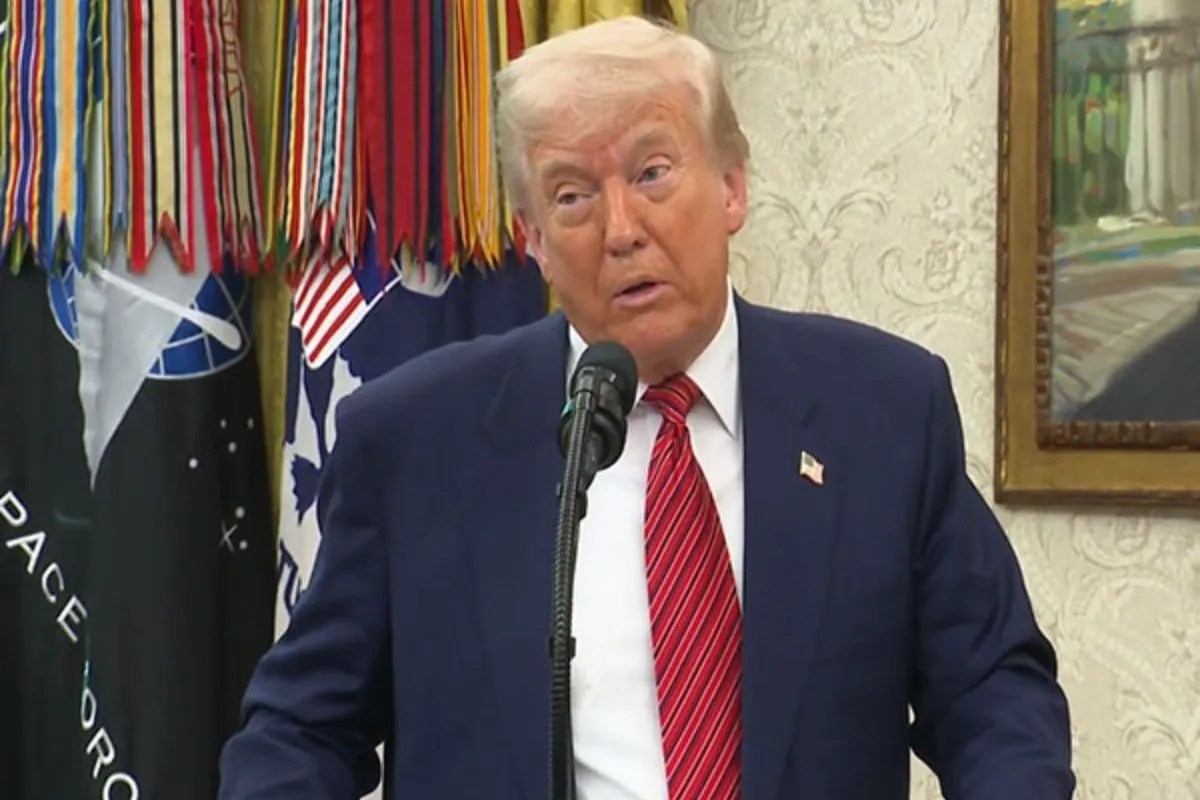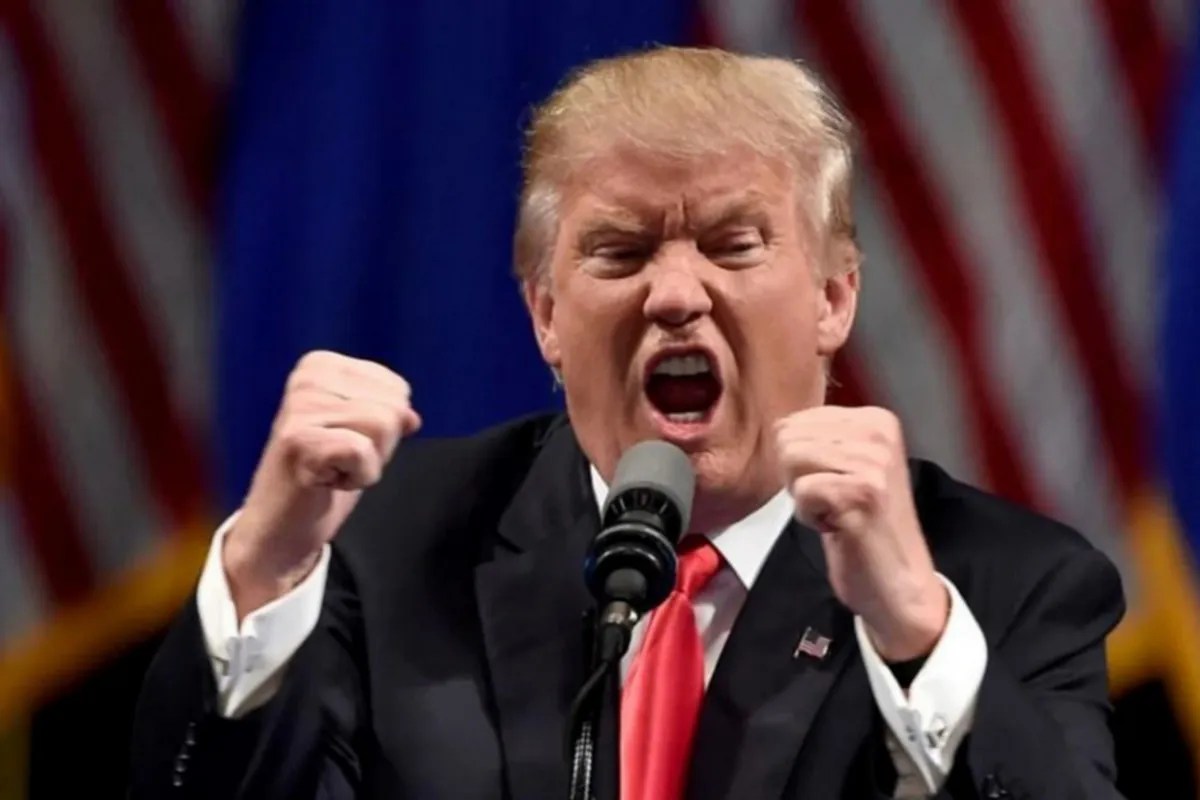
Everyone loves a good salvation joke. Especially when it comes with a television soundbite.
When Donald Trump tells a 60 Minutes interviewer that he has no interest in forgiving his political enemies—not even if it costs him a seat in heaven—the internet rushes to the same lazy conclusion. Half the crowd reads it as pure malice. The other half reads it as a macho warning shot. Both sides treat the remark like a confession of personal cruelty or a theatrical flex for cable news clips.
They are reading the wrong ledger.
A headline about refusing to forgive enemies sounds like a Sunday school debate or a reality-TV feud. It invites shallow commentary about morality, religion, and temperament. That is the easy way out. Anyone can squint at a soundbite, pick a team, and type three hundred words about whether a politician sounds "nice" or "vengeful."
It misses the actual mechanics of how power works in high-stakes politics. In modern American politics, forgiveness is rarely a private spiritual event. Usually, it is a transaction, a concession, or a signal of leverage. Treating a refusal to forgive as mere spite confuses emotion with strategy—and it ignores how voters, allies, and rivals actually read political promises.
The Lazy Consensus Around Political Grudges
Conventional political coverage runs on a predictable script. When a prominent leader refuses to bury the hatchet with opponents, pundits immediately reach for two explanations: personal grievance or base pandering. Neither explanation requires much heavy lifting. Both fit neatly into existing partisan habits.
Personal grievance assumes the leader is acting like an ordinary person nursing a bruised ego at a Thanksgiving table. Base pandering assumes the leader is simply tossing red meat to angry supporters who want blood.
Both theories have a grain of truth, which is why lazy writers cling to them. Politics does involve real friction, real betrayals, and real audiences who reward toughness. Yet relying solely on those two explanations leaves a massive blind spot. It treats political hostility as static—as if a statement made in one media interview locks in every future move regardless of circumstances.
History rarely works that way. Politics is full of bitter rivals who suddenly discover shared interests when incentives shift. Conversely, it is full of smooth talkers who smile on camera while working to ruin their counterparts behind closed doors. Publicly promising never to forgive sends a very specific message about bargaining posture, loyalty enforcement, and credibility.
What "Forgiveness" Actually Means in Power Politics
In everyday life, forgiveness means letting go of resentment so you can move on with peace of mind. In politics, "forgiveness" often means something else entirely: amnesty without accountability, or signaling that crossing a line carries no lasting cost.
When a leader says they will not forgive enemies, they are often defining a boundary rather than reciting a theology exam. In organizational leadership and high-stakes negotiation, consistency of posture matters. If a leader signals that every betrayal will eventually be brushed aside for the sake of polite norms, rivals face lower penalties for defecting. If the leader signals that hostility is remembered and answered, rivals calculate risk differently.
That is a strategic point, not a moral endorsement. A hardline posture creates real friction. It can alienate swing voters who prefer a softer tone, complicate coalition building, and harden opposition resolve. Pretending there is no downside is dishonest. Refusing to forgive can turn temporary opponents into permanent enemies who fight with nothing left to lose.
Still, pretending the remark is just about heaven or just about anger is analytical malpractice.
I Have Watched Campaigns Burn Cash Chasing the Wrong Narrative
Over years of watching political strategy and crisis communications up close, I have seen campaigns and institutions burn millions chasing the wrong narrative. They spend weeks reacting to the tone of a controversial line while ignoring the incentive structure underneath it.
A classic mistake is assuming that voters interpret every blunt statement literally. Sometimes they do. Often, they interpret it as a proxy for competence, backbone, or authenticity. A voter who dislikes polished political doublespeak may hear a harsh line on 60 Minutes and translate it into something plain: "At least he isn't pretending to love people who tried to take him down."
Another voter hears the exact same sentence and thinks: "This is exhausting. Nobody ever lowers the temperature."
Both reactions are real. The mistake happens when commentators act as if one reaction is the only rational response, or when strategists try to win over skeptics by lecturing them on manners instead of addressing why the message landed in the first place.
Why "60 Minutes" Changes the Framing
Context matters more than soundbites admit. 60 Minutes is not a friendly rally stage where every line is engineered for applause. It is an adversarial, mainstream broadcast setting where answers get sliced, replayed, and scrutinized across rival ecosystems.
When a figure known for combative rhetoric sits for a high-profile interview and delivers an uncompromising line about enemies and the afterlife, two things happen at once. First, critics get immediate ammunition to argue the speaker is unhinged, vindictive, or unfit. Second, supporters see a leader refusing to soften up for establishment interviewers or polite Washington conventions.
That dual effect is the point of high-contrast politics. Polarizing statements rarely persuade people sitting calmly in the middle. Instead, they sharpen identity. They tell loyalists, "I haven't gone soft," while reminding critics, "I am not changing for you."
Are We Asking the Right Questions About This Remark?
When a story like this breaks, search trends and social feeds fill up with predictable questions. Most of them point people toward dead ends.
"Does saying he won't forgive enemies hurt him with moderate voters?"
It can—depending on what else is happening at the moment. Moderates often bristle at overt hostility, especially when framed around personal vendettas rather than policy outcomes. Yet voters rarely decide major elections on a single interview clip in isolation. If they feel economically squeezed, worried about borders, or frustrated with institutions, they frequently discount abrasive rhetoric if they believe the alternative is worse. Asking whether one line "hurts" in a vacuum misses how voters weigh competing priorities.
"Is this a sign he plans to retaliate against political opponents?"
Rhetoric is not a blueprint, and a blueprint is not always execution. Political leaders talk tough all the time—about fighting, crushing opposition, or never backing down—without turning every word into official action. At the same time, ignoring harsh rhetoric completely is naive. A leader who frames opponents as enemies sets a combative tone that shapes staff behavior, public trust, and institutional norms. The smart question is not "Did he say something harsh?" It is "What legal, institutional, and political constraints actually shape what happens next?"
"Why bring up heaven and forgiveness in a political interview?"
Because humor, irony, and provocation compress complex ideas into a single memorable image. Bringing up heaven is an obvious hyperbole—a way of saying, "Even in the highest stakes imaginable, I'm not playing nice with people who came after me." Whether that strikes you as witty, irreverent, or distasteful says a lot about your priors, but the religious imagery itself is mostly rhetorical garnish on a political point.
A Thought Experiment in Political Incentives
Imagine a scenario where a prominent politician suddenly announces a sweeping policy of unconditional forgiveness toward every critic, media outlet, and rival who ever attacked them.
On paper, it sounds noble. It looks like statesmanship.
Now watch what happens in the real world over the next six months. Rivals who were previously cautious realize there is zero downside to attacking again, because the worst consequence is a polite shrug. Allies who took risks to defend the politician wonder why loyalty earns no special protection while hostility costs nothing. Critics who expected a fight see an opening to press harder without fear of pushback.
That thought experiment does not prove that mercy is useless or that grudges are smart. It proves something simpler: in competitive systems, unilateral posture shifts change incentives for everyone else. You cannot understand a hardline statement without looking at the game board around it.
The Trade-Offs Nobody Wants to Own
Let us be candid about the cost of this approach. There is a steep price to running on permanent enmity, even when wrapped in humor or bravado.
First, it narrows room for maneuver. When you publicly vow never to forgive enemies, walking that back later looks like weakness or hypocrisy. Politics sometimes requires unlikely alliances, quiet compromises, or pragmatic truces. Scorched-earth rhetoric makes future pivots more expensive.
Second, it lowers public trust. Democracies already struggle with polarization and exhaustion. When prominent figures normalize the language of "enemies" rather than "opponents," civic friction rises. Even supporters can burn out on constant combat.
Third, it invites mirror-image behavior. When one side treats politics as total war with no forgiveness, the other side often concludes that restraint is sucker's play. Escalation feeds escalation.
None of those trade-offs disappear just because a line gets laughs or clicks. Anyone who champions a hardline stance—or critiques it—has to reckon with those costs honestly.
What to Do Instead of Taking the Bait
If you follow politics, work in communications, or simply try to make sense of noisy headlines, reacting to provocative soundbites at face value is a losing habit. Here is a more practical way to read moments like this:
- Separate posture from policy: Ask what the speaker is signaling about attitude and toughness versus what concrete policies or actions are actually on the table.
- Look for the audience, not just the interviewer: An answer on a major broadcast network often speaks past the host to a specific group of voters or insiders watching at home.
- Check the incentives: Ask who benefits if this quote dominates the news cycle—critics looking for outrage, supporters looking for grit, or media outlets chasing engagement.
- Track behavior over months, not minutes: A single sharp line tells you how someone wants to sound today. Their actual decisions over time tell you how they operate.
Stop treating every fiery soundbite like a window into a leader's soul—or a crystal ball for tomorrow's headlines. Watch the incentives, count the costs, and judge them by what they actually do when the cameras move on.