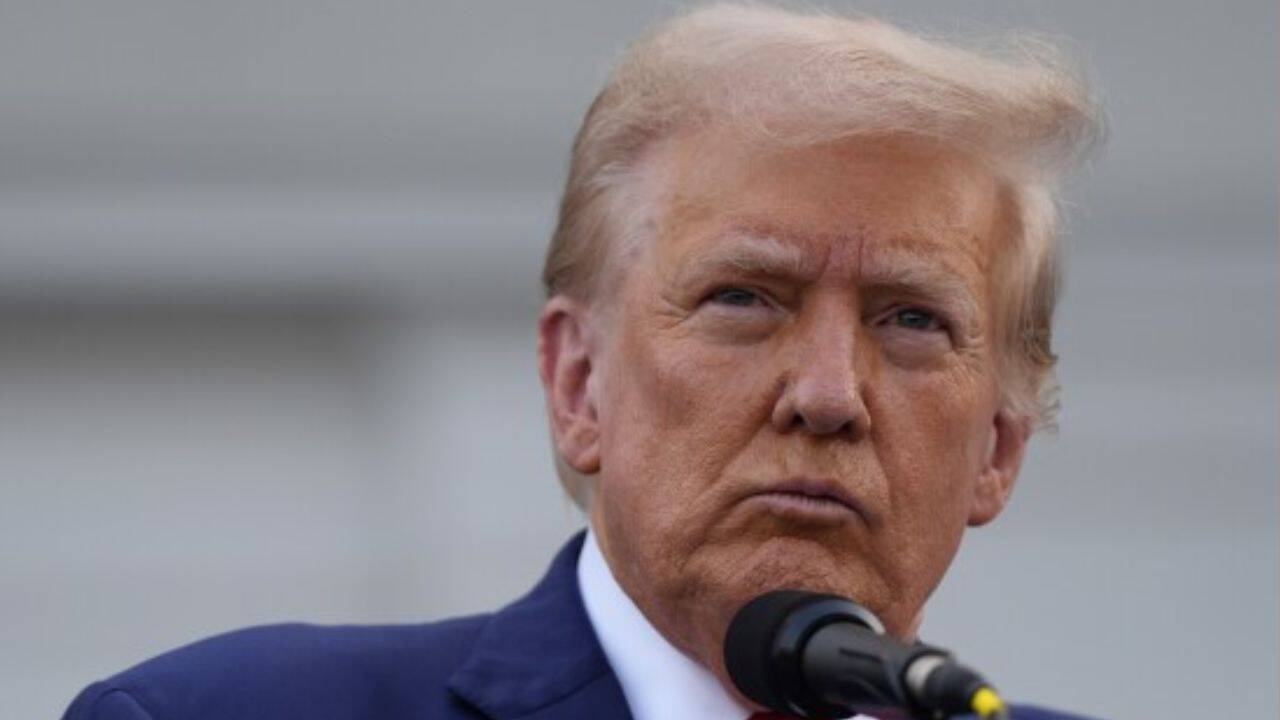
Mississippi is supposed to be safe territory for Republicans. It's a state where Donald Trump won comfortably, and where Democrats haven't held a U.S. Senate seat since 1989. Yet there he was, flying down to the Magnolia State to stump for Senator Cindy Hyde-Smith, repeating a simple, telling phrase to the crowd.
"Can't take a chance." Read more on a connected subject: this related article.
Those four words tell you everything you need to know about the real anxiety gripping the Republican Party during a midterm cycle. When a sitting or former president has to spend precious campaign capital defending a seat in a state he carried by double digits, something bigger is happening beneath the surface. If you think this was just a routine victory lap or a favor to a loyal ally, you're missing the actual political math driving the GOP's strategy.
The Real Reason Cindy Hyde-Smith Needed Backup
Let's look at the numbers first, because political panic rarely happens in a vacuum. Cindy Hyde-Smith didn't enter the Senate through a traditional primary. Governor Phil Bryant appointed her in 2018 after Thad Cochran stepped down due to failing health. Because she was an appointee, she had to face voters in a November special election that immediately spilled into a runoff against Democrat Mike Espy, a former U.S. Agriculture Secretary. More journalism by The New York Times explores similar views on this issue.
Hyde-Smith won that 2018 runoff with roughly 53.6 percent of the vote to Espy's 46.4 percent. On paper, a seven-point margin looks fine. In Mississippi, it's a flashing red warning light.
Compare that margin to how Republicans normally perform in the state. Just two years earlier, in 2016, Trump beat Hillary Clinton in Mississippi by nearly 18 percentage points. In 2020, he won the state by over 16 points. Seeing a Republican Senate candidate drop ten points behind the top of the ticket made national GOP strategists sweat.
Why did the gap shrink so fast? A few things collided at once.
- Unforced campaign errors: During the 2018 race, Hyde-Smith caught national backlash after a video surfaced of her joking about attending a "public hanging" if a supporter invited her. She later apologized, saying the comment was twisted, but the damage to her national image was done.
- Democratic enthusiasm: Mike Espy wasn't a sacrificial lamb. He was a well-funded, moderate Black Democrat with deep roots in the state who knew how to turn out voters in the Mississippi Delta and Jackson.
- The midterm curse: Historically, the party holding the White House loses seats in the midterms. Every single Senate seat matters when the majority hangs by one or two votes.
I've watched plenty of safe-state incumbents sleepwalk through races until it's too late. You can't rely on party registration alone when the national environment turns sour. Trump's team looked at the polling, saw a seat that shouldn't even be on the competitive map, and decided they couldn't risk an upset.
How the "Can't Take a Chance" Strategy Works
When Trump steps onto a rally stage in a place like Tupelo or Southaven, he isn't trying to win over undecided suburban moderates. That's not how Mississippi elections work. He's there to solve one specific problem—turnout drop-off.
In presidential election years, low-propensity voters show up because Trump's name is at the top of the ballot. In midterm elections, millions of those exact voters stay home. They don't care much about down-ballot senators or local house races. When they stay on the couch, the electorate shrinks, and suddenly a deep-red state starts looking dangerously purple.
Trump's message in Mississippi was blunt. He framed Hyde-Smith as a reliable vote for his agenda—judges, border security, tax cuts—and warned his supporters that staying home was the same as handing the Senate gavel to Chuck Schumer.
It's a transactional pitch. Trump doesn't spend much time talking about Hyde-Smith's committee assignments on Appropriations or Agriculture. Instead, he makes the race about himself and the broader national fight. By tying her survival directly to his own political strength, he forces his base to treat a midterm Senate race with the same urgency as a presidential showdown.
Why National Republicans Were Nervous
Behind closed doors in Washington, Senate Republican leadership had good reason to worry about the map. Defending the Senate majority requires holding every single red-state seat while trying to pick off vulnerable Democrats in swing states.
If a Republican loses in Mississippi, the math collapses instantly. You can't make up for a surprise loss in the Deep South by winning in Pennsylvania or Nevada.
There's also the money problem. Every dollar the National Republican Senatorial Committee (NRSC) has to spend defending Cindy Hyde-Smith in Mississippi is a dollar they can't spend attacking Democrats in actual battleground states. Campaigns are zero-sum games. TV ads in Jackson and Biloxi aren't cheap, and forcing the GOP to play defense on their own turf is a massive strategic win for Democrats, even if the Democrat ultimately loses on Election Day.
What Most Political Pundits Get Wrong About Southern Races
If you listen to cable news commentators, they often treat the American South as a monolithic block where Republicans win automatically. That's lazy analysis.
Mississippi has the highest percentage of Black residents of any state in the country, sitting right around 38 percent according to U.S. Census Bureau data. Demographics alone don't determine elections, but they create a very narrow margin for error if voting breaks strictly along racial lines.
For a Republican to win statewide in Mississippi, two things have to happen:
- White voters have to turn out at high rates and vote overwhelmingly Republican.
- Black voter turnout has to remain closer to historical midterm averages rather than surging to presidential-year levels.
When Mike Espy ran against Hyde-Smith, he proved that a disciplined Democratic campaign could drive up Black turnout while peeling off just enough moderate white voters in places like DeSoto County or the Gulf Coast to make Republicans panic. Even in subsequent cycles, Democrats have looked at Mississippi as a long-term investment, hoping that shifting demographics and grassroots organizing could eventually crack the state's GOP wall.
That's why Trump's intervention mattered so much. He wasn't just boosting Hyde-Smith's name recognition. He was trying to artificially recreate a presidential-year turnout surge among rural white voters in counties like Lee, Rankin, and Jones.
The Limits of a Trump Endorsement
Does a Trump rally actually guarantee a massive landslide? Not always, and this is where you have to separate hype from reality.
Trump is unmatched at energizing his core base. When he holds a rally, local media covers it nonstop for three days, and small-dollar donations spike. For a candidate like Hyde-Smith, who isn't known as a fiery populist orator, borrowing Trump's spotlight is huge.
The catch is that Trump also energizes the opposition. Every time he attacks Democrats or nationalizes a local race, he reminds Democratic voters why they're angry. In states with tighter margins, that double-edged sword can backfire. In Mississippi, where the Republican ceiling is simply higher than the Democratic ceiling, energizing both sides still favors the GOP—provided white rural turnout hits its targets.
Still, relying on one person to drag candidates across the finish line exposes a deeper vulnerability for the Republican Party. If voters only show up when Trump tells them to, what happens when he isn't on the ballot? We've seen multiple midterm cycles where GOP candidates underperformed expectations because they couldn't replicate Trump's unique appeal on their own.
How to Read Midterm Warning Signs Yourself
You don't need an inside track at the NRSC to spot when a political party is genuinely worried about an election. Politicians lie with their words all the time, but they almost never lie with their travel schedules and ad buys.
Next time you're watching a midterm or general election cycle unfold, ignore the confident press releases and look at three concrete indicators instead:
- Follow the heavy hitters: Watch where the party's biggest stars travel in the final two weeks before Election Day. If a president or former president is spending time in a state they already won by 15 points, their internal polling is showing a serious turnout problem.
- Track late ad spending: Look at open-source tracking from firms like AdImpact. When a national party dumps millions of dollars into a "safe" state during the final month of a campaign, they're trying to plug a leak before the boat sinks.
- Watch the candidate's rhetoric: When an incumbent suddenly shifts from talking about local accomplishments to screaming about national culture wars, it means they're trying to scare their base into showing up at the polls.
Trump's trip to Mississippi wasn't a victory lap. It was an emergency firewall built to protect a Senate seat that Republicans couldn't afford to lose, proving that in modern American politics, no seat is ever truly safe if your voters decide to stay home.