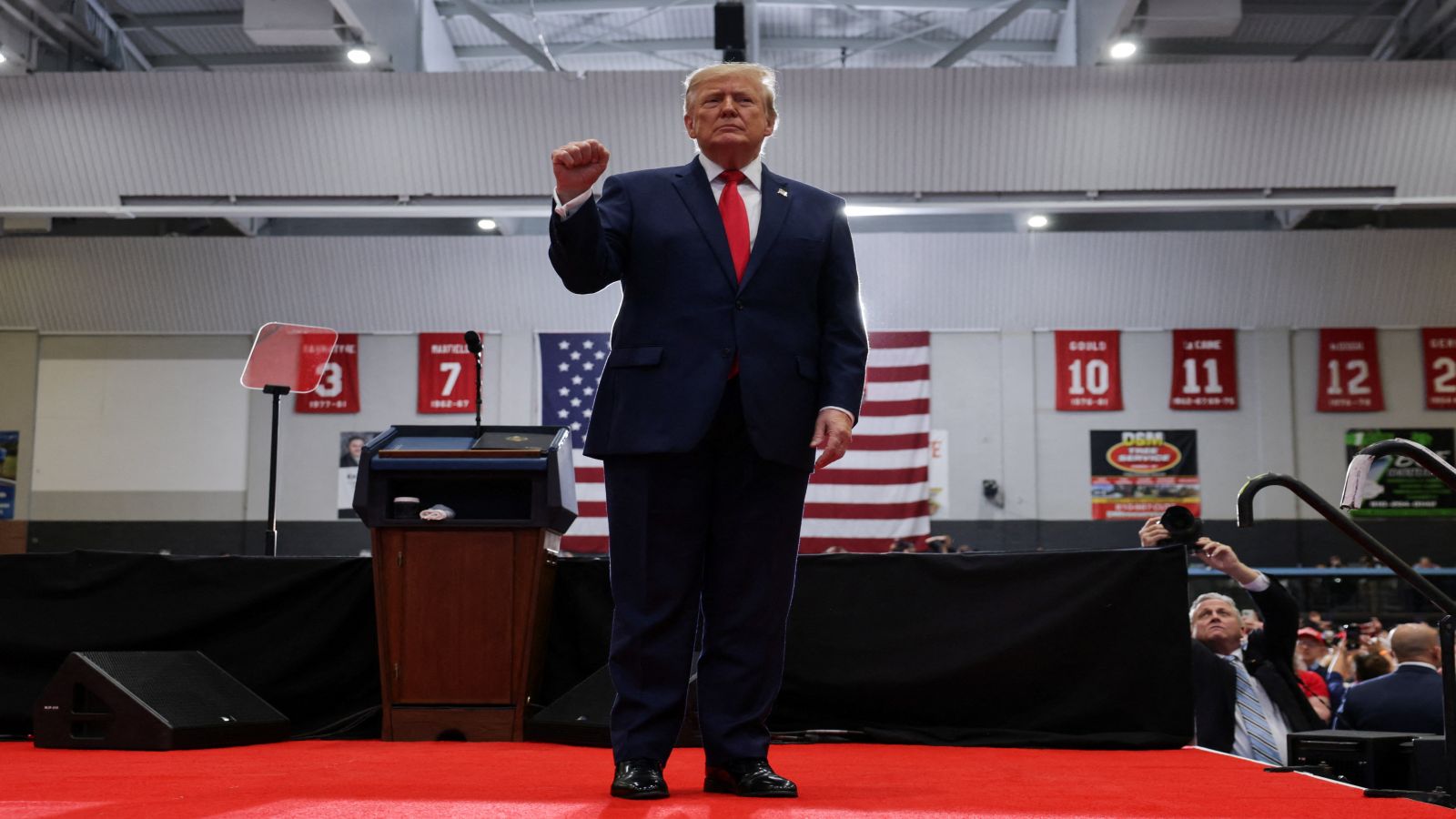
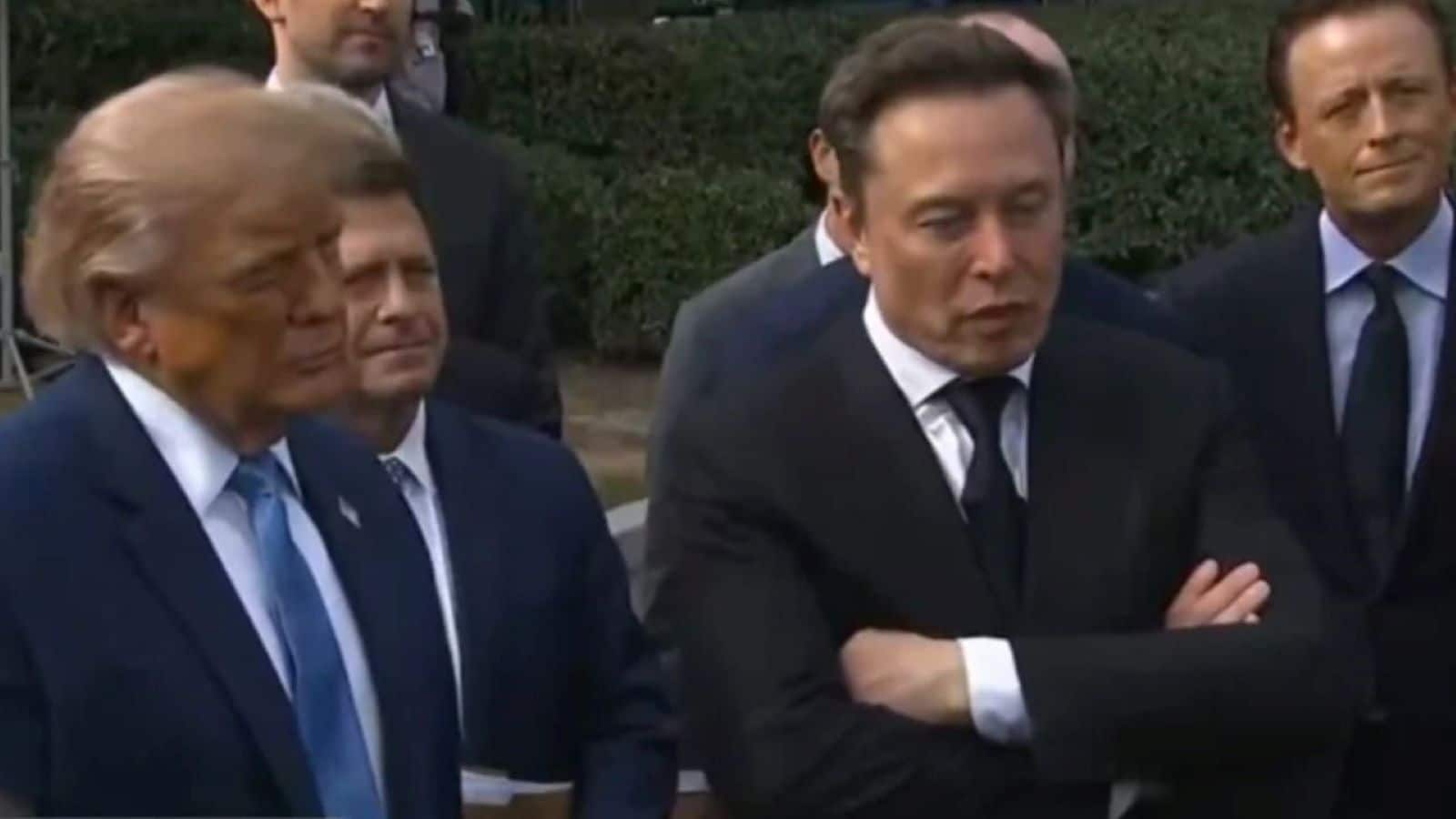
Mainstream foreign policy pundits love a good photo op. They treat international diplomacy like a reality television season finale, breathless over the prospect of Donald Trump, Xi Jinping, and Vladimir Putin sharing a stage at the Asia-Pacific Economic Cooperation (APEC) summit in China. The lazy consensus assumes that putting the three most consequential strongmen of the twenty-first century in the same room will magically yield a grand bargain on trade, Ukraine, and Taiwan.
That assumption is completely detached from geopolitical reality.
If you are waiting for a historic handshake in China to reset global stability, you are asking the wrong question entirely. The real story isn't whether these three men will meet. The real story is why a trilateral encounter at APEC is structurally rigged to produce zero substantive breakthroughs—and why treating it as a peacemaking summit actively blinds markets and policymakers to the actual friction points driving global risk.
The Structural Flaw of the APEC Venue
To understand why this hyped summit is a mirage, you have to understand what APEC actually is. Unlike the G7 or the United Nations Security Council, APEC is a consensus-based economic forum built around voluntary, non-binding commitments. Its members are officially referred to as "economies," not states, specifically to allow Taiwan (participating as Chinese Taipei) and Hong Kong to sit at the table alongside Beijing.
I have watched institutional investors and corporate boards burn millions of dollars positioning their supply chains around multilateral summit communiqués that weren't worth the paper they were printed on. When you strip away the diplomatic pageantry, APEC is a venue designed for bureaucratic trade facilitation, customs harmonization, and digital economy standards. It is not an architecture built for hard-power security negotiations.
Expecting Trump, Xi, and Putin to hammer out a binding sphere-of-influence agreement on the sidelines of an APEC meeting is like expecting a hostile corporate merger to be finalized during a charity golf tournament. The institutional scaffolding simply does not exist to enforce whatever verbal assurances get traded behind closed doors.
The Myth of the Great Power Triumvirate
The prevailing media narrative frames a potential Trump-Xi-Putin convergence as the return of nineteenth-century Concert of Europe diplomacy—three titans carving up the world while smaller nations watch from the sidelines. This framing flatters the egos of the principals, which is precisely why Trump enjoys floating the idea, and why state media in Moscow and Beijing happily amplify the speculation.
Yet this triumvirate model ignores a massive, glaring asymmetry.
Russia Is No Longer a Peer Competitor
Putin enters any room with Xi and Trump as the junior partner, and everyone at the table knows it. Following years of grueling war in Ukraine and sweeping Western sanctions, the Russian economy has become structurally dependent on Chinese industrial inputs, energy purchases, and financial clearing mechanisms.
- Trade Asymmetry: China accounts for roughly a third of Russia's total foreign trade, whereas Russia represents a single-digit fraction of China's global commerce.
- Technological Dependency: From machine tools to microelectronics, Moscow relies on Beijing to keep its defense industrial base humming.
- Diplomatic Isolation: Putin needs the optics of standing beside the American and Chinese presidents far more than either of them needs him.
When pundits talk about a three-way negotiation, they miss the core dynamic. Putin cannot make a strategic concession to Washington that jeopardizes his lifeline to Beijing. Conversely, Xi has zero incentive to let Trump peel Moscow away from its "no limits" partnership, no matter how loudly Washington floats a "reverse Kissinger" strategy.
Why Xi Jinping Actually Wants the Summit
If the summit won't solve the war in Ukraine or end the U.S.-China trade war, why is Beijing eager to host it? Because for Xi Jinping, the meeting itself is the victory.
In Chinese diplomatic tradition, hosting foreign leaders in Beijing—or at a flagship Chinese-led summit—projects hierarchy and centrality. Having the President of the United States and the President of Russia travel to China allows Xi to visually position himself as the indispensable hub of global order. It tells the Global South that Washington no longer dictates the diplomatic calendar, and it tells domestic audiences in China that the Communist Party has successfully weathered American containment.
Think about the optics. Trump wants a headline showing he is the only leader capable of talking to America's fiercest adversaries. Putin wants a headline showing Western isolation has failed. Xi gets both men on his home turf, playing by his protocol, without having to surrender a single millimeter on South China Sea territorial claims, semiconductor self-reliance, or industrial subsidies.
Dismantling the "Personal Chemistry" Fallacy
Whenever Trump discusses Xi or Putin, the conversation inevitably drifts toward personal rapport. Supporters argue that his transactional style and willingness to bypass traditional State Department channels can break decades-old deadlocks. Critics argue his affinity for autocrats makes him vulnerable to flattery.
Both sides overestimate the power of individual psychology in structural geopolitics.
As political scientist Graham Allison has extensively documented in his work on great power rivalry, structural pressures—security dilemmas, economic competition, and ideological incompatibility—routinely overwhelm the personal intentions of individual leaders. You cannot charm your way past a zero-sum contest over who controls the foundational technologies of the next fifty years.
Trump and Xi already tested the personal chemistry thesis during Trump's first term. They shared chocolate cake at Mar-a-Lago and walked through the Forbidden City in Beijing. Months later, the United States launched the most aggressive tariff regime against China since the Smoot-Hawley Act of 1930, and bilateral relations plunged to their lowest point since normalization in 1979. Personal warmth did not stop structural collision then, and it will not stop it at APEC.
What Everyone Is Missing About the Taiwan Variable
There is one massive, under-discussed complication baked into any China-hosted APEC summit: Taiwan.
Because Taiwan is a full member economy of APEC, Taipei is entitled to send a high-level representative to the annual Leaders' Meeting. Traditionally, Beijing pressures Taipei to send a lower-profile business figure rather than its sitting president, and the host nation controls the logistics of accreditation and security.
Imagine a scenario where cross-strait tensions flare in the weeks leading up to the summit, and Beijing attempts to downgrade Taiwan's participation or restrict its delegation's movements. Suddenly, the U.S. delegation faces a brutal diplomatic trap. Attending the summit while Beijing humiliates a democratic partner sends a catastrophic signal of abandonment across the Indo-Pacific—from Tokyo to Manila. Boycotting the summit blows up Trump's promised grand meeting with Xi and Putin.
Mainstream coverage completely ignores this tripwire because it requires understanding the granular rules of APEC protocol rather than just repeating cable-news talking points about strongman summits.
The Real Questions You Should Be Asking
If you run a multinational business, manage capital, or simply want to understand where the world is actually heading, stop tracking rumors about summit seating charts. Start looking at the concrete indicators that dictate real-world outcomes.
1. Will a Trump-Xi-Putin meeting prevent new tariffs?
No. Tariffs are no longer just a negotiating tactic for Washington; they have become a bipartisan instrument of industrial policy and revenue generation. Even if Trump and Xi announce a temporary truce or a superficial agricultural purchase agreement at APEC, the underlying decoupling of strategic supply chains—semiconductors, critical minerals, pharmaceuticals, and electric vehicles—is permanent.
2. Can Trump broker a Ukraine ceasefire with Putin in China?
Not on terms Europe or Kyiv will accept without massive coercive leverage. Putin believes time and attrition are on his side. Unless Washington is willing to drastically escalate military aid to Ukraine to change Moscow's battlefield calculus before the summit, Putin has zero reason to offer real concessions in front of Xi.
3. Does APEC still matter for global trade?
Only at the margins. The real trade architecture in the Indo-Pacific is being written through binding agreements like the Comprehensive and Progressive Agreement for Trans-Pacific Partnership (CPTPP)—which the U.S. abandoned—and targeted bilateral mineral and technology pacts. APEC is a talking shop, not an enforcement mechanism.
The Downside of Cynicism
To be completely transparent, dismissing summit diplomacy carries its own blind spot. High-level leader-to-leader contact does serve one vital, non-negotiable function: crisis management.
When militaries are operating within meters of each other in the Taiwan Strait, the South China Sea, and the Black Sea, direct communication channels between Washington, Beijing, and Moscow reduce the odds of an accidental clash spiraling into nuclear escalation. If a meeting at APEC re-establishes reliable military-to-military hotlines or prevents a miscalculation, that is an undeniable net positive for global safety. The danger isn't the leaders talking; the danger is confusing crisis de-escalation with strategic reconciliation.
How to Position Yourself Before the Circus Starts
Stop treating diplomatic theater as actionable intelligence. If you are making business, investment, or policy decisions based on the hope of a grand geopolitical reset, you are setting yourself up to get burned when the post-summit reality sets in.
- Price in permanent friction. Treat U.S.-China tariff walls and export controls as permanent structural features of the global economy, not temporary bargaining chips that will vanish after a handshake.
- Watch actions, ignore communiqués. Ignore whatever joint statements emerge from the summit. Track customs enforcement data, Entity List additions, and defense procurement budgets instead.
- Audit single-point-of-failure supply chains. If your operations still rely on unhedged manufacturing or raw material processing inside China, use every headline about "diplomatic thaws" as a window to accelerate your diversification into Southeast Asia, India, or Latin America.
Grand summits are designed to give politicians a stage and journalists a narrative. They are not designed to solve structural conflicts between rival empires. Watch the show if you want the entertainment, but keep your money on the collision.