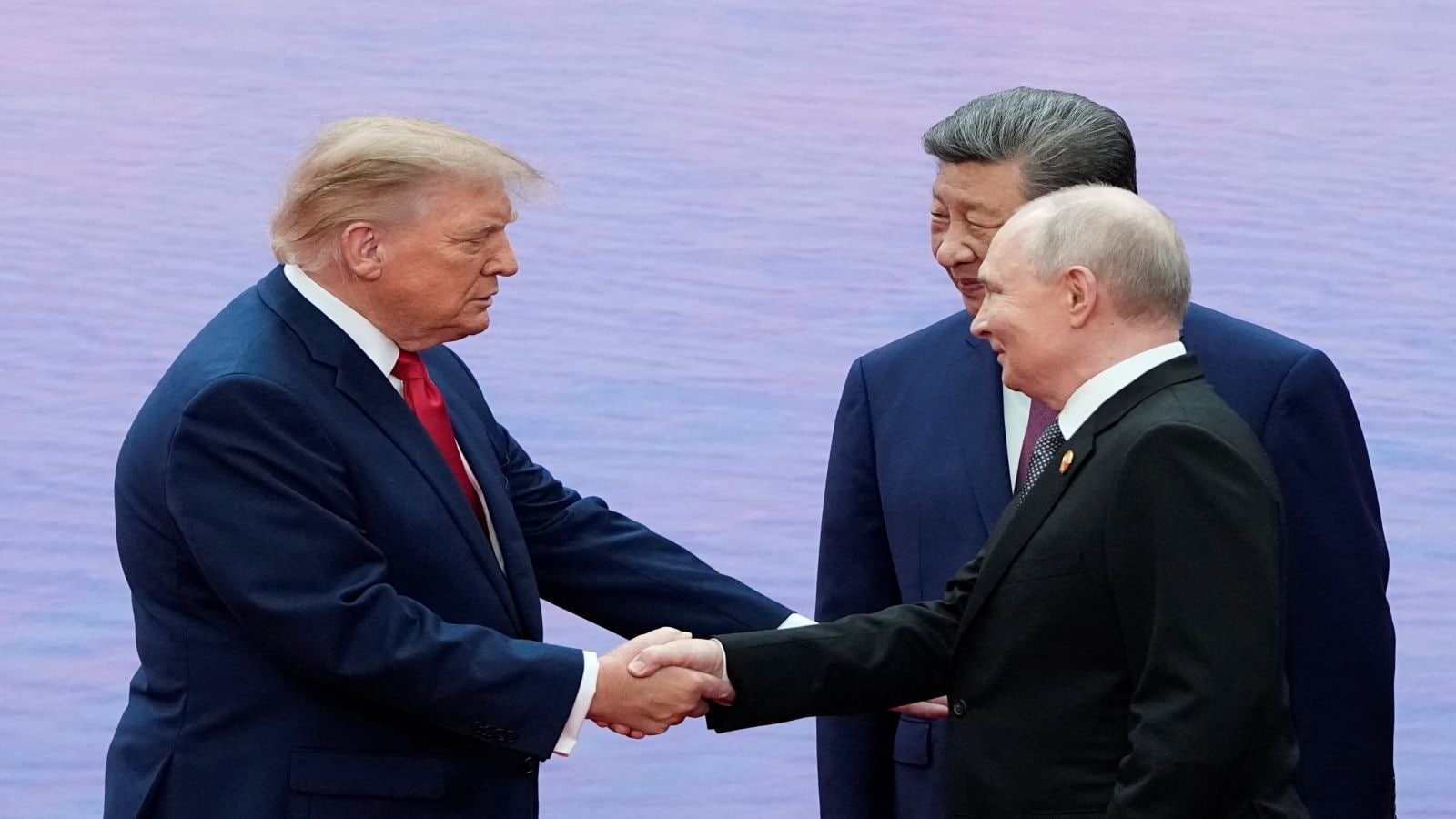
History happened in Shenzhen on November 19, 2026. Or at least that's what the cameras wanted you to believe.
For the first time ever, U.S. President Donald Trump, Chinese President Xi Jinping, and Russian President Vladimir Putin sat down together for a formal trilateral summit. Held at Kylin Villa on the sidelines of the Asia-Pacific Economic Cooperation (APEC) gathering, the meeting produced a joint statement officially titled the "U.S.-Russia-China Heads of State Declaration toward Peace". You might also find this related article interesting: What Really Happened When a Spanish Court Granted Bail to James ‘Fergie’ Chambers.
Trump rated the encounter a "12" on a scale of zero to 10. He called both Putin and Xi friends. Yet if you look past the airport hugs and the diplomatic pageantry, the actual text of the Trump, Xi, and Putin peace declaration tells a completely different story.
It wasn't a peace treaty. It was a handshake over shared grievances, a convenient escape hatch for Moscow, and a massive diplomatic stage for Beijing. As highlighted in latest reports by BBC News, the implications are notable.
What Is Actually Inside the Shenzhen Peace Declaration
Most headlines focused on the optics of three nuclear superpowers sitting at one table. Fewer people read the four core pillars buried inside the White House, Kremlin, and Xinhua releases. When you strip away the diplomatic fluff, the three leaders agreed on four specific points:
- Nuclear Risk Dialogue: They reaffirmed the classic Reagan-Gorbachev era line that "a nuclear war cannot be won and must never be fought," committing to future talks on reducing nuclear risks and preventing proliferation.
- Attacking International Courts: All three heads of state declared that state consent and official immunity are absolute, explicitly warning that the International Criminal Court (ICC) and similar bodies must not abuse their jurisdiction.
- United Nations Reform: As permanent members of the UN Security Council, Washington, Beijing, and Moscow pledged to reform the institution so it aligns with their view of international peace and security.
- Energy Flow Stability: The leaders agreed on the need to maintain stable energy supplies and expand refined petroleum products globally.
Notice what's missing? Everything that is currently setting the world on fire.
There is zero mention of Kyiv or a ceasefire mechanism for the Russia-Ukraine war, now grinding through its fifth year. There is no framework for resolving the escalating Iran conflict. There are no binding limits on warheads, no trade tariff rollbacks, and no settlement over Taiwan.
Why the Nuclear Talks Carry Zero Binding Weight
If you're wondering why nuclear arms control dominated the pre-summit chatter, look at the calendar. The New START treaty—the last remaining bilateral pact capping U.S. and Russian deployed strategic warheads at 1,550 each—expired back in February 2026.
For the first time since the Cold War, Washington and Moscow have operated for nine months without legally binding nuclear inspections or caps. Putin had previously floated extending those limits voluntarily for a year, an offer Trump rejected because it left China's rapidly expanding arsenal completely unchecked.
So bringing Xi into the room made strategic sense on paper. In practice, however, Beijing has zero interest in capping its stockpile while it still trails Washington and Moscow by thousands of warheads. During the Shenzhen talks, Xi offered sweeping rhetoric about eventually prohibiting and destroying all nuclear weapons, while Trump admitted to reporters afterward that giving up nuclear weapons is "psychologically very difficult" for leaders.
A promise to hold "dialogue" isn't an arms control treaty. Without verification regimes, telemetry data exchanges, or hard numerical ceilings, the nuclear clause in the peace declaration functions purely as a PR shield. Each leader gets to go home claiming they lowered the temperature on Armageddon without dismantling a single missile.
The Real Winner Behind the ICC Clause
Look closely at the second bullet point of the declaration. Why would the leaders of the world's three largest military powers dedicate a quarter of their historic peace statement to bashing the International Criminal Court?
Because Vladimir Putin has an active ICC arrest warrant hanging over his head.
Issued in March 2023 over the unlawful deportation of Ukrainian children, that warrant has turned Putin into a diplomatic pariah across Europe and much of the world. He couldn't even travel to South Africa for a BRICS summit without risking arrest. Neither the United States nor China is a signatory to the Rome Statute, meaning neither country recognizes the court's authority anyway.
By calling the ICC "out of control" and writing official state immunity directly into a joint declaration with the U.S. president, Putin walked out of Shenzhen with something money can't buy. He got Western legitimization.
Dr. Samuel Ramani, an associate fellow at the Royal United Services Institute, put it bluntly when analyzing the fallout. He noted that China emerged as the biggest winner by showcasing its centrality in global diplomacy, Russia finished as a clear secondary winner by breaking out of Western isolation, and the United States came in a distant third.
What Happened to Ukraine Trade and Taiwan
You can't separate this summit from the messy bilateral baggage each leader carried into Kylin Villa.
For Trump, the domestic and geopolitical pressure was mounting on multiple fronts. U.S. military entanglement in the Iran conflict has grown increasingly costly with no clean exit strategy, while Senate Minority Leader Chuck Schumer immediately slammed the Shenzhen photo-op as a "betrayal" that handed adversaries free propaganda. Even Trump's own follow-up actions betrayed the limits of the Shenzhen goodwill. Just days after calling Putin a friend in China, Trump met with NATO Secretary General Mark Rutte at Mar-a-Lago, issuing a fresh demand for Russia to pull back military aggression in Europe and pledging to keep expanding NATO's defense industrial base.
Meanwhile, Ukrainian President Volodymyr Zelenskyy summed up Kyiv's view without saying a word. When reporters asked him about Trump greeting Putin as "my friend," Zelenskyy simply shrugged and walked away.
Behind closed doors, the friction between Washington and Beijing didn't vanish either. Yes, Xi broke personal precedent by greeting Trump at the Shenzhen airport—reciprocating Trump's hospitality during Xi's September state visit to Washington. Yet tensions remain raw over reports that restricted Nvidia AI chips are being diverted into China through Southeast Asia, undermining U.S. export controls. On Taiwan, Xi used the bilateral margins to warn Trump that Washington must "do the right thing" to avoid major setbacks, especially as regional friction with Japan flares over Tokyo's defense posture.
Russia's economy is roughly one-tenth the size of China's and remains heavily battered by Western sanctions. Standing as an equal alongside Washington and Beijing lets Putin project strength to his domestic audience while signaling to the Global South that Western isolation has failed.
How to Read Great Power Summits Without Getting Fooled
When three leaders with fundamentally opposing interests sign a vague document in front of television cameras, watching the ink dry is a waste of time. Watch the concrete pressure points over the next sixty days instead.
- Track the Florida G20 Guest List: Trump is scheduled to host the Group of 20 summit at his Florida golf resort in the coming weeks. Putin indicated he is considering attending after discussing it with Trump. If Putin actually steps onto U.S. soil without a prior ceasefire in Ukraine, it will confirm that European allies have lost their veto over Washington's Moscow policy.
- Watch Semiconductor Enforcement: Look past the trade truce extensions and watch whether the U.S. Commerce Department sanctions Southeast Asian intermediaries routing Nvidia hardware to Chinese firms. Tech containment is the real battlefield between Washington and Beijing, regardless of airport hugs.
- Separate Rhetoric from Warhead Counts: Unless Beijing agrees to join formal working-level nuclear verification talks before the New START expiration hits its one-year mark in February 2027, treat the Shenzhen nuclear clause as pure theater.
Diplomacy at this level rarely changes reality overnight. Usually, it just reveals who needed the photo more.
To see the exact footage and diplomatic framing from the Shenzhen meeting, watch Rappler's coverage of the historic trilateral summit, which highlights how the three leaders presented their symbolic agreement on the world stage.