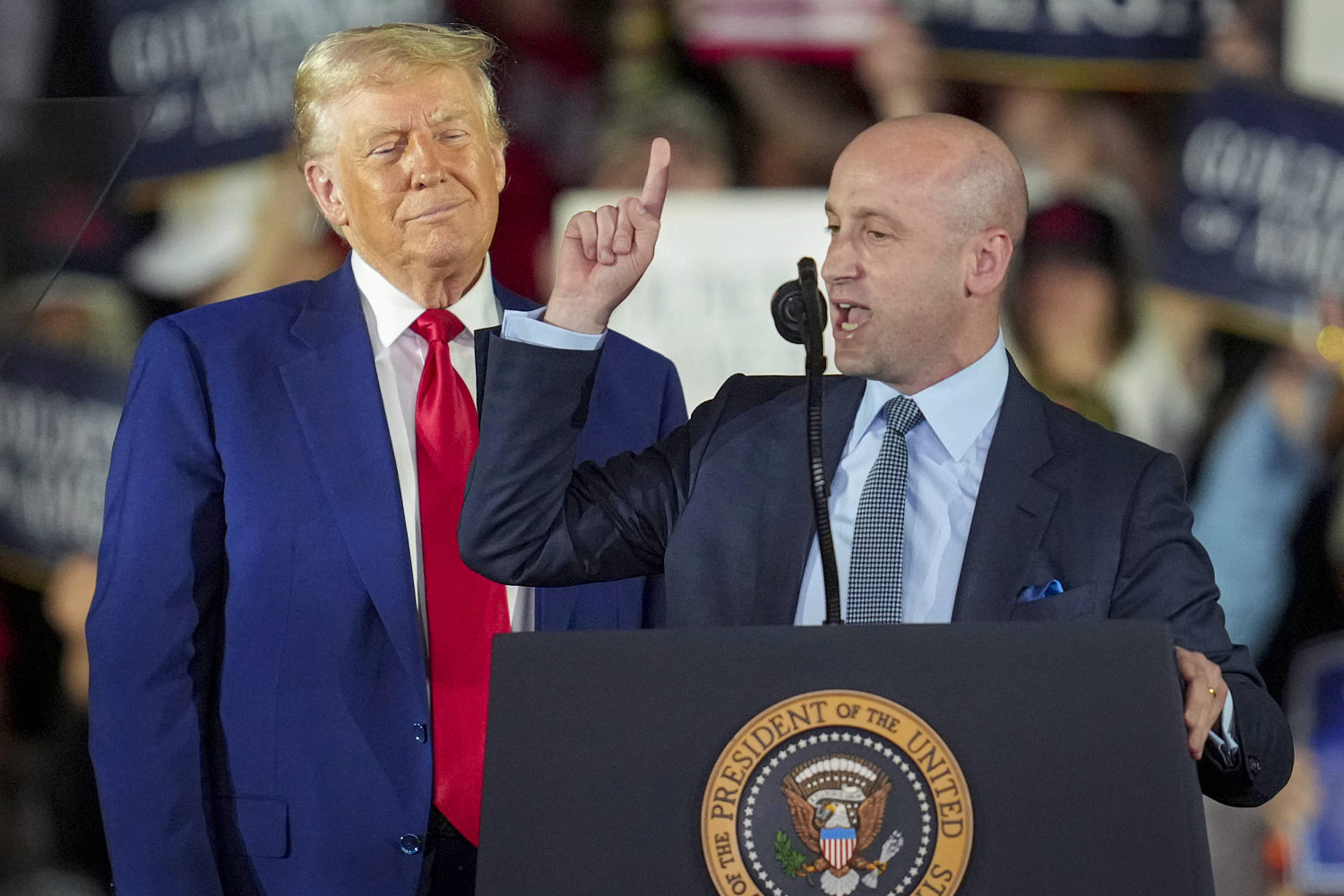
When Donald Trump takes the podium at a major aerospace gathering on Florida's Space Coast, the optics carry far more weight than standard campaign-trail rhetoric or political pageantry. His appearance at NASA's aerospace expo in Florida puts the spotlight directly on the multibillion-dollar tug-of-war over who controls the next era of human space exploration, how federal tax dollars are distributed among rival private contractors, and whether the United States will prioritize a sustained lunar presence or pivot aggressively toward Mars.
In an industry where rocket development cycles span decades while presidential administrations turn over every four to eight years, every syllable uttered near the Vehicle Assembly Building sends immediate shockwaves through corporate boardrooms in Hawthorne, Kent, and Huntsville.
The Politics of the Space Coast
Florida is not merely a backdrop for space policy. It is the economic and political fulcrum of the entire American launch industry. Brevard County, known globally as the Space Coast, sits at the intersection of deep-rooted aerospace tradition and hyper-competitive commercial innovation. For decades, local livelihoods depended almost entirely on government-managed programs like Apollo and the Space Shuttle. When those programs ended, the region suffered severe economic contraction before rebounding on the backs of commercial launch providers.
According to space policy analysts and regional economic development boards, any high-profile political speech in this corridor serves a dual purpose. First, it signals federal commitment to maintaining Florida as the primary gateway to orbit, fending off competing spaceport ambitions in Texas, California, and Virginia. Second, it speaks directly to a massive, technically skilled electorate whose jobs depend on predictable congressional appropriations.
Trump’s relationship with Florida’s aerospace sector is defined by the signature space policy achievements of his first term in office. During that administration, the White House re-established the National Space Council, signed Space Policy Directive 1 to return American astronauts to the Moon, and created the United States Space Force—the first new branch of the armed services in more than seventy years. Supporters within the aerospace community frequently point to these milestones as proof of decisive executive backing that cut through decades of bureaucratic stagnation.
Critics, however, offer a markedly different assessment of that era's legacy. Policy researchers and former NASA officials argue that the accelerated timelines introduced during the previous administration—most notably the push to land humans on the lunar surface by 2024—were detached from engineering realities and congressional budget constraints. Those compressed schedules forced NASA into rapid procurement decisions that critics say skewed the competitive balance among contractors and created technical bottlenecks that the agency is still untangling today.
The Billion-Dollar Battle Over Artemis Architecture
To understand the stakes behind a speech at a NASA expo, you have to look at the structural fault lines running through the Artemis program. Conceived as the twin sister to Apollo, Artemis is designed to establish a long-term human presence on and around the Moon as a proving ground for eventual missions to Mars. Yet beneath the unified branding lies a deeply divided technological architecture.
On one side sits the traditional aerospace establishment, anchored by the Space Launch System (SLS) and the Orion crew capsule. Built largely by legacy defense contractors like Boeing, Northrop Grumman, and Lockheed Martin, this architecture relies on cost-plus contracting models and distributed manufacturing across dozens of congressional districts. This geographic spread is not accidental; it ensures broad bipartisan protection in the House and Senate whenever budget cuts are proposed.
On the other side is the commercial space vanguard, led by SpaceX and Blue Origin. These companies operate primarily on fixed-price contracts, designing reusable launch vehicles and landers with private capital alongside federal awards. SpaceX’s Starship—selected by NASA as the Human Landing System for the initial Artemis crewed landings—represents a fundamentally different approach to spaceflight. Rather than discarding expensive hardware into the ocean after a single flight, the commercial model depends on rapid iteration, high flight rates, and full reusability to drive down the cost per kilogram to orbit.
| Program Element | Primary Contractors | Contracting Model | Core Strategic Critique |
|---|---|---|---|
| Space Launch System (SLS) | Boeing, Northrop Grumman, Aerojet Rocketdyne | Cost-Plus | High per-launch cost exceeding $2 billion; non-reusable hardware |
| Orion Spacecraft | Lockheed Martin, Airbus | Cost-Plus | Long development timeline; heat shield erosion issues discovered in testing |
| Starship HLS | SpaceX | Fixed-Price | Complex orbital refueling requirements; uncrewed flight test delays |
| Blue Moon Lander | Blue Origin, Lockheed Martin, Draper | Fixed-Price | Late entry into lunar lander architecture; reliant on New Glenn rocket |
A speech at a Florida aerospace expo places the speaker directly in front of executives and engineers from both camps. Industry observers note that the central tension facing any White House is whether to continue funding the astronomically expensive SLS rocket or to transition crewed launch responsibilities entirely to commercial heavy-lift vehicles. Proponents of SLS argue that it is the only human-rated super-heavy lift vehicle currently proven to send astronauts directly to lunar orbit. Detractors counter that spending over two billion dollars per launch is fiscally unsustainable when commercial alternatives promise exponentially greater payload capacity at a fraction of the cost.
Moon First or Straight to Mars
Beneath the contracting debates lies a fundamental philosophical split over destination. For years, NASA’s official roadmap has centered on using the Moon as a stepping stone—learning how to live off the land, harvest lunar water ice for propellant, and operate deep-space habitats before attempting the multi-year journey to Mars.
Trump’s own public statements over the years have oscillated between embracing this lunar stepping-stone strategy and questioning why the United States is returning to a celestial body it already visited half a century ago. In 2019, he famously posted on social media that NASA should not be talking about going to the Moon, stating that the agency should be focused on much bigger things, including Mars, of which the Moon is a part.
That ambiguity keeps aerospace planners awake at night. Pivoting away from the Moon toward a direct-to-Mars architecture is not a simple matter of changing flight coordinates. It requires completely different life-support systems, radiation shielding, propulsion technologies, and entry-descent-landing profiles. Mars has a thin atmosphere that makes landing heavy payloads notoriously difficult, unlike the airless Moon where retro-propulsion alone suffices.
Space industry analysts warn that shifting strategic destinations every few years is the single greatest threat to American leadership in space. The cancellation of the Constellation program in 2010, followed by the pivot to an asteroid redirect mission, and then the shift back to the Moon under Artemis, cost taxpayers tens of billions of dollars in sunk development costs without producing a single crewed landing. When political leaders speak at NASA events, industry veterans listen closely not for grand visions, but for signs of programmatic continuity.
The Shadow of the New Space Race
The geopolitical context surrounding Florida’s launchpads has shifted dramatically since the Shuttle era. The United States is no longer operating in a unipolar space environment where international partners simply follow NASA's lead. China’s space program has executed a methodical, remarkably consistent series of robotic lunar landings, sample-return missions, and space station operations aboard Tiangong.
Beijing has publicly stated its intention to land Chinese taikonauts on the Moon by 2030, targeting the lunar south pole—the exact same region NASA plans to explore with Artemis. This is not merely a symbolic race for national prestige. The lunar south pole contains permanently shadowed craters believed to hold vast reserves of water ice. Water can be broken down into hydrogen and oxygen, the primary components of rocket fuel. Controlling access to these craters means controlling the refueling stations of the inner solar system.
Military space analysts and congressional committees frequently frame this competition in stark national security terms. According to defense assessments, the rules of behavior in cislunar space—the volume of space between Earth and the Moon's orbit—will be written by the nations that arrive first and establish operational infrastructure. This reality has blurred the traditional boundary between NASA's civilian exploration mandate and the Pentagon's space domain awareness priorities.
When political figures address aerospace crowds in Florida, references to beating foreign rivals to the Moon are guaranteed applause lines. Yet seasoned policy experts point out a structural paradox. While political rhetoric emphasizes urgency and beating China back to the lunar surface, the actual appropriations process in Washington frequently leaves NASA short of the funding required to keep complex hardware development on schedule.
Regulatory Friction and the Launch Cadence Bottleneck
For the commercial companies exhibiting on the floor of a Florida aerospace expo, the most immediate threat to their business models is not foreign competition or deep-space strategy. It is terrestrial red tape.
Over the past five years, the launch cadence on the Eastern Range—comprising Cape Canaveral Space Force Station and Kennedy Space Center—has shattered every historical record. Rockets now lift off from Florida's coast at a pace that would have seemed like science fiction a decade ago. SpaceX alone accounts for the vast majority of these launches, routinely flying boosters more than twenty times.
This unprecedented tempo has collided head-on with federal regulatory frameworks designed for an era when rockets launched once a month rather than every few days. Commercial operators have repeatedly clashed with the Federal Aviation Administration (FAA) over launch licensing timelines, environmental impact reviews, and airspace closure protocols.
Industry advocates argue that outdated regulatory bottlenecks threaten to squander America's commercial launch advantage. They contend that licensing delays give foreign competitors an opening to capture market share in satellite deployment. Conversely, environmental groups and regulatory defenders maintain that thorough oversight is essential to protect fragile coastal ecosystems, manage commercial aviation disruptions, and ensure public safety as rocket sizes and propellant loads increase dramatically.
During his previous administration, Trump issued Space Policy Directive 2, specifically aimed at streamlining commercial space regulations and consolidating oversight within the Department of Commerce. Aerospace executives closely monitor his public remarks for signals of aggressive deregulation, particularly regarding FAA launch licensing and environmental review exemptions for major spaceport infrastructure.
The Reality Behind the Podium
A political speech at a NASA expo inevitably generates headlines focused on bold promises, patriotic imagery, and immediate political takeaways. Industry veterans, however, separate the stagecraft from the ledger sheets.
The trajectory of American spaceflight is governed by three unyielding forces: physics, federal appropriations, and industrial supply chains. A president can set a bold destination, reorganize advisory councils, and push for regulatory reform. Yet a president cannot unilaterally appropriate billions of dollars without Congress, nor can executive rhetoric accelerate the metallurgical testing of a new rocket engine or resolve supply-chain shortages in specialized aerospace alloys.
For the engineers, machinists, and executives walking the expo floor in Florida, the true measure of any administration's space policy is not found in a keynote address. It is found in the budget request sent to Capitol Hill the following spring, the stability of multi-year procurement contracts, and the willingness of political leaders to resist the urge to tear up the blueprint every four years.