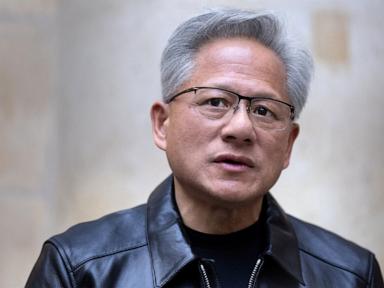
Rumors claiming Nvidia CEO Jensen Huang faces an imminent boardroom ouster are entirely unfounded, and CNBC host Jim Cramer remains firmly bullish on Nvidia stock, urging investors to own the shares rather than trade them around fabricated executive drama. Despite periodic waves of social media speculation and click-driven financial blogs suggesting board dissatisfaction, Nvidia’s governance structure, historic financial dominance, and Huang’s status as a co-founder make an involuntary departure virtually impossible. Cramer has repeatedly dismissed the noise, pointing instead to Nvidia’s unmatched software moat and data center demand as the primary drivers of long-term shareholder value.
Wall Street loves a palace intrigue story. When a company grows as fast as Nvidia has over the past several years, the financial press inevitably looks for cracks in the foundation. Whenever a minor supply chain hiccup occurs, or when export restrictions tighten, anonymous message boards and low-tier financial aggregators begin floating the same tired rumor—that institutional investors are quietly pushing to replace the founder with a traditional, operationally focused chief executive.
It is a narrative borrowed from the Silicon Valley playbook of the late 1990s and early 2000s, when venture capitalists routinely shoved aside technical founders in favor of "adult supervision." Applying that archaic template to Nvidia demonstrates a profound misunderstanding of modern corporate governance and the specific mechanics of the semiconductor industry.
Why the Jensen Huang Ouster Narrative Fails Basic Scrutiny
To understand why reports of a boardroom coup are pure fiction, you have to look at who actually controls Nvidia. Unlike many mega-cap technology firms where founders were diluted down to fractional ownership stakes decades ago, Jensen Huang remains one of Nvidia’s largest individual shareholders. His voting power, combined with his deep, decades-long relationships with the board of directors, insulates him from activist pressure.
Corporate boards do not fire CEOs who oversee unprecedented revenue expansion and gross margins exceeding seventy percent. In the history of publicly traded American companies, an ouster requires two catalysts: catastrophic financial underperformance or severe personal misconduct. Neither exists here.
The Anatomy of a Manufactured Stock Rumor
Where do these reports originate? Usually, they trace back to algorithmic content farms or misinterpretations of standard regulatory filings. When an executive files a routine 10b5-1 trading plan to sell a predetermined number of shares for tax and diversification purposes, sensationalist headlines frame it as "cashing out before the fall."
Similarly, when Wall Street analysts debate succession planning—a standard fiduciary requirement for any company worth trillions of dollars—clickbait outlets twist that routine governance discussion into an active plot to remove the sitting chief executive. Investors who trade on these headlines are essentially reacting to ghosts.
Key-Man Risk Versus Boardroom Mutiny
If institutional investors have any anxiety regarding Jensen Huang, it is the exact opposite of wanting him gone. The real institutional concern on Wall Street is key-man risk—the fear that Huang might eventually decide to retire on his own terms.
Huang’s leadership style is famously flat and hands-on. He has dozens of direct reports, skips traditional corporate middle management, and maintains direct visibility into engineering roadmaps. Replacing him wouldn't just mean hiring a new spokesperson; it would require completely re-architecting how Nvidia builds hardware and software. No sane board member wants to trigger that kind of operational shock voluntarily.
Jim Cramer's Unwavering Conviction on Nvidia Stock
Jim Cramer has been one of the loudest, most consistent champions of Nvidia on financial television for over a decade. In fact, his conviction runs so deep that he famously named his dog after the company. When confronted with rumors of executive turmoil or temporary pullbacks in the share price, Cramer’s response has remained remarkably consistent across market cycles.
His core thesis rests on a simple mantra that he repeats frequently on Mad Money and Squawk on the Street: "Own it, don't trade it."
Looking Past Quarterly Noise
Cramer’s defense of Nvidia isn't blind fandom; it is rooted in how institutional money flows into secular growth trends. When chatter about Huang's job security or minor product delays hits the tape, retail investors often panic-sell, locking in short-term losses or missing massive rebounds.
Cramer argues that trying to time these dips based on unverified rumors is a fool's errand. According to his framework, as long as hyperscalers—companies like Microsoft, Alphabet, Meta, and Amazon—continue spending tens of billions of dollars on capital expenditures to build out artificial intelligence infrastructure, Nvidia remains the primary beneficiary. To Cramer, worrying about fake boardroom drama while missing the largest infrastructure buildout in computing history is a classic case of missing the forest for the trees.
The Software Moat Cramer Always Emphasizes
Whenever critics argue that Nvidia is merely a cyclical chipmaker vulnerable to competitors like AMD or custom silicon from cloud providers, Cramer points directly to CUDA (Compute Unified Device Architecture).
Hardware can be copied or rivaled over time. Ecosystems cannot. Nvidia spent nearly two decades convincing university researchers, data scientists, and enterprise developers to write their code on CUDA. Switching away from Nvidia isn't just a matter of swapping out a server rack; it requires rewriting millions of lines of proprietary code and retraining entire engineering departments. Cramer routinely highlights this software lock-in as the ultimate insurance policy for Nvidia’s valuation—and the ultimate proof of Huang’s foresight.
The Real Risks Facing Nvidia That Actually Matter
Dismissing fake ouster rumors does not mean Nvidia is invincible. Every veteran market analyst knows that trees do not grow to the sky, and pretending a company has zero vulnerabilities is just as dangerous as falling for clickbait. If you want to track the real threats to Nvidia's dominance, ignore the executive gossip and watch the balance sheets of its largest customers.
Customer Concentration and Hyperscaler Fatigue
A massive portion of Nvidia’s data center revenue comes from a handful of mega-cap technology companies. Right now, those companies are locked in an existential arms race, terrified of falling behind in generative AI. Consequently, they are buying every GPU Nvidia can manufacture, regardless of price.
However, capital expenditure cycles are never permanent. At some point, Wall Street will demand a concrete return on investment from those hyperscalers. If Microsoft or Meta cannot prove that their massive AI infrastructure spending is generating proportional software and advertising revenue, they will inevitably tap the brakes on hardware orders. A slowdown in order velocity from just two or three top customers would compress Nvidia’s valuation multiples far faster than any executive rumor ever could.
The Custom Silicon Threat
The very companies buying Nvidia’s chips today are actively working to reduce their dependence on them tomorrow. Google has its Tensor Processing Units (TPUs). Amazon is aggressively developing its Trainium and Inferentia chips. Microsoft is rolling out its own custom silicon.
For a hypothetical example of how this plays out, consider a cloud provider running a massive, repetitive AI inference workload. While they still need Nvidia’s top-tier GPUs to train their foundational models, shifting routine inference tasks to cheaper, in-house chips saves them billions in gross margin. Over time, this internal silicon won't eliminate Nvidia, but it will chip away at its pricing power.
Geopolitical Chokepoints and Supply Chain Fragility
Nvidia is a fabless semiconductor designer. It designs the blueprints, while Taiwan Semiconductor Manufacturing Company (TSMC) actually fabricates the silicon. This single point of failure in East Asia represents an ongoing geopolitical risk that no CEO—not even Jensen Huang—can fully engineer away.
Furthermore, tightening U.S. export controls aimed at restricting advanced computing hardware from reaching China have already forced Nvidia to repeatedly redesign downgraded chips for the Chinese market. Every new regulatory hurdle shrinks Nvidia’s total addressable market and invites domestic Chinese competitors to fill the vacuum with state-backed alternatives.
How Investors Should Separate Market Signal from Financial Noise
The financial media ecosystem thrives on emotional volatility. Fear generates clicks, and outrage keeps viewers glued to screens during commercial breaks. When a stock becomes a cultural phenomenon, it attracts an endless stream of commentators trying to make a name for themselves by calling the top or predicting a sudden collapse.
Seasoned investors treat sensationalist headlines about executive ousters as a contrarian indicator. When rumors have zero basis in SEC filings, reputable investigative reporting, or observable financial deterioration, they serve only to shake weak hands out of strong positions.
Watch the gross margins. Track the capital expenditure guidance of the major cloud providers. Monitor TSMC’s packaging capacity. Everything else is just static designed to separate you from your shares.