Silence.
That is what greets you first when a property dispute turns cold, a heavy, suffocating quiet that settles over the privet hedge while you are simply trying to carry your groceries from the boot of your car to the front door.
I remember the morning I found a laminated notice zip-tied to my own side gate three winters ago, the wet November wind slapping the plastic against the iron latch while my tea went cold on the kitchen counter inside. Nothing changes your pulse quite like a stranger asserting dominion over the very concrete your tyres roll across every single morning. You look at the familiar cracks in the tarmac, the oil stain from an old Fiesta, the moss creeping out from under the garden wall, and suddenly that mundane patch of earth transforms from an afterthought into a battlefield.
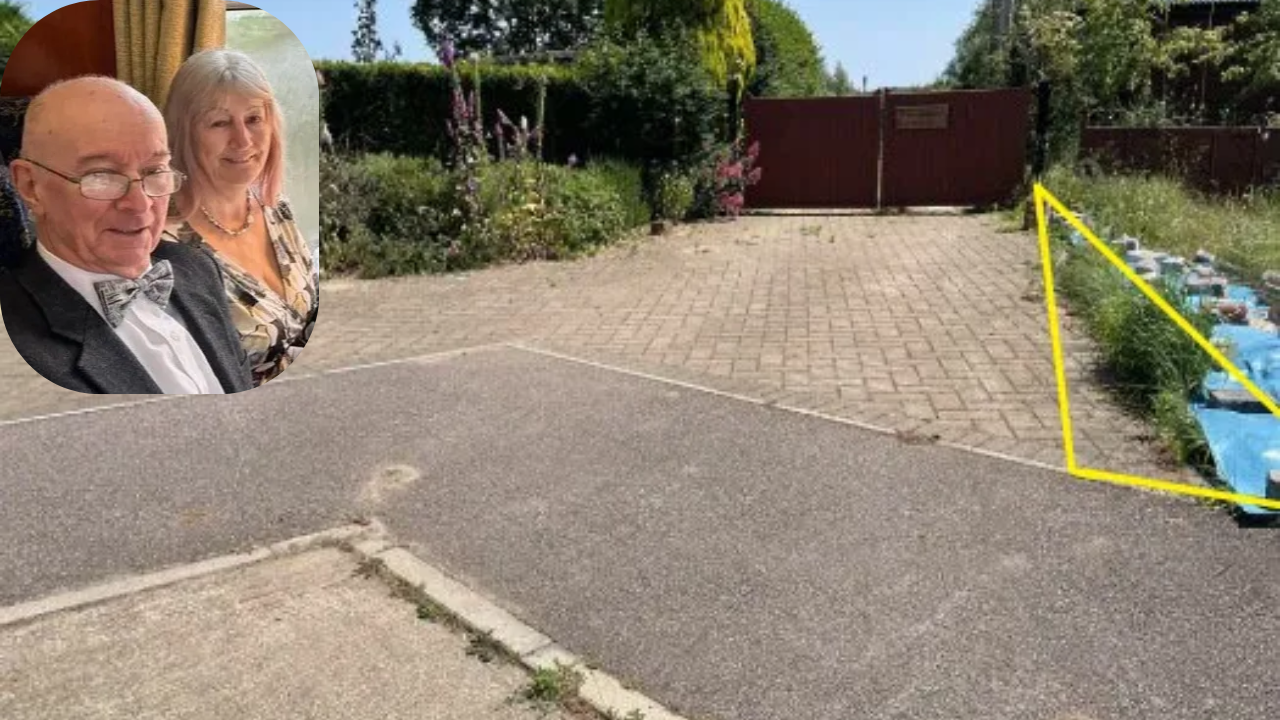
This is the visceral reality sitting right beneath the dry, clinical ink of a recent UK property tribunal ruling that rejected an adverse possession bid over a contested residential driveway. On paper, it reads like bureaucratic sawdust. A panel of legal minds examined deeds, measured boundaries, weighed decades of vehicle movements, and ultimately denied a homeowner's claim to take legal ownership of the strip of asphalt they had been parking on for years, leaving the future use of the driveway hanging in an uncomfortable, unresolved limbo.
Strip away the Latin maxims and the Land Registry title numbers, however, and you are looking at one of the sharpest, most expensive anxieties in modern British life. We spend our working lives pouring every spare pound into bricks and mortar, convinced that an Englishman’s home is his castle, only to discover that the moat might actually belong to the bloke next door—and worse, that you might not even have the legal right to cross the drawbridge.
The Architecture of a Modern Illusion
To understand why a UK tribunal would slam the door on an adverse possession claim—commonly known in pub conversations as squatter's rights—we have to look at how ordinary people actually live versus how the law insists we behave.
Consider a hypothetical scenario that mirrors the exact mechanics of this ruling. Picture Arthur and Brenda, a retired couple living in a tidy 1930s semi-detached house in the Midlands. Between their house and the neighbouring property runs a shared tarmac strip, roughly twelve feet wide, leading back toward two detached garages. For eighteen years, Arthur has reversed his hatchback down that strip every evening. He has weeded the cracks in the spring. He paid a local contractor four hundred pounds in 2014 to patch a pothole near the drain. In Arthur’s mind, that tarmac is his. He treats it like his, he maintains it like his, and nobody has ever told him to stop.
Then the house next door sells.
A young couple moves in, armed with high-definition boundary plans, a renovation budget, and an architect who wants to build a single-storey side extension right up to the property line. Suddenly, that twelve-foot strip isn't a shared convenience anymore; it is prime square footage. Arthur panics and applies to HM Land Registry for adverse possession, arguing that because he has used and maintained the driveway exclusively for well over the statutory ten-year period required for registered land under the Land Registration Act 2002, the title should legally transfer to him.
It sounds entirely logical. It feels morally right. And in front of a First-tier Tribunal (Property Chamber), it fails spectacularly.
Why? Because the law draws a razor-thin, merciless distinction between using land and possessing it to the exclusion of the entire world.
The Trap of Being a Good Neighbour
Here is the great, tragic irony of British boundary disputes: the very qualities that make someone a decent neighbour are the exact same qualities that destroy their legal case in a tribunal.
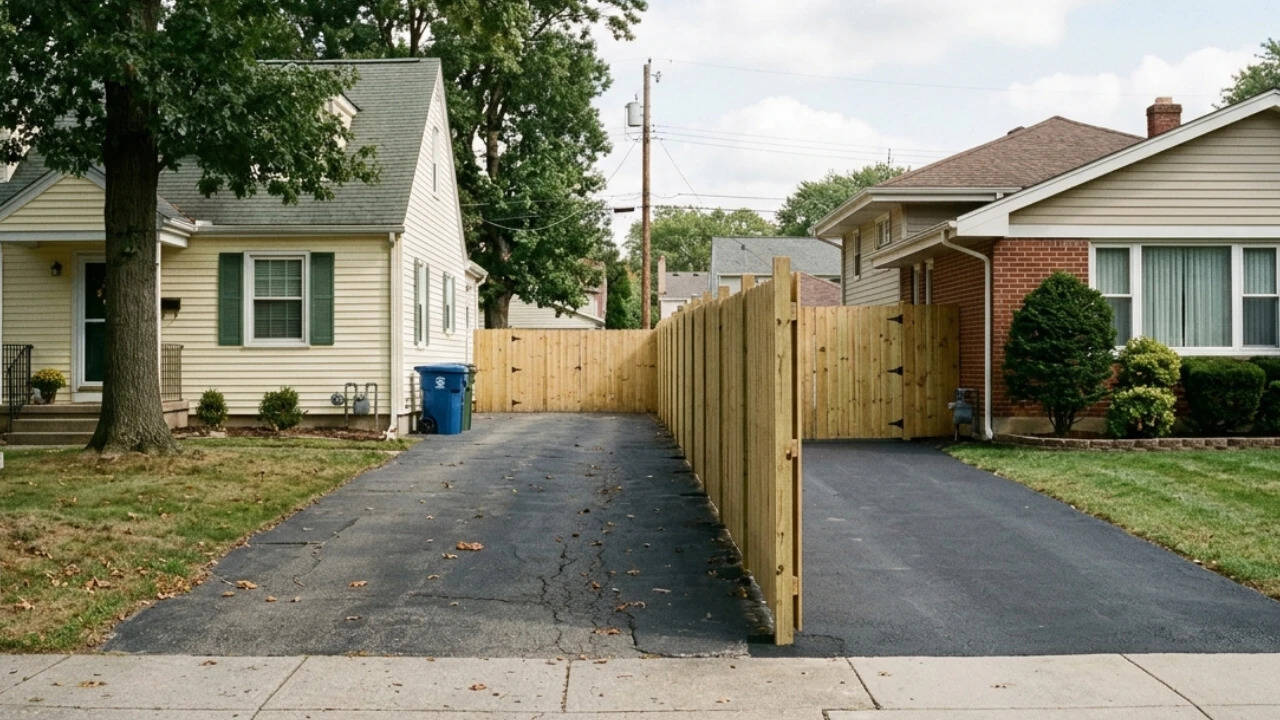
Think of a driveway not as a garden, which you fence off with six-foot timber panels and lock behind a bolted gate, but as a corridor in a busy house. You walk down that corridor every day. You might even hoover the carpet and change the lightbulb when it blows. Does walking down the hallway and replacing a bulb make the corridor yours alone if other people still have keys to the front door? Of course not.
In legal terms, establishing adverse possession requires proving two distinct elements: factual possession and an intention to possess (animus possidendi). To prove factual possession over a driveway, you cannot merely park your car there, sweep the autumn leaves, or fill in the odd pothole. Tribunals consistently view those acts as equivocal—meaning they are just as consistent with someone exercising a right of way, or simply enjoying an informal neighbourly arrangement, as they are with someone claiming absolute ownership.
If Arthur never erected a locked gate across the entrance, never put up a sign forbidding others from stepping onto the tarmac, and never physically blocked the true paper owner from walking across that strip to inspect their own drainpipes, then Arthur never truly excluded the world. He was just parking his car.
And when the tribunal rejects that claim, notice what happens next. They do not magically hand Arthur a permanent parking permit. They simply rule that the paper title remains untouched. The driveway's future use is suddenly plunged into complete uncertainty because the tribunal was only asked to decide who owns the dirt, not whether Arthur has a lesser, separate legal right—known as an easement—to keep driving his car over it.
When Custom Collides With the Land Registry
I used to think property boundaries were absolute, carved into the earth with the same permanence as Roman roads. When I stood beside my own side gate three years ago, staring at that laminated notice, I felt a cold knot of dread in my stomach because I realized I had spent seven years assuming my solicitor had checked every inch of the title plan when I bought the house.
Spoiler: most residential conveyancing moves at breakneck speed, relying on red lines drawn on Ordnance Survey maps at a scale of 1:1250. At that scale, the thickness of a single red felt-tip pen line on a piece of paper represents nearly two feet of real-world gravel, brick, or tarmac on the ground.
Let that sink in. Two feet.
Across England and Wales, millions of semi-detached and terraced homes built between the Victorian era and the post-war boom rely on shared drives, narrow alleyways, and unrecorded handshakes made between owners who died forty years ago. Back in 1978, nobody drafted a formal Deed of Grant when Bill from number 42 asked Ted at number 44 if he could widen his turning circle by eighteen inches so his new Ford Cortina wouldn't scrape the gatepost. Ted just nodded over his pint at the local, said, "Crack on, Bill," and both men went back to watching the football.
Fast-forward to the 2020s, where urban infill, electric vehicle charging cables trailing across pavements, and skyrocketing price-per-square-foot valuations have turned every square inch of tarmac into liquid gold. That casual nod from 1978 evaporates the moment a developer or a new buyer downloads the title register for seven pounds from the Land Registry website.
Under the Land Registration Act 2002, Parliament deliberately made it drastically harder to claim registered land through adverse possession than it used to be under the old rules. Even if you prove ten years of exclusive, unbroken possession—which, as the recent tribunal ruling demonstrates, is notoriously difficult on an open driveway—the Land Registry simply notifies the paper owner. The paper owner then has sixty-five business days to serve a counter-notice, which automatically defeats the application unless the claimant can satisfy one of three narrow statutory exceptions, the most common being an honest, reasonable mistake about where the boundary actually stood.
If you knew all along that the driveway belonged to the neighbour, or if you cannot prove you reasonably believed it was yours, your ten years of weeding and tarmac-patching count for almost nothing.
The Invisible Stakes of a Rejected Claim
What makes a ruling like this so unsettling is not the defeat itself, but the vacuum it leaves behind.
Imagine walking out of a tribunal hearing after spending fifteen, twenty, or thirty thousand pounds in surveyor fees and barrister briefs, only to hear the judge tell you that the driveway is not yours—and simultaneously decline to clarify whether you are allowed to park on it tomorrow morning. You drive home. You pull up to the kerb. Your indicator clicks rhythmically in the quiet street.
Do you pull onto the tarmac?
If you drive onto that strip now, knowing the tribunal has affirmed your neighbour’s paper ownership, you are arguably committing a deliberate trespass. Your neighbour could erect bollards along the boundary line tomorrow afternoon, trapping your car inside your own garage or forcing you to compete for scarce on-street parking three streets away. Worse, if you try to sell your house next spring, you are legally obligated on the TA6 Property Information Form to disclose any formal disputes or tribunal rulings affecting the property.
A house with an unresolved driveway dispute doesn't just lose value; it becomes radioactive to mortgage lenders. High-street banks will routinely refuse to lend against a property where vehicular access is contested or lacks a legally watertight right of way. Overnight, a homeowner can go from sitting on hundreds of thousands of pounds of equity to owning an unsellable asset.
How to Audit Your Own Ground Before the Storm Hits
When I finally untangled my own boundary mess three winters ago, it cost me four months of sleepless nights, two sessions with a chartered land surveyor, and a humbling conversation with my neighbour over lukewarm coffee at my kitchen table. We didn't go to a tribunal. We realized early on that the only people guaranteed to win a property war are the lawyers billing by the six-minute unit.
If you share a drive, park on a strip of land that isn't explicitly fenced inside your garden, or rely on an informal access route that has simply "always been there," you cannot afford to wait until a skip arrives on your neighbour’s front lawn.
Start by pulling your official Title Plan and Title Register—not the glossy estate agent brochure from when you bought the place, which carries zero legal weight, but the actual documents filed with HM Land Registry. Read the register carefully for any mention of easements, rights of way, or covenants. Sometimes, you do not own the soil beneath a shared drive, and you never will, because the title sits firmly with next door; however, your title deeds may contain an explicit, irrevocable legal right to pass and repass over that exact strip with vehicles at all times. If that right is written into the register, you do not need adverse possession. You already have the shield you need.
If the deeds are silent—or if the boundary line on the map looks suspiciously vague—resist the urge to immediately plant a flag or build a wall. Remember the lesson from the tribunal: acts of physical aggression rarely create legal rights; they mostly trigger injunctions. Instead, look closely at how long the access has been used without interruption, without secrecy, and without permission. Even if an adverse possession claim for full ownership is doomed to fail because you haven't locked the neighbour out, twenty years of continuous, open use as a driveway can sometimes establish a prescriptive easement—a permanent legal right to keep driving across the land, even while the neighbour keeps the underlying ownership.
The distinction between owning the tarmac and having the legal right to drive over it is the difference between a hopeless crusade and a practical survival strategy.
The Heavy Cost of Silence
We like to believe that good fences make good neighbours, as the old proverb goes, yet anyone who has ever stood in front of a property tribunal knows that fences are usually where the trouble begins. What actually keeps the peace on a suburban street isn't timber or brick; it is clarity.
It is deeply human to avoid awkward conversations. Nobody wants to knock on the door next door on a sunny Saturday afternoon with a rolled-up Ordnance Survey map under their arm and ask where the drainpipe ends and the driveway begins. It feels petty. It feels unneighbourly. So we stay quiet, we reverse our cars into the same narrow gap year after year, and we mistake habit for law.
Until one morning, the surveyor’s van pulls up outside, a bright yellow measuring tape unspools across the wet tarmac, and you realize that the ground beneath your feet was never really yours at all.