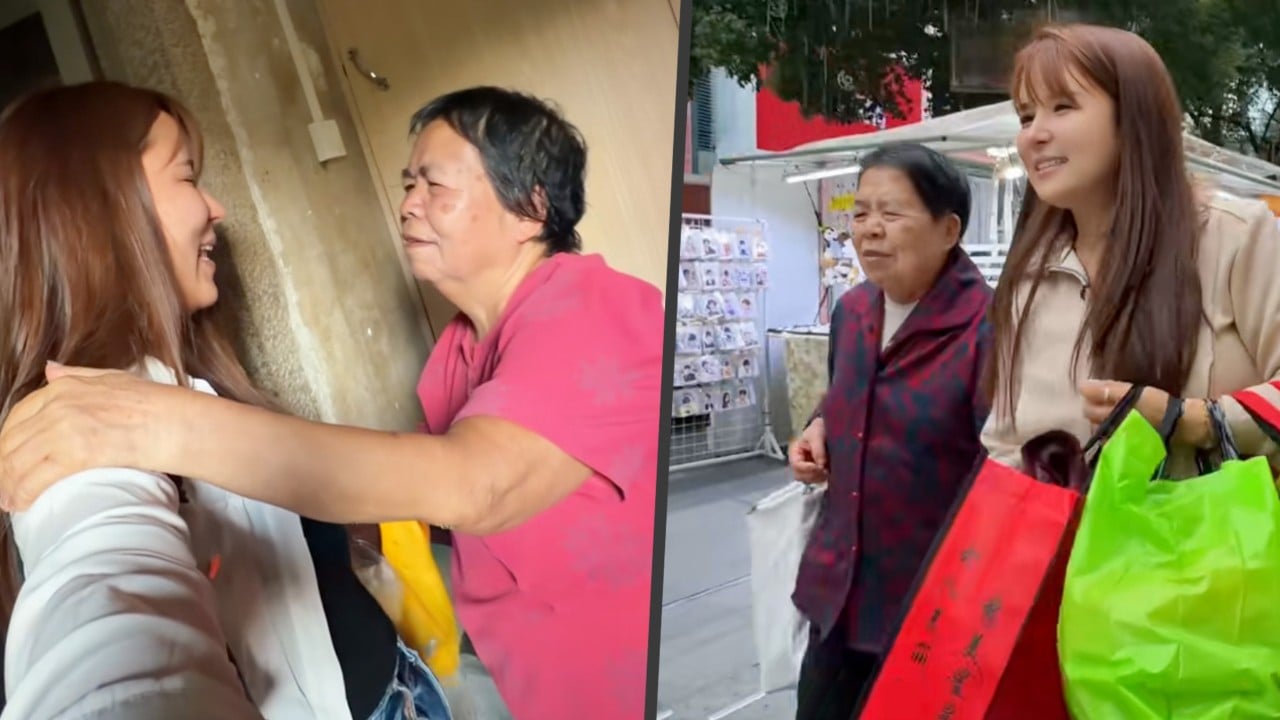
Silence has a specific weight in an empty apartment.
You learn its texture slowly. At first, it is just the absence of footsteps in the hallway or the sudden quiet of a kettle boiling without anyone else waiting for a cup. Then, over months and years, that quiet thickens into something physical, pressing against the windows, settling into the upholstery, reminding an aging body that if it falls on the kitchen tile at three in the afternoon, nobody will know until the milk spoils outside the door.
Now, picture a woman in her seventies sitting inside that exact silence.
Her son is gone—not estranged, not busy, simply dead, taken too early by illness or accident, leaving behind a void that no government pension can fill. Her former daughter-in-law, the woman who once shared Sunday dinners and holiday preparations under the same roof, divorced her son twelve years ago. Twelve years. In modern family math, twelve years of divorce equals complete erasure. The legal ledger is closed. The obligations are dissolved. The phone numbers are deleted, or at least buried beneath a decade of newer, more relevant contacts.
Except one day, the phone rings. And the ex-daughter-in-law asks a question that defies every sensible rule of modern self-preservation: Come live with me.
When news broke out of China about a woman inviting her late ex-husband's mother to move into her home twelve years after their marriage ended, the internet reacted with the kind of stunned, tearful applause usually reserved for miracle rescues. Millions of people shared the headline. They called her a saint. They called her a living Bodhisattva. They marveled at a level of filial devotion that felt almost alien in an era defined by clean breaks, rigid boundaries, and transactional relationships.
Applause is easy. Understanding is harder.
If we reduce this story to a heartwarming anomaly—a rare burst of traditional virtue surviving in a cold modern world—we miss the entire point. We miss the quiet crisis unfolding behind closed doors across rapidly aging societies, and we miss a radical truth about what actually holds human beings together when bloodlines snap and legal contracts expire.
The Architecture of a Clean Break
Modern adulthood is built around the clean break. We are taught, often rightly, that survival requires boundaries. When a marriage ends, we divide the furniture, split the savings, untangle the joint accounts, and sever the extended family tree like a dead branch. Your mother-in-law is no longer your mother. Your obligations end where the court decree begins.
I know the relief of that boundary. Anyone who has ever stood in the wreckage of a dissolved relationship knows how desperately you cling to the clarity of paper. Paper tells you what you owe and what you no longer have to carry. Without those lines, grief and resentment bleed into everything, turning ordinary Tuesdays into minefields of old expectations.
In China, where marriage has historically functioned less as a private romance and more as a merger of two entire kinship networks, divorce carries an extra layer of cultural gravity. For centuries, xiao—filial piety—bound a daughter-in-law to her husband’s parents with ironclad social duty. Even after the twentieth century dismantled traditional clan structures and urbanization scattered families across thousands of miles, the ghost of that obligation lingered.
Yet modern Chinese cities operate on a very different rhythm. Young and middle-aged adults already face the crushing arithmetic of the "4-2-1" family structure: one only child supporting two aging parents and four grandparents. Adding an ex-mother-in-law to that equation isn't just unconventional. Financially and emotionally, it looks like madness.
Consider what happens when a marriage ends and twelve years pass. A dozen Lunar New Years come and go. Careers shift. Children grow up, graduate, move away. Both women build separate lives, separate routines, separate circles of survival. By year twelve, the former mother-in-law is not a daily presence; she is a memory from another lifetime.
Until tragedy rewrites the terms.
When the Bridge Collapses
Imagine, for a moment, a hypothetical bridge connecting two islands. For years, traffic moves across it—sometimes smoothly, sometimes in heavy storms. One day, the two islands decide they no longer want to be connected, so they close the tollbooths and stop maintaining the road. Still, the bridge stands. As long as the man at the center—the son, the ex-husband—is alive, he remains the structural link between his mother and his former wife, especially if they share children.
Then he dies. The bridge collapses into the water.
For the older woman, the loss is double. She loses her child, the single most devastating grief a human being can endure, and she simultaneously loses her safety net. In a society where eldercare infrastructure still struggles to keep pace with a population aging faster than almost any other in history, losing an adult child often means losing your advocate, your emergency contact, your translator in confusing hospital corridors, and your daily anchor to the living world.
Let us be honest about what happens next in ninety-nine percent of cases. Friends offer condolences. Distant relatives visit for a week, bring fruit baskets, urge her to "eat well and stay strong," and then return to their own overwhelming lives. The apartment grows quiet. The silence moves in.
Why did this particular ex-daughter-in-law refuse to let that happen?
People hunting for a simple explanation often ask whether there was a hidden inheritance, a promise made on a deathbed, or a debt of money waiting to be repaid. We are so conditioned to look for transactional motives that pure empathy feels suspicious. Yet the reality of long-term family bonds rarely fits inside a spreadsheet.
During the years they were family, the older woman had likely watched her daughter-in-law navigate early adulthood, perhaps helped raise her grandchildren, cooked meals during exhaustion, or stood by her in quiet, unrecorded ways that had nothing to do with the man they both loved—and eventually lost. Divorce ended the marriage between husband and wife. It did not erase the shared history between two women who had once built a household together.
The Invisible Stakes of Eldercare
To feel the true weight of that invitation, you have to look beyond sentiment and confront the demographic reality staring down China—and much of the developed world—right now.
According to China's National Bureau of Statistics, the population aged sixty and older has surged past 300 million people, accounting for more than a fifth of the entire country. Millions of those seniors live as "empty-nesters," separated from working children by distance, migration, or tragedy. Among them sits an even more vulnerable group known in Chinese media as shidu parents—older adults who have lost their only child.
If you have never sat beside an elderly parent trying to navigate a modern digital hospital system alone, it is hard to grasp how terrifying aging without an advocate has become. Today, booking a clinic appointment, paying for prescriptions, ordering groceries, or hailing a cab requires a smartphone, facial recognition, and a dozen rapidly updating apps. For a seventy-five-year-old mourning the death of her son, an uncharged phone or a frozen screen isn't a minor inconvenience. It is total isolation.
When a former daughter-in-law opens her spare bedroom to her late ex-husband's mother, she isn't merely offering a roof. She is taking on the daily, unglamorous labor of eldercare.
She is signing up for:
- The midnight worry whenever a cough lingers too long in winter or blood pressure spikes before dawn.
- The quiet diplomacy of merging two sets of stubborn habits—how the vegetables are chopped, when the thermostat gets turned down, which television channel plays at dinner.
- The emotional weight of living alongside someone else's permanent grief, knowing that your very face reminds her of the son she buried.
None of that makes for a neat viral video clip. Viral clips capture the tearful embrace at the doorway; they never show month seven, when both women are tired, when joints ache, and when patience wears thin over spilled soup or forgotten medication.
Choosing that life voluntarily—without a marriage certificate forcing your hand, without social pressure demanding your obedience—requires a completely different kind of courage than traditional filial duty ever did. Duty is what you do when the village is watching. Grace is what you do when nobody expects anything from you at all.
Rethinking What Makes a Family
We spend an enormous amount of energy debating the decline of traditional family values. Commentators point to rising divorce rates, shrinking household sizes, and delayed marriages as proof that modern societies are becoming selfish, atomized, and cold.
There is some truth in that fear. Loneliness has become a documented public health crisis, linked by researchers to higher risks of heart disease, dementia, and premature mortality comparable to smoking fifteen cigarettes a day. When families fracture, older adults are almost always the ones left standing on the eroding shoreline.
Yet this story reveals something the doomsayers completely overlook. When old obligations crumble, human beings do not automatically become monsters. Sometimes, freed from rigid scripts, people invent better, more compassionate versions of kinship.
Think about the difference between a bond forged by law and a bond chosen in freedom.
In traditional marriages, countless daughters-in-law cared for aging parents out of sheer entrapment—trapped by financial dependence, trapped by fear of gossip, trapped by lack of alternatives. Resentment festered beneath polite obedience. Everyone paid a price.
Here, there was no trap. Twelve years of divorce had already broken every chain. Both women were legally strangers. If the younger woman had sent a polite wreath to the funeral, transferred a modest sum of money, and never called again, not a single neighbor or magistrate could have faulted her. She had already done her time.
Instead, she looked at an elderly woman staring down the barrel of a lonely final chapter and recognized a simple, stubborn truth: You are still my child's grandmother. You were still my family. And I am not going to leave you behind.
The Messy Reality of Radical Kindness
I will admit something that might sound cynical: part of me initially flinched when I read about this arrangement.
Having watched family members burn themselves out trying to rescue relatives who couldn't—or wouldn't—meet them halfway, I know how quickly noble gestures can curdle into martyrdom. Merging households late in life is hard even when blood ties are intact. Throw in the ghosts of a failed marriage, unspoken grievances from twelve years ago, and the raw trauma of a recent death, and you have the ingredients for intense emotional friction.
What happens when old arguments from the marriage resurface over dinner? What happens if the younger woman wants to date, travel, or move cities? How do you set healthy boundaries with someone who has nowhere else to go?
These are not cold questions; they are the exact questions any honest adult has to ask when considering long-term caregiving. Pretending that love magically erases friction does a disservice to the women actually living inside that apartment.
The beauty of their choice isn't that it is effortless. The beauty is that they stepped into the mess anyway, eyes wide open, deciding that temporary friction was infinitely better than permanent abandonment.
In behavioral psychology, researchers often distinguish between kin altruism—helping those who share our genes—and chosen kinship, where individuals extend family-level protection to people outside their biological circle. While biology wires us to protect our offspring, human civilization advances precisely when we stretch that circle wider than survival demands. We build orphanages, hospices, mutual aid networks, and—occasionally, quietly, inside an ordinary apartment—a home where an ex-wife cooks breakfast for the mother of the man she divorced over a decade ago.
The Sound of Two Spoons
Picture that apartment again. Not the silent one from the beginning, with the kettle cooling untouched on the stove, but the one that exists now.
It is seven in the morning. Light filters through the balcony curtains onto potted plants that someone finally remembers to water. In the kitchen, two women who have survived marriage, divorce, parenthood, and bereavement move around each other with the practiced, unhurried choreography of people who no longer need to prove anything.
One chops scallions on a worn wooden board. The other sets two bowls of warm porridge on the table, adjusting the chair slightly so the older woman doesn't have to strain her knees sitting down. Neither of them mentions the twelve years they spent apart. Neither of them pulls out a yellowed divorce decree to check whose turn it is to wash the dishes.
Outside their door, the modern world keeps spinning at a furious, transactional pace—counting debts, drawing lines, calculating what each person owes and what each person gets in return. Inside, two bowls steam on a small wooden table, and two spoons clink softly against porcelain in a room that is no longer quiet.