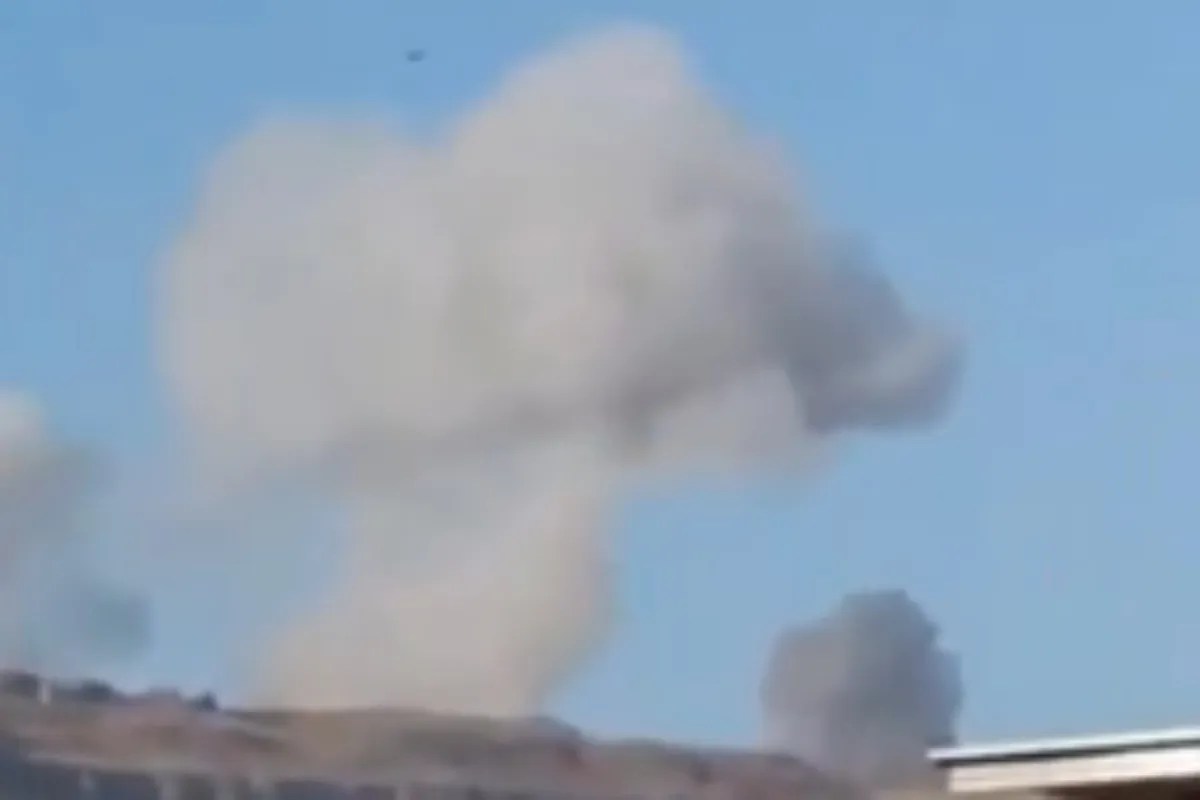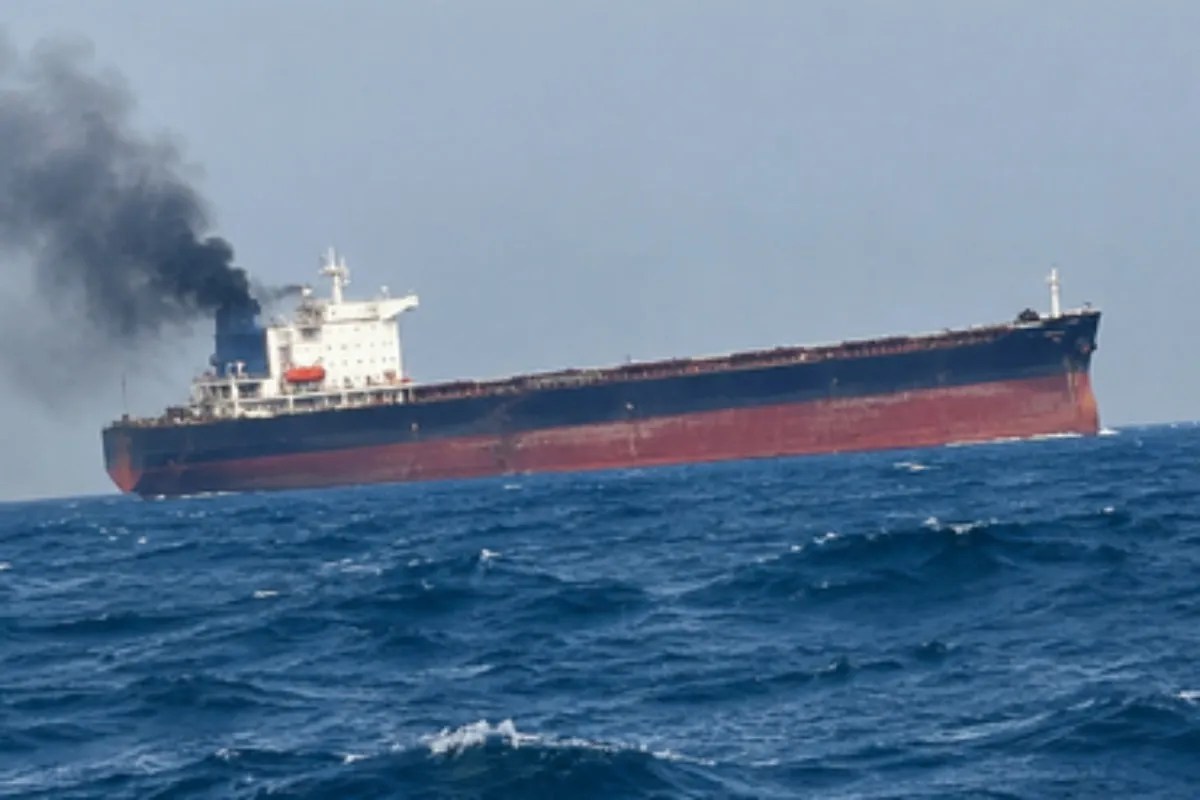
Two ships get hit near the Strait of Hormuz after ignoring an Iranian warning. Cue the alarms. Cue the breathless headlines. Cue the instant consensus that Tehran just slammed a bottleneck shut on the global economy.
Lazy. Predictable. Wrong. If you found value in this piece, you should check out: this related article.
When two vessels suffer explosions in the Persian Gulf approaches after defying an Iranian directive, the standard media reflex is to treat the incident as proof of total chokepoint control. If Iran issues an order, two ships ignore it, and blasts follow, the story writes itself in lazy shorthand: Iran enforces its will, tankers burn, oil spikes, chaos reigns.
That reading misses almost every mechanism that actually governs maritime risk in the Strait of Hormuz. For another look on this development, see the recent update from NPR.
An order is not a blockade. A warning is not sovereign law in an international strait. Two damaged hulls do not equal a sealed waterway, nor do they prove that every blast comes from the exact source a rushed headline implies. Worse, treating a localized strike on non-compliant vessels as an automatic chokepoint shutdown blinds traders, shipowners, and policymakers to where the real danger—and the real leverage—actually sits.
The Chokepoint Myth Everyone Keeps Recycling
Ask ten pundits what happens when ships get blown up near Hormuz, and nine will recite the same line: roughly a fifth of the world's petroleum passes through a narrow channel, so any defiance met with explosions means the tap is turning off.
That is a category error.
Volume through a corridor tells you what is at stake if a sustained closure occurs. It does not tell you that two explosions after an Iranian warning equal closure. For decades, analysts have conflated vulnerability with closure. A narrow waterway is inherently exposed to mines, fast-attack craft, shore batteries, drones, and asymmetric harassment. Exposure is constant. Full closure is extraordinarily difficult for any state to sustain without triggering massive military escalation and wrecking its own regional trade and diplomatic standing.
Look closely at what actually happens when vessels ignore a warning and get hit:
- Deterrence by example is not a blockade. Hitting or harassing specific ships that defy an order aims to raise perceived risk and cost for operators, not physically seal a multi-lane maritime passage.
- Transit is a spectrum, not a light switch. Shipping rarely goes from normal flow to zero overnight. It shifts through rerouting, slower speeds, convoying, higher war-risk premiums, and selective caution.
- Attribution takes time, while headlines move in seconds. A blast near a contested maritime corridor triggers immediate assumptions about who pulled the trigger, even when maritime intelligence, hull damage assessments, and regional security dynamics leave critical questions open.
I have watched commodity desks and corporate supply-chain teams blow millions chasing knee-jerk "Hormuz is closed" narratives after single-day or two-ship flare-ups. They buy panic at the top of a spike, hedge the wrong part of the curve, or freeze chartering decisions based on a headline rather than physical flow data, AIS vessel tracking, and insurance market behavior. When the waterway stays open—even under tense, noisy conditions—the traders who priced in a full shutdown get carried out on a stretcher.
What International Law Actually Says About Warnings and Transit
One of the biggest misconceptions baked into stories about ships defying an Iranian order is that a coastal state can simply declare a rule in the Strait of Hormuz and make compliance a legal baseline.
Under the United Nations Convention on the Law of the Sea (UNCLOS), straits used for international navigation between one part of the high seas or an exclusive economic zone and another are governed by the regime of transit passage. Unlike innocent passage in territorial seas—which coastal states have narrower authority to regulate or temporarily suspend under strict conditions—transit passage protects the right of continuous and expeditious transit for commercial ships and aircraft.
Iran is not a party to UNCLOS, and Tehran has historically asserted claims and conditions around transit that the United States and many other maritime nations dispute. That legal friction is precisely why warnings in the Strait of Hormuz are so contentious. Calling two ships "violating Iran's order" accepts, at least rhetorically, that Tehran's directive carries settled authority over international shipping lanes.
In reality, maritime security in the Persian Gulf and Gulf of Oman operates in a gray zone where:
- Navigational rules collide with geopolitical pressure. Merchant captains and owners weigh international maritime norms alongside immediate physical threat levels in the region.
- Warnings function as psychological warfare. Even when a coastal force lacks the ability to stop every vessel physically, issuing directives and punishing select offenders creates fear that does part of the enforcement work for free.
- Flag state, cargo, ownership, and route all matter. Two ships ignoring an order do not share identical risk profiles; ownership ties, commercial exposure, and recent port calls change how operators read threats and how adversaries target or pressure them.
You Are Asking the Wrong Question About Two Blasts
When two vessels suffer explosions after ignoring an order in Hormuz, the reflex question on search engines and trading floors is predictable: Is Iran closing the Strait of Hormuz?
Wrong question.
The right question is: How much friction can two blasts inject into maritime insurance, crew willingness, and shipping routes before physical barrels actually stop moving?
Physical barrels and paper risk move on different clocks. A tanker can stay afloat—or limp away—while war-risk underwriters reprice coverage within hours. A shipowner can decide a bonus for transiting a high-risk zone is worth the gamble, while a crew union or charterer refuses the voyage. That gap between physical capacity and operational friction is where real market distortion lives.
Consider the questions people routinely ask after an incident like this—and why most of the answers floating around online miss the point:
Does ignoring an Iranian warning automatically mean a ship will be attacked?
No. Treating every warning as a guaranteed strike—or every blast as proof of airtight enforcement—confuses correlation and deterrence theater with mechanical certainty. Maritime corridors see routine hails, warnings, and tense encounters without explosions. When blasts do happen after defiance, they signal escalating willingness to impose costs, not an automatic switch that destroys every non-compliant hull.
Should oil prices spike permanently whenever ships are hit near Hormuz?
Not unless physical supply is durably removed or sustained transit disruption looks likely. Geopolitical risk premiums in crude tend to jump on shock headlines and fade when physical deliveries continue, alternative export infrastructure absorbs pressure, or broader demand and inventory fundamentals reassert control. Anyone trading a two-ship headline as a permanent structural regime shift is confusing noise with a trend.
How can businesses tell real chokepoint danger from headline hysteria?
Stop reading second-hand commentary and watch hard operational indicators instead:
- AIS vessel density and speed changes approaching and exiting the strait—are ships anchoring outside, loitering, or hugging different lanes?
- Marine war-risk insurance quotes and exclusions—underwriters price real actuarial and geopolitical hazard faster than cable news.
- Alternative pipeline and export flows—such as regional bypass capacity (including pipelines like Saudi Arabia's East-West pipeline or the UAE's Habshan-Fujairah link, depending on route and grade) and floating storage behavior.
- Official naval and maritime advisories from established shipping and security bodies rather than anonymous social media claims.
Why My Contrarian Take Can Still Burn You
Being the contrarian in the room feels great right up until the one time the tail risk actually materializes.
Let's be honest about the downside of pushing back against chokepoint panic. If you dismiss every warning and every pair of explosions as "just noise," you can get caught flat-footed if a localized incident escalates into a broader mining campaign, sustained attacks on multiple tankers, or direct military confrontation that genuinely stalls traffic.
Low-probability, high-impact events are brutal precisely because they look like previous false alarms right up until they aren't. A smart contrarian does not turn into a reckless contrarian. Challenging lazy consensus means sizing risk for reality—not pretending tail risks are zero just because pundits cry wolf too often.
A Quick Thought Experiment on Escalation
Imagine a scenario where two ships ignore an order in the strait, explosions damage both, and within forty-eight hours three more vessels take hits while naval escorts deploy and insurers pull coverage for unescorted transits. At that point, clinging to "it's just two ships, nothing changed" would be willful blindness. The thesis shifts not because the first two blasts were misread, but because the pattern changed from isolated coercion to systemic disruption.
Serious analysts update on new evidence. Lazy ones marry a catchphrase.
What Serious Operators Do When Shots or Blasts Hit the Gulf
If you manage supply chains, energy exposure, commercial shipping risk, or capital markets positions tied to the Middle East, skip the doomscrolling and run a disciplined playbook:
- Separate the order, the defiance, and the blast. Verify what happened to each vessel—location, damage, casualties, cargo, and whether transit continued—before repeating a neat causal chain.
- Stress-test exposure to delay and cost, not just total cutoff. Most disruptions hit via freight rates, rerouting, insurance spikes, and delivery delays long before a total physical blockade occurs.
- Audit single-point dependencies. If a single maritime lane or supplier concentration can knock your plan sideways, two explosions in Hormuz didn't create your fragility—they just exposed it.
- Define your escalation tripwires in advance. Decide ahead of time what concrete facts—sustained vessel losses, confirmed mine threats, halted transits—would force you to upgrade from "elevated risk" to "active disruption."
Two explosions after an ignored warning near Hormuz are a serious security story, not proof that the world's most famous oil chokepoint just snapped shut. Watch the ships, the insurance, and the barrels—not the loudest panic in the room.