Brussels thinks writing a check solves geopolitics.
The European Commission just rolled out a fresh two-hundred-million-euro package for Greenland, framed as a generous lifeline for clean energy, connectivity, and critical raw materials. The media treats this as a philanthropic masterstroke to bolster the Arctic against American real estate ambitions and Washington's loud assertions.
It is a comforting delusion.
Two hundred million euros is a rounding error in the brutal, high-stakes game of polar supremacy. If you think this cash injection protects Greenland's sovereignty or secures Europe's supply chains, you are looking at the map through a frosted windshield. The lazy consensus in European press rooms is that financial aid equals geopolitical security. History shows the exact opposite. Money without military teeth and industrial execution is just an invitation for extraction.
Let us dismantle the fiction.
The Mineral Mirage and the Math That Fails
Look at what the money is supposedly buying: critical raw materials, rare earths, and green infrastructure. Sounds pragmatic. Modern, even.
Except the infrastructure required to extract rare earth elements in sub-zero, ice-locked terrain does not run on good intentions or bureaucratic grants disbursed over two years. I have watched corporations and governments hemorrhage billions into northern resource plays, assuming local logistics will magically sort themselves out. They never do.
Greenland sits on staggering mineral wealth, true. Neodymium, praseodymium, dysprosium—the alphabet soup of the clean-tech transition. But extracting them requires deep-water ports, year-round shipping lanes, immense power grids, and an industrial workforce that a territory of fifty-seven thousand people simply cannot supply.
Two hundred million euros will barely fund the environmental impact assessments and a couple of half-decent satellite dishes. By pretending this sum represents a strategic bulwark, the European Commission is engaging in performative diplomacy. They are buying headlines in Brussels while actual geopolitical weight is measured in ice-breakers, deep-water defense installations, and operational supply chains. Europe has none to spare in the Arctic.
The Washington Pressure Test
The timing of this funding announcement is not subtle. It follows relentless pressure from the White House regarding the strategic necessity of controlling the island. Donald Trump wants a foothold; Brussels wants a buffer.
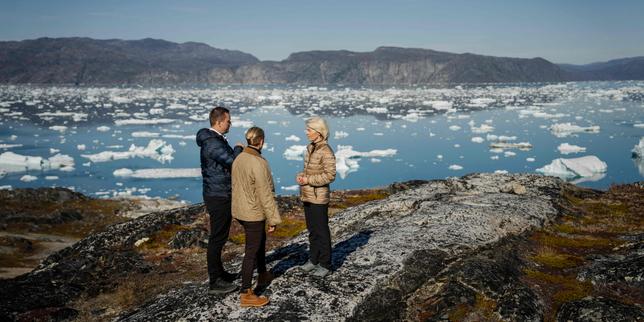
The lazy narrative says Europe is stepping up to defend self-determination. Ursula von der Leyen stands in Nuuk alongside local leaders, proclaiming that Greenland's future belongs exclusively to Greenlanders and Danes.
Imagine a scenario where a major global power decides that international maritime borders are negotiable conveniences rather than legal absolutes. Paper declarations signed in a local parliament do not deflect ballistic missiles or stop economic coercion. When Washington applies tariff pressure or strategic trade bottlenecks, a two-hundred-million-euro cohesion fund for housing and fisheries evaporates into irrelevance.
Worse yet, this dynamic places Nuuk in an impossible bind. Greenland wants independence from Denmark eventually, but independence financed by European mining subsidies just trades a Copenhagen leash for a Brussels one. True economic autonomy requires self-sustaining capital generation, not permanent dependency on foreign grants designed to keep a strategic asset out of a rival's hands.
The Real Question No One Is Asking
People ask: "How can the European Union help Greenland develop sustainably?"
Wrong question entirely.
The question you should be asking is: "How long can a micro-economy resist becoming a proxy battleground for superpowers fighting over the energy transition?"
The answer is: not very long.
When you look past the diplomatic handshakes and the joint declarations, Greenland's future is being dictated by physical scarcity and raw military geography. The Arctic ice pack is retreating, opening shipping lanes that bypass traditional chokepoints. That makes the island the most valuable piece of unfortified real estate on the planet.
Pouring pocket change into education and digital communications while ignoring the militarization of the north is like rearranging deck chairs on a nuclear-powered icebreaker heading straight for a glacier.
Stop pretending that administrative subsidies constitute a foreign policy. Stop cheering for financial band-aids on structural wounds.
The Arctic is not a development project. It is the frontline. And right now, Europe is bringing a checkbook to a knife fight.