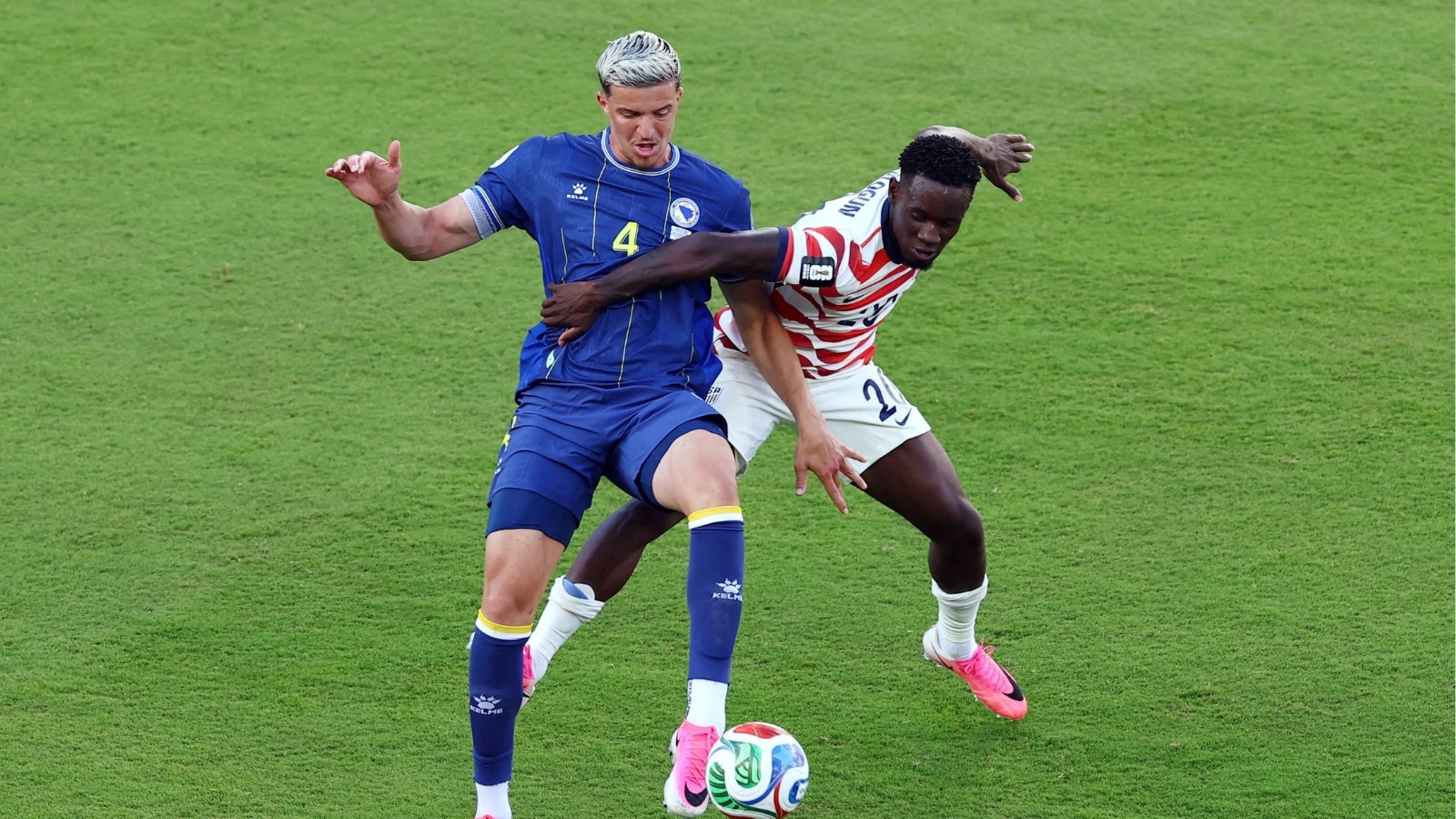
Tyler Adams stood in the mixed zone, the weight of another premature tournament exit hanging in the humid air, and asked for perspective. "We cannot take credit away from what we achieved in the rest of the tournament," the USMNT captain insisted. It is a familiar refrain in American soccer. Every major disappointment is quickly repackaged as a building block. Every failure to progress past elite opposition is shielded by the armor of "valuable experience."
But the reality of international football is brutal, and it cares very little about incremental growth.
The United States Men’s National Team continues to trap itself in a cycle of self-congratulation. By focusing on the flashes of competence shown in group stages or friendly matches, the federation, the players, and a segment of the fanbase ignore the tactical stagnation that prevents the team from breaching the world's elite tier. Adams is right that individual matches show progress. He is wrong to think those matches matter when the ultimate objective is discarded. The gap between the USMNT and the global elite is not shrinking; it is hardening.
The Comfort Zone of Structural Defeat
American soccer culture has developed a sophisticated defense mechanism against high-level failure. When the national team drops a decisive knockout match or fails to advance from a group it should navigate comfortably, the post-match analysis almost always shifts toward the future.
This is a structural flaw in how the sport is evaluated in the United States.
In Europe and South America, tournament exits spark immediate, często merciless institutional audits. Managers are sacked. Systems are overhauled. Tactical approaches are picked apart by a ruthless media apparatus. In the USMNT ecosystem, the narrative is steered toward the average age of the squad or the number of players technically under contract at European clubs.
Consider the tactical setup that routinely fails Adams and his teammates when the pressure intensifies. The U.S. has spent years relying on an athletic profile to mask a lack of creative variation in the final third. When playing opposition that can match their physical output, the Americans look devoid of a secondary plan.
Relying on a mid-block press and rapid transitions works against CONCACAF opponents. It falls apart entirely when facing a disciplined side that refuses to cede space behind its defensive line. The tournament accomplishments Adams wants to protect are usually just victories over teams the U.S. is economically and structurally expected to beat.
The Midfield Paradox
Adams himself embodies the central contradiction of this roster. He is an elite destroyer, a player whose ability to disrupt passing lanes and cover ground is genuinely world-class. Yet, when the U.S. encounters teams that sit deep, the responsibility to progress the ball falls squarely on a midfield that lacks a true orchestrator.
- The possession illusion: Holding 60% of the ball against a low block means nothing if the possession happens entirely in front of the opposition's defensive shape.
- The transition dependency: When opponents deny the U.S. the chance to run into open space, the attacking output drops off a cliff.
- The isolation of the striker: Without central penetration, the American center-forward is reduced to chasing hopeless long balls or pulling wide to clear space for inverted wingers.
This is not a matter of effort. It is a matter of profile. The U.S. has built a team capable of competing in high-tempo, chaotic matches, but they have failed to develop the technical sophistication required to dictate terms against elite tactical setups.
The Illusion of European Pedigree
We are told this is the golden generation because the squad list features employers like AC Milan, Juventus, and Monaco. This is a shallow metric for success.
There is a vast difference between belonging to a squad at a major European club and driving the culture of winning at that club.
Many core American players occupy rotational roles abroad or play for clubs hovering in the middle of top-flight leagues. They are exposed to elite environments, yes, but they are rarely the individuals expected to carry the tactical or emotional burden when a trophy is on the line. When they assemble for the national team, they are suddenly asked to be the protagonists. The transition is rarely clean.
[Elite Tier: Argentina, France, Spain] -> Dictate tempo, elite technical depth
       ^
       |  <-- The Invisible Ceiling (Tactical rigidity, lack of a true No. 10)
       |
[USMNT Profile: Athletic, Transition-Heavy] -> Rely on physical output, struggles against low blocks
When Adams asks to retain credit for what was achieved early in a cycle, he is asking to be judged on a curve. But global football does not grade on a curve. The world's top ten nations do not celebrate a well-fought group stage draw against a traditional power. They view it as a baseline requirement.
Breaking the Cycle of Apologia
If the USMNT is to ever break through the ceiling that has kept it safely in the tier of "promising neutrals" for thirty years, the internal rhetoric must change. The leadership group, led by Adams, must stop treating tournaments as educational seminars.
The upcoming cycle offers no safety net. Hosting major tournaments removes the crucible of competitive qualification, meaning the team will rely even more on friendlies and condensed summer tournaments to find its edge. If every exit is met with a philosophical defense of the process, the process itself becomes meaningless.
The federation must foster an environment where tactical inflexibility is punished, not excused by injuries or poor refereeing. Players must face the reality that their standing in European club football does not automatically translate to international dominance.
American soccer does not need more validation. It needs a collective intolerance for mediocrity. Until the captain and the coach look at a tournament exit and see a failure rather than a lesson, the USMNT will remain exactly what it has always been: a team with an incredibly bright future that somehow never arrives.