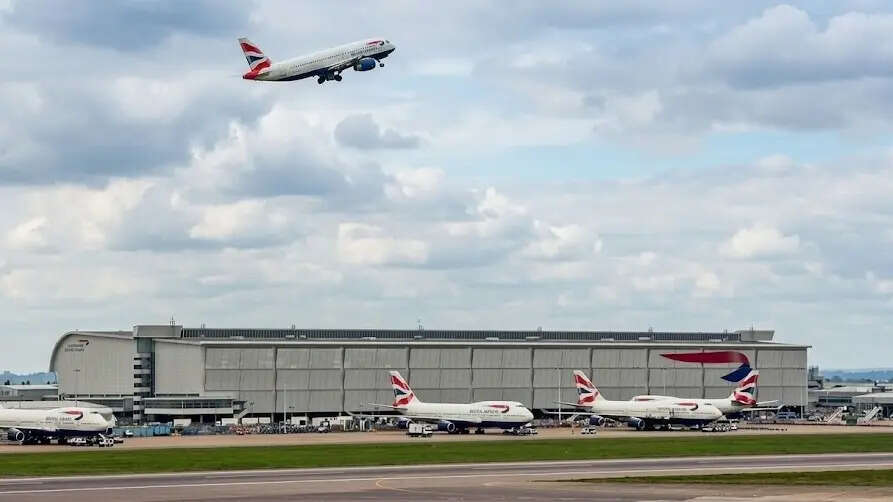
The United Kingdom aviation sector faces a structural vulnerability in its supply chain. Regulatory interventions intended to mandate lower-carbon operations have collided with structural deficits in terminal infrastructure, pipeline capacity, and inventory management. This imbalance creates a quantifiable risk of flight reductions, capacity constraints, and volatile operating costs for commercial carriers. Understanding this system requires analyzing the economic mechanisms of fuel supply, infrastructure bottlenecks, and regulatory compliance costs.
The Microeconomic Anatomy of Jet Fuel Supply
Jet fuel logistics rely on a capital-intensive supply chain characterized by low inventory buffers and high-velocity demand. The throughput of kerosene depends on three interdependent components: import terminal capacity, dedicated pipeline infrastructure, and on-site refinery yields.
The Refinery Yield Deficit
The United Kingdom produces a declining volume of its own aviation turbine kerosene. Domestic refineries have experienced margin compression over the past two decades, leading to structural rationalization and closures.
- Structural decline: The reduction in domestic refining capacity shifts the burden of supply to maritime imports.
- Supply chain length: Longer supply chains introduce variability into lead times, requiring larger working capital commitments to ensure supply chain continuity.
- Quality specifications: Jet A-1 requires strict adherence to freezing point, flash point, and thermal stability metrics, leaving little room for substitution during supply shortfalls.
Pipeline and Storage Bottlenecks
Once imported via deep-water terminals, kerosene moves through regional pipeline networks or via road and rail distribution. The primary bottleneck lies in the final-mile infrastructure linking coastal storage facilities to major hubs such as London Heathrow and Gatwick.
- Terminal Throughput Limits: The capacity of coastal offloading facilities dictates the maximum intake rate of imported fuel.
- Pipeline Contamination Risk: Multipipeline systems transporting multiple products require strict batch sequencing, limiting the continuous flow of jet fuel.
- Inventory-to-Sales Ratios: Storage facilities at major airports maintain only a few days of forward coverage. This minimal buffer means minor disruptions create immediate price spikes.
Regulatory Mechanics and Cost Functions
Recent legislative mandates aimed at reducing greenhouse gas emissions have changed the operating environment for airlines. The integration of Sustainable Aviation Fuel (SAF) mandates introduces a new variable into airline cost functions.
Total Fuel Cost Function = (Base Kerosene Price x Volume) + (SAF Price Premium x SAF Volume) + Regulatory Compliance Penalties
The SAF Mandate Constraint
The regulatory framework forces airlines to procure an increasing percentage of SAF, which currently trades at a significant price premium compared to conventional Jet A-1.
- Feedstock scarcity: The production of hydroprocessed esters and fatty acids (HEFA) faces physical constraints due to the limited supply of suitable biological feedstocks.
- Cost pass-through dynamics: Low-cost carriers and full-service network carriers face different price elasticities of demand. The ability to pass compliance costs to the consumer depends on the route structure and market concentration.
Capacity Management and Flight Cuts
When fuel supply drops below the threshold needed for scheduled operations, airlines face a choice between reducing capacity or paying premium spot prices.
- Shadow costs of disruption: Canceling flights imposes significant costs, including re-accommodating passengers, crew repositioning, and regulatory compensation.
- Yield optimization: Airlines prioritize long-haul routes with higher revenue per available seat kilometer (RASK) over short-haul domestic connections during shortages.
Structural Bottlenecks in the UK Distribution Network
The UK aviation infrastructure relies on legacy networks constructed in the mid-twentieth century. These systems were designed for a different demand profile and are not optimized for current fuel throughput requirements.
Heathrow Airport Distribution
Heathrow accounts for the largest share of UK aviation fuel consumption. Its reliance on the CLH pipeline system means any upstream operational issue affects the entire hub.
- Low storage volume relative to demand: Heathrow holds approximately three to four days of fuel inventory during peak periods.
- Pipeline exclusivity: A disruption in the main pipeline forces reliance on road tankers, which increases logistics costs and carbon emissions.
Secondary Regional Airports
Regional hubs such as Manchester and Stansted face different challenges. Their supply chains rely primarily on road transport from coastal import terminals rather than direct pipeline access.
- Trucking capacity constraints: The availability of specialized hazardous goods drivers and tanker fleets acts as a physical ceiling on fuel delivery rates.
- Margin squeeze: The fixed cost of road transport represents a higher percentage of the total fuel cost for smaller airports, making them vulnerable to localized fuel price shocks.
Strategic Framework for Carriers
To navigate this operating environment, airlines must shift from reactive procurement to strategic inventory hedging and infrastructure investment.
Diversification of Supply Portfolios
Carriers should develop procurement strategies that decouple their operations from a single terminal or pipeline system.
- Storage leasing: Securing long-term storage capacity at continental European hubs allows for multi-modal transport via rail or direct pipeline into the UK, reducing single-point-of-failure risks.
- Co-mingled purchasing pools: By pooling procurement with alliance partners, airlines can negotiate better terms and secure priority supply agreements during shortages.
Hedging Against SAF Price Volatility
Because SAF supply is constrained, airlines must manage the price spread between conventional kerosene and alternative fuels.
- Long-term off-take agreements: Securing multi-year supply contracts protects airlines from short-term price spikes and guarantees volume allocation.
- Operational efficiency optimizations: Aircraft routing, weight reduction, and fleet renewal programs reduce the total volume of fuel required, lessening the impact of supply constraints.
Strategic Forecast
The intersection of regulatory mandates and aging infrastructure will lead to a consolidation of UK aviation capacity. Carriers with high load factors and strong balance sheets will secure access to limited fuel supplies, while marginal operators will face capacity reductions. The primary differentiator for profitability will be the sophistication of an airline's logistics and inventory management rather than its passenger operations alone. Future operating models will require tighter integration between airline procurement teams and fuel terminal operators to prevent disruptions.