Everyone loves a miracle headline. A patient lies in a vegetative state for months, doctors aim a sound-wave wand at their skull, and suddenly they blink, squeeze a hand, or speak. When news breaks that China has entered the global race to "reawaken" brain-injury patients using ultrasound therapy, the tech press predictable erupts into applause. They frame it as a geopolitical space race where the winner unlocks human consciousness with a non-invasive helmet.
It is lazy journalism. Worse, it is cruel to families sitting in neuro-ICUs waiting for a sign of life.
Framing low-intensity focused ultrasound (LIFU) as a magic switch that wakes up damaged brains misses the actual physics of the human skull, the brutal reality of neuroplasticity, and the massive gap between transient neural excitation and actual cognitive recovery. We are watching a classic medical hype cycle unfold in real time, where early-stage physiological twitches are sold to the public as full-scale resurrections.
The Geopolitical Mirage of the "Brain Race"
Mainstream coverage loves to turn medical research into a Cold War scoreboard. When researchers in Beijing or Shanghai publish trial results on transcranial ultrasound, headlines immediately pit them against pioneers like Dr. Martin Monti at UCLA, who first made waves with thalamic ultrasound stimulation in 2016.
Here is what those articles leave out. Science does not care about flags, and biology does not speed up because two superpowers want patents.
The reality of the global neuromodulation sector is far less glamorous than a national space race. Across the United States, Europe, and China, research teams are running small, open-label pilot studies with tiny sample sizes—often fewer than twenty patients per trial. In many of these studies, there is no sham-controlled double-blind group. Why does that matter? Because patients with severe traumatic brain injury (TBI) or anoxic brain damage experience spontaneous fluctuations in arousal. Sometimes, a patient moves a finger simply because their circadian rhythm shifted or an infection cleared, not because a transducer pulsed acoustic energy into their thalamus.
I have watched neurotech startups burn through tens of millions in venture capital chasing this exact illusion. They take an open-label pilot study where three out of ten patients showed improved scores on the Coma Recovery Scale-Revised (CRS-R), slap a press release together, and pitch it as a cure for disorders of consciousness. When those same protocols hit Phase III randomized controlled trials, the statistical magic evaporates.
The Acoustic Brick Wall Nobody Wants to Talk About
To understand why "ultrasound awakening" is vastly oversold, you have to stop listening to biotech PR and start looking at basic acoustics.
The human skull is not a clear window. It is a dense, irregular, multi-layered helmet of cortical bone and spongy diploë designed by millions of years of evolution to absorb and deflect kinetic energy. Acoustic waves hate bone. When you fire low-intensity focused ultrasound at the head, the skull reflects, scatters, and absorbs up to 90 percent of the energy before it ever touches the meninges.
Worse still, skull thickness varies wildly from person to person—and even across different quadrants of the same person’s head. A beam calibrated to hit the central thalamus in a 25-year-old male will refract completely off-target in a 60-year-old female with different bone density.
To get around this, top-tier researchers—like the teams working alongside Dr. Seung-Schik Yoo at Harvard Medical School or Dr. Kim Butts Pauly at Stanford—have to map every single patient’s cranium using high-resolution CT scans and run complex acoustic phase-aberration corrections inside an MRI machine. Even then, calculating the exact thermal and mechanical index at the focal point inside deep brain tissue remains an educated guess.
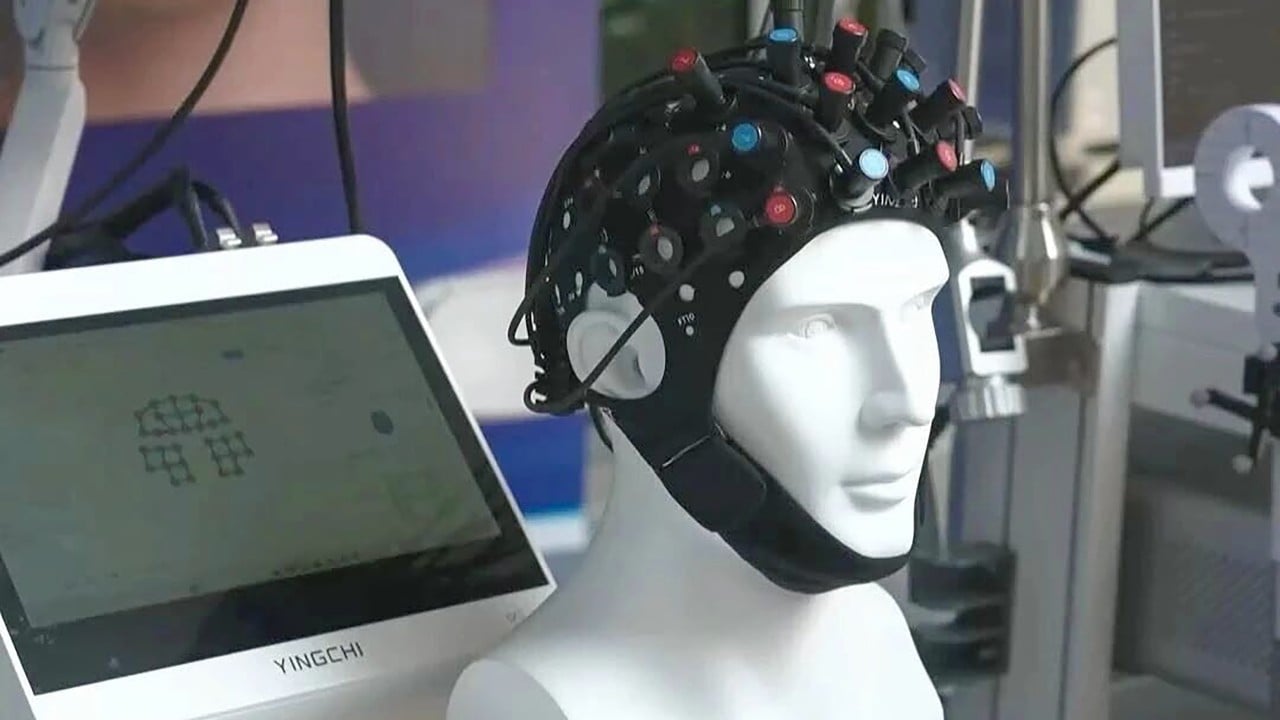
Yet, popular articles routinely describe these devices as simple, portable helmets that paramedics or local clinics will soon slap onto coma patients. That is pure fantasy. Without real-time magnetic resonance acoustic radiation force imaging (MR-ARFI) to verify where the beam is actually landing, you are essentially shooting blindfolded through a brick wall and hoping you hit a light switch on the other side.
Confusing a Reflex With a Resurrection
Let us look closely at what actually happens when ultrasound hits the thalamus.
The thalamus acts as the brain’s central relay station, routing sensory signals to the cerebral cortex and regulating sleep, alertness, and consciousness. In patients with disorders of consciousness—specifically those in a minimally conscious state (MCS) or vegetative state (now more accurately termed unresponsive wakefulness syndrome, or UWS)—the thalamocortical loop is severely disrupted.
When you pulse low-intensity ultrasound into the thalamus, the mechanical pressure waves gently vibrate neuronal membranes. This stretches mechanosensitive ion channels, causing calcium and sodium ions to rush in, which temporarily forces the neurons to fire.
Notice the key word there. Temporarily.
Forcing dormant neurons to fire via mechanical stimulation is not the same thing as repairing severed axons. If a severe traumatic brain injury or prolonged cardiac arrest has physically destroyed the white matter tracts connecting the thalamus to the prefrontal cortex, buzzing the thalamus with sound waves will not rebuild the wiring.
Imagine a scenario where a massive hurricane wipes out the power lines connecting a city’s central power plant to its neighborhoods. You can walk into the power plant, manually crank the turbines, and watch the needles spike on the control panel. You might even see a single streetlight flicker down the block. Does that mean the city has power again? No. The grid is still shredded.
When mainstream outlets report that an ultrasound patient "woke up," they are almost always describing an incremental jump on a diagnostic scale—such as tracking a mirror with their eyes or responding inconsistently to a simple command—that often fades within days or weeks once stimulation stops. Calling that a reawakening is a massive distortion of clinical reality.
Dismantling the Questions Families Actually Ask
When families encounter these headlines, they rush to neurologists with urgent, heartbreaking questions. Most media coverage feeds their false hope instead of giving them straight answers. Let us dismantle the most common questions surrounding this technology.
Can ultrasound therapy cure a coma?
No. First, true coma rarely lasts more than two to four weeks; patients either recover, pass away, or transition into unresponsive wakefulness syndrome or a minimally conscious state. Second, ultrasound does not cure structural brain damage. At best, it acts as a neuromodulatory kickstart for brains that already possess intact, albeit dormant, neural architecture. If the underlying cortex is necrotic, sound waves will do nothing.
Is non-invasive ultrasound safer than deep brain stimulation?
On paper, yes—because you do not have to drill burr holes into the skull and thread electrodes into the midbrain, which carries risks of hemorrhage and infection. In practice, "non-invasive" does not mean risk-free. Focused ultrasound carries real dangers of localized tissue heating, micro-cavitation (where microscopic gas bubbles form and violently collapse, shredding blood vessels), and unintended blood-brain barrier disruption. If you miscalculate the skull’s acoustic impedance, you can cook deep brain tissue without leaving a mark on the scalp.
How soon will this be available in regular hospitals?
Not anytime soon, regardless of how many press releases come out of Beijing, Boston, or London. Moving a neuromodulation therapy from a specialized academic research center to standard clinical care takes a decade of rigorous, sham-controlled trials, FDA or NMPA regulatory clearance, and standardized hardware calibration. Anyone telling you this will be standard ICU protocol within two years is selling stock, not medicine.
The Uncomfortable Truth About Neuro-Rehabilitation
There is a massive financial and academic incentive to chase shiny hardware solutions. Tech journalists love sleek transducers. Venture capitalists love patentable medical devices. Universities love global headlines about breakthroughs in consciousness.
Meanwhile, the interventions that actually move the needle for severe brain-injury patients get starved of funding and attention.
Do you want to know what genuinely helps a minimally conscious brain rebuild functional pathways? Relentless, high-frequency physical and occupational therapy, aggressive prevention of secondary complications like hydrocephalus and neuro-inflammation, targeted pharmacological regimens (like amantadine, which actually has robust, double-blind clinical trial backing for accelerating recovery in severe TBI), and sensory regulation.
Even more importantly, we have a massive diagnostic failure in modern neurology. Studies published in journals like The New England Journal of Medicine have shown that roughly 15 to 20 percent of patients diagnosed as completely vegetative actually exhibit "cognitive motor dissociation"—meaning their minds are awake and aware, trapped inside bodies that cannot execute motor commands.
Before we spend billions trying to blast patients awake with acoustic beams, we should focus on using functional MRI and high-density EEG to identify the patients who are already awake and simply locked in.
Where Ultrasound Actually Belongs
To be completely fair, dismissing low-intensity focused ultrasound entirely would be just as foolish as overhyping it. The technology has genuine, profound utility—just not as a miracle resurrection wand.
First, as a diagnostic sorting tool, ultrasound has massive potential. If a clinician can deliver a safe, calibrated acoustic pulse to the thalamus and observe immediate downstream cortical activation on an EEG, it proves that the thalamocortical highway is still physically intact. That tells the medical team which patients have high potential for recovery and deserve aggressive, long-term rehabilitation, separating them from patients whose neural networks are irreversibly destroyed.
Second, LIFU shines when paired with targeted pharmacology. By tuning ultrasound parameters to temporarily and safely open the blood-brain barrier in specific regions, doctors can deliver neuroprotective drugs, neurotrophic factors, or anti-inflammatory agents directly to damaged brain tissue at concentrations that would otherwise be toxic to the rest of the body.
Third, it offers a non-surgical testing ground before committing patients to permanent Deep Brain Stimulation (DBS) implants. Surgeons can use focused ultrasound to map the exact thalamic nuclei that yield the strongest arousal response in a specific patient, dramatically improving the success rate if they later decide to implant permanent electrodes.
Stop Buying the Miracle Narrative
Science moves in millimeters, not leaps. When researchers in China, the United States, or Europe publish new data on transcranial ultrasound, they are adding a single brick to a foundation that will take twenty years to finish.
We need to stop treating complex neurological trauma like a broken radio that just needs a sharp smack on the side to start playing music again. Human consciousness is not a single switch buried in the thalamus. It is an emergent, wildly complex symphony distributed across billions of interconnected neurons.
Until the tech press learns the difference between vibrating a cluster of cells and restoring a human mind, keep your skepticism sharp. The next time you read that a country is winning the race to reawaken the brain, look past the headline, check the sample size, ask where the control group is, and remember that sound waves cannot rebuild what trauma has already erased.