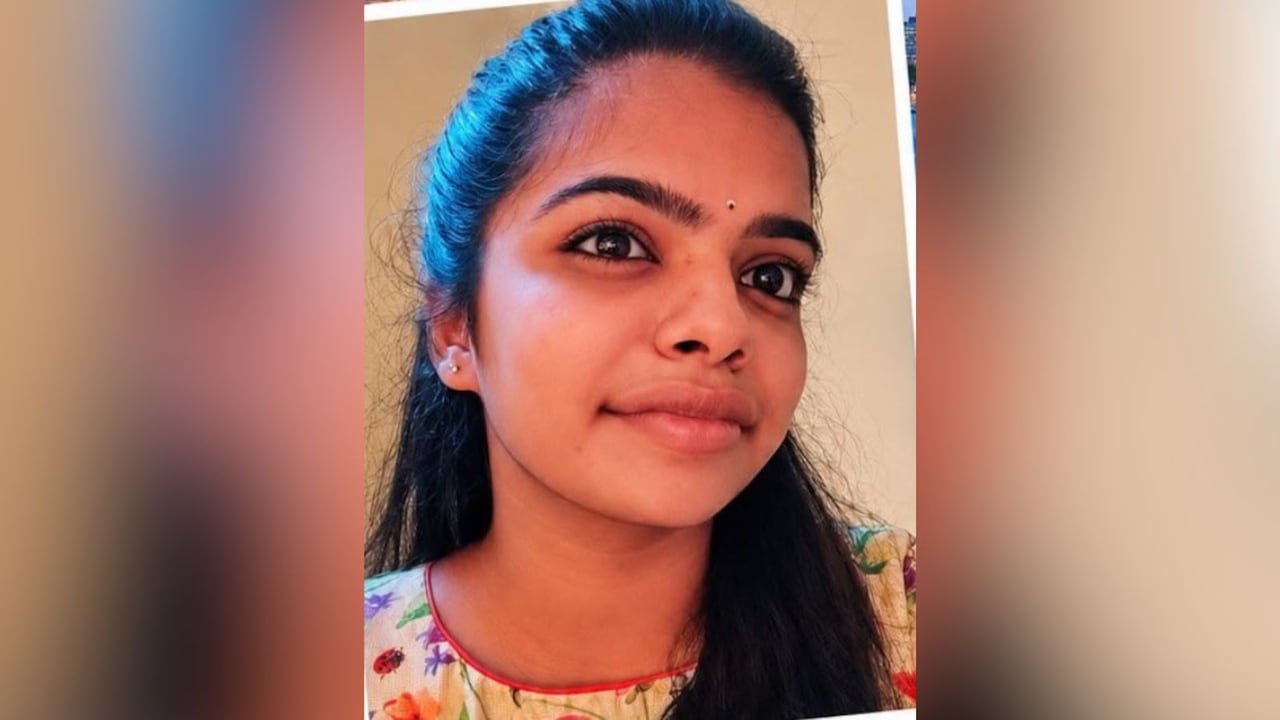
On the night of November 2, 2026, 23-year-old Sreeja Reddy Koya stepped out of her apartment in the Edison Green area of Dorchester, Boston, and vanished. She was a graduate student pursuing a Master of Science in Finance at the University of Massachusetts Boston. Her mobile phone went dead shortly after she left, and her last known digital footprint placed her roughly a kilometer from her front door, near the waterfront stretch of Carson Beach and Harbor Point. More than three weeks later, despite a missing person alert from the Boston Police Department, diplomatic intervention from the Indian Consulate, and appeals from her family in Telangana, her whereabouts remain unknown.
Initial wire reports reduced the incident to a familiar, tragic headline about an international student going for a walk and failing to return. That surface-level framing misses the disturbing details embedded in the timeline. It ignores the strange physical clues reported on the night she disappeared, the logistical friction of cross-border missing person investigations, and the silent pressures weighing on young Indian students navigating life thousands of miles from home.
The Timeline That Does Not Add Up
To understand why this case has rattled both the Boston area and Sreeja's hometown of Shabdullapuram in Telangana's Nalgonda district, you have to look closely at the sequence of events on November 2.
Sreeja was not an isolated newcomer struggling to find her bearings. She had moved to the United States roughly a year and a half earlier, completed her undergraduate commerce degree in Hyderabad beforehand, and had just spent a full month back home in India in August. According to her mother, Swaroopa Reddy, Sreeja appeared happy, grounded, and entirely normal during that visit.
On the evening of her disappearance, she spoke with her mother by phone. There was loud background noise on the line—a birthday party was taking place at her residence. Sreeja asked if her mother had eaten and mentioned she planned to eat soon and go to sleep early.
Then, around 9:45 p.m., she walked out of the apartment.
Her family back in Telangana immediately questioned the narrative that she simply went out for a routine evening stroll. Her mother noted that Sreeja was normally cautious and would not casually walk alone at night. Even more puzzling is a detail that surfaced in local reporting: patrolling police officers reportedly spotted Sreeja walking barefoot near the Edison Green area around the time she left her building.
A student leaves a noisy birthday gathering at 9:45 p.m. in early November in New England—without shoes—wearing a black jacket and blue jeans. Her phone switches off within a kilometer of her residence. That is not a routine walk. It is a sudden, unexplained departure that points toward acute distress, an emergency, or an abrupt break from her normal behavior.
Geography and the Waterfront Problem
When investigators pulled the final cellular data from Sreeja's device, the trail ended near Carson Beach and Harbor Point.
For anyone unfamiliar with Boston's geography, Dorchester sits along the southern waterfront of the city. Edison Green is an inland residential pocket, roughly a 15-to-20-minute walk east toward the coast. Crossing Columbia Road brings a pedestrian directly to the shoreline of Dorchester Bay, where Carson Beach stretches along William J. Day Boulevard, bordered by the Harbor Point peninsula—the exact area housing the UMass Boston campus.
Waterfront terrain complicates search and rescue operations exponentially. Unlike an urban grid lined with commercial storefronts, ring cameras, and transit turnstiles, coastal parks and bayfront walkways go dark and empty after 9:00 p.m. in November. Cold water temperatures in Massachusetts Bay during late autumn create immediate survival risks if someone enters the water, whether by accident or intent.
Local residents near Harbor Point reported seeing a heavy police presence in the days immediately following the November 3 missing person report, including officers deploying drones and marine units along the shoreline. Yet once the initial 48-hour window closed without a physical trace, visible search operations tapered off, leaving friends and community members to circulate flyers on social media and Reddit.
The Bottleneck of Cross-Border Crisis Response
When an American college student vanishes off-campus, parents can drive to the precinct, demand daily briefings from detectives, hire private investigators, and rally local press within hours. When a student from a farming family in Nalgonda district disappears in Massachusetts, distance becomes an institutional barrier.
Sreeja's father, Yadagiri Reddy Koya, a farmer who invested his hopes into seeing his daughter earn a graduate degree abroad, had to rely on secondhand updates relayed through her roommates, community volunteers, and diplomatic channels. It took until November 4—two full days after she walked out the door—for the Boston Police Department to issue a formal public missing person alert. By November 7, Telangana Roads and Buildings Minister Komatireddy Venkat Reddy publicly intervened, urging the Ministry of External Affairs and the Consulate General of India in Boston to press local authorities.
This lag highlights a recurring structural flaw in how international student emergencies are handled:
- Jurisdictional fragmentation: Local municipal police treat adult disappearances without immediate evidence of foul play as standard missing person cases, which rarely trigger instant emergency alerts.
- Privacy walls: Under U.S. federal privacy laws like FERPA, universities are restricted in what information they can release, even to frantic parents overseas, unless formal emergency waivers or law enforcement subpoenas are in place.
- Diplomatic reaction time: Consulates do not have investigative authority. They act as liaisons, meaning meaningful pressure on local precincts often only materializes after a story gains political traction back in India.
Organizations like the Telugu Association of North America stepped in to visit Boston police stations and act as a bridge for the family, filling an operational void that neither universities nor governments efficiently cover.
The Unspoken Weight on International Graduate Students
Behind the police bulletin lies a broader reality that rarely makes it into breaking news briefs. Sreeja was balancing a demanding Master of Science in Finance program at UMass Boston while working part-time to cover her living expenses.
That dual load is standard for hundreds of thousands of Indian graduate students in the United States, yet its psychological toll remains chronically under-discussed. Tuition fees, high urban rent in cities like Boston, visa compliance rules that restrict off-campus employment, and the immense financial expectations of families back home create a pressure cooker. Students routinely mask exhaustion or anxiety during phone calls home so they do not worry their parents—just as Sreeja reassured her mother she would eat and sleep early while a party raged in the background.
Acknowledging this context does not solve what happened on the night of November 2. Law enforcement has not confirmed whether Sreeja experienced a medical or mental health crisis, met with foul play, or suffered an accidental fall near the water. Until District C-11 detectives recover physical evidence or secure witness footage from the corridor between Edison Green and Dorchester Bay, every theory remains unverified.
What Needs to Happen Now
For the investigation to move forward, attention must stay fixed on actionable evidence rather than speculation. Investigators and community volunteers are still asking anyone who was near Edison Green, Columbia Road, Carson Beach, or Harbor Point after 9:30 p.m. on November 2 to review dashcam footage, residential security cameras, or late-night transit recordings.
Anyone with credible details or video files can contact Boston Police District C-11 detectives directly at 617-343-4335, call 911, or submit anonymous tips through Boston Police CrimeStoppers at 1-800-494-TIPS. Every camera angle along that one-kilometer stretch between her apartment and the bay holds the potential to turn an open timeline into an answer for a family waiting half a world away.
Watch this NDTV report on Sreeja Reddy Koya's disappearance in Boston for a visual summary of the initial missing person alert and her family's appeal.