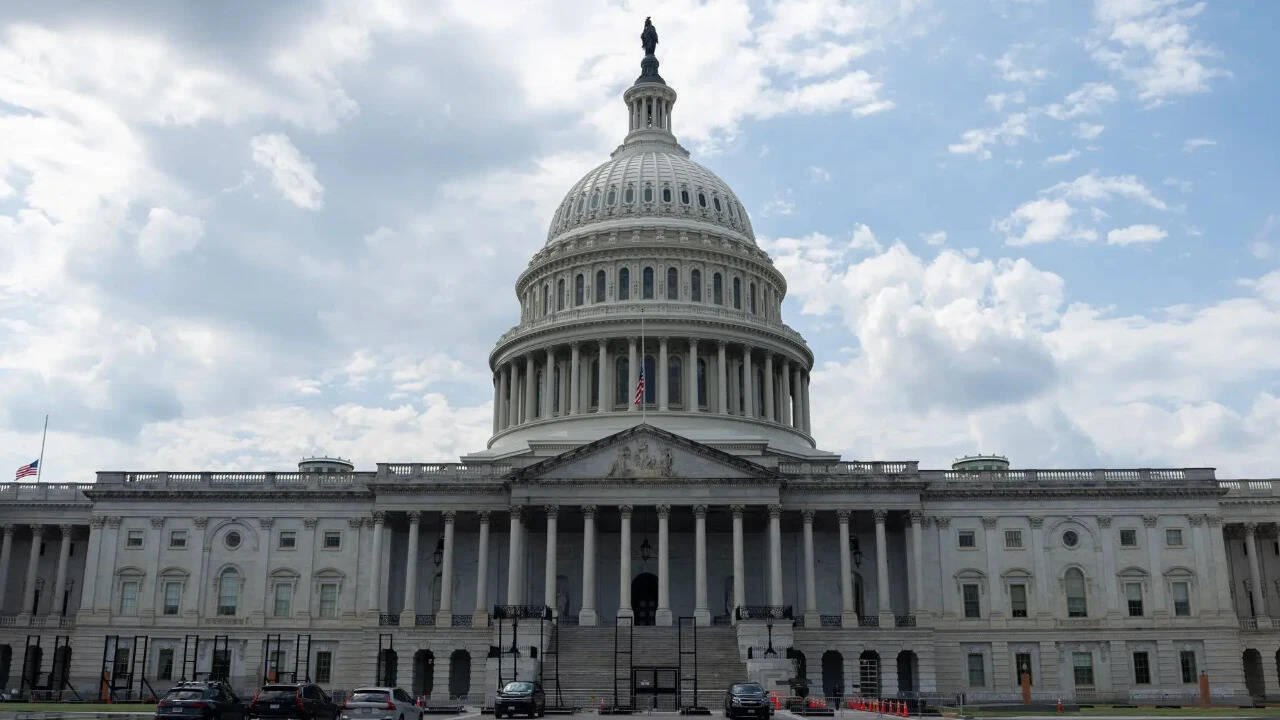
The United States House of Representatives just passed the Protect Economic and Academic Freedom Act by a 237-169 vote, creating an unprecedented federal trap for higher education institutions over boycotts of Israel. Thirty-three Democrats crossed party lines to join a Republican majority, signaling that Capitol Hill is willing to tie federal student aid and international program funding directly to foreign policy compliance.
This legislative maneuver targets the Boycott, Divestment, and Sanctions (BDS) movement. Yet the text of the bill does not actually mention BDS by name. Instead, it amends the Higher Education Act of 1965 to penalize universities engaging in what it defines as a "nonexpressive commercial boycott" of Israel.
Watch how the mechanics of this bill operate. It requires colleges receiving federal funds to submit an annual certification guaranteeing they do not participate in commercial boycotts or restrict students from joining study abroad programs in Israel. Fail the certification, or let a politically active student group pressure an endowment fund into an indirect divestment, and the university faces the total evaporation of federal financial lifelines.
The Pretext Versus the Reality
Walk onto any quad in America today, and you will find an administration walking through a minefield. Following the escalation of the conflict in Gaza after October 7, 2023, student encampments and faculty resolutions put immense pressure on campus trustees. They demanded transparency, divestment, and the severance of institutional ties with companies doing business with the Israeli military.
Virtually no major American university actually capitulated to these structural divestment demands. College presidents mastered the art of issuing ambiguous statements while quietly protecting multi-billion-dollar endowments.
Supporters of the legislation argue that preemptive containment is necessary. Representative Virginia Foxx and Representative Josh Gottheimer framed the measure as an essential firewall against rising antisemitism disguised as academic activism. They contend that taxpayer dollars must never subsidize institutional discrimination against one specific nation or religion.
Critics point out a glaring contradiction. If no university has actually instituted an academic or commercial boycott of Israel, why draft a federal statute carrying a nuclear option penalty?
The answer lies in the ambiguity of modern corporate and financial portfolios. Modern university endowments are tangled webs of index funds, venture capital, and indirect holdings.
The Legal Minefield of Commercial Boycotts
To understand why this legislation terrifies university general counsels, look closely at the legal distinction between expressive speech and nonexpressive commercial conduct.
Federal courts have previously ruled that economic boycotts can be classified as commercial conduct rather than protected symbolic speech. The new House bill capitalizes on this legal distinction. By categorizing certain forms of institutional non-cooperation as commercial boycotts, the bill sidesteps standard First Amendment defenses that usually protect campus protests.
Consider a hypothetical example. Suppose a university endowment fund quietly shifts its holdings away from a multinational technology contractor that supplies services to military forces worldwide, doing so to optimize portfolio safety or respond to internal ESG metrics. Under this new legislation, bad-faith litigants or political actors could comb through that portfolio change. They could argue that the divestment was a targeted commercial boycott against Israeli interests.
The university would then bear the burden of proving a valid commercial reason for the trade. Every routine asset reallocation becomes a potential federal lawsuit.
Legal scholars note that this shifts the baseline of institutional behavior. Universities will no longer simply avoid boycotting Israel; they will be incentivized to over-correct. They must actively seek out institutional partnerships and research grants with Israeli entities to prove their compliance. Neutrality is effectively outlawed.
The Fractured Democratic Coalition
The floor vote revealed deep fissures within the Democratic Party. Thirty-three Democrats voted in favor of the bill, driven by a mixture of staunch pro-Israel advocacy and acute electoral vulnerability ahead of tight midterm contests.
Lawmakers facing difficult re-election battles in competitive districts could not afford to be painted as soft on antisemitism. At the same time, veteran liberal legislators like Representative Jerrold Nadler broke ranks to vote against the measure. Nadler argued that undermining the foundational right to protest, even speech one finds objectionable, creates a dangerous precedent that will eventually be weaponized against other political viewpoints.
This split highlights a broader strategic miscalculation by congressional leadership. By forcing a vote on an issue where compliance is technically universal among universities, leadership successfully manufactured a wedge issue. They split the opposition caucus while projecting unyielding alignment with foreign policy allies.
Yet the long-term cost falls entirely on academic administration.
What Happens When the Senate Takes It Up
The bill now heads to the Senate, where its future remains uncertain. The upper chamber operates under different procedural rules, and the legislative calendar is crowded with budget battles and judicial nominations.
If the Senate takes up the measure, expect intense lobbying from higher education associations. Groups like the American Council on Education usually fight federal mandates that tie educational funding to political behavioral codes. They argue that federal overreach into endowment management and curriculum access degrades the traditional autonomy of American higher education.
Even if the bill stalls in the Senate, the House vote has already altered the landscape. It establishes a clear legislative template. Future Congresses can adapt this model to target any ideological movement on campus, whether related to climate policy, international conflicts, or domestic social issues.
The precedent is set. Federal dollars are no longer insulated from ideological litmus tests. Universities wanted government protection and funding, but they are discovering that the price of admission is the surrender of administrative independence.