The screen flickered. The room smelled of stale coffee and wool coats that had absorbed too much winter rain. Outside, the capital was frozen in a gray grip, but inside the convention hall, the air felt electric, humming with a frequency that defied party lines.
Then came the clip.
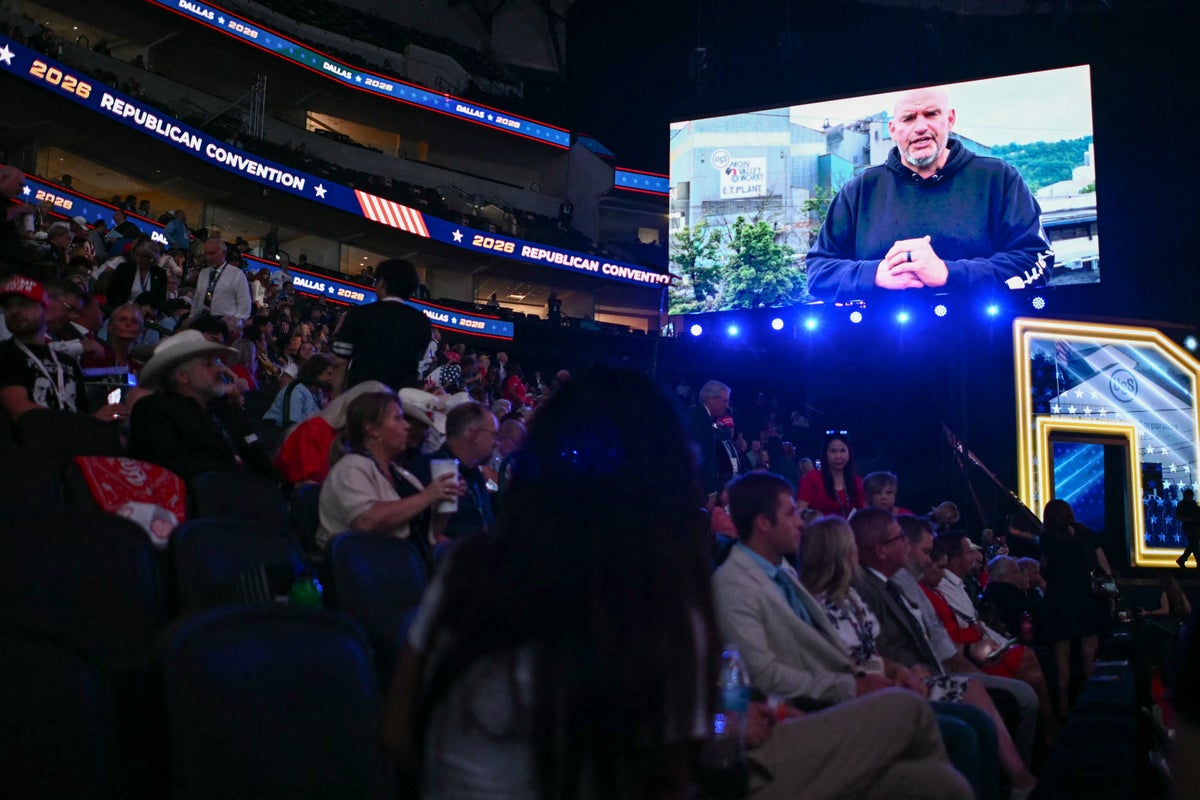
It was John Fetterman. Not the Fetterman of the hoodie on the Senate floor, nor the rumpled figure battling the grueling aftermath of a stroke under the hot glare of congressional spotlights. This was something else. This was a video flickering across the massive screens at a Republican gathering, featuring the Pennsylvania Democrat in a moment that stopped the room cold. A tribute. A nod. A wink from across an abyss that most politicians spent their entire careers widening.
Silence stretched. Then a murmur.
To understand why that moment mattered, why social media feeds caught fire and news anchors scrambled to rewrite their morning scripts, you have to step away from the podium and look at the geometry of modern political tribalism. We have built a machine that runs on iron walls. You stay on your side. You use your vocabulary. You nod only at your own reflection.
Fetterman has a habit of smashing those walls with a sledgehammer, sometimes awkwardly, sometimes brilliantly, always loudly.
Consider the mechanics of how we consume outrage today. It arrives in micro-doses, optimized for adrenaline. A senator crosses an invisible line, and the digital bells toll instantly from both flanks. The left groans in betrayal; the right smirks in opportunistic triumph. But beneath the algorithmic theater lies a simpler, messier human truth. Politicians are people trapped inside costumes of absolute certainty, and occasionally, the costume tears.
The video at the GOP convention wasn't just a political oddity. It was a symptom of a deeper fracture in how we define allegiance.
I remember sitting in a diner in western Pennsylvania three years ago, watching the blue-collar corridors where the political ground was shifting beneath everyone's feet. The patrons weren't reading policy white papers. They were watching who looked them in the eye, who swore without a filter, who seemed to bleed when things went wrong. The old guard of politics relied on polished edges and careful calculation. The new era runs on raw nerve.
When Fetterman appeared in that tribute video, leaning into the populist currents that usually spell heresy for a standard-bearer of the Democratic Party, he wasn't necessarily executing a grand strategy. Often, survival in the political arena looks less like chess and more like stumbling through a dark room and accidentally hitting the light switch.
Yet, the reaction tells us everything about our collective anxiety.
We crave purity, yet we distrust perfection. We demand that our leaders embody our deepest convictions, yet we secretly cheer when they break character, because it reminds us that they are breathing flesh beneath the partisan armor. The tribute video became a Rorschach test for a country split down the middle. To some, it was proof of apostasy, a sign that the center cannot hold because the edges are actively trading dance partners. To others, it was a rare breath of fresh air in a room that has lacked oxygen for a decade.
Look closely at the architecture of the modern convention stage. Every banner is measured. Every camera angle is tested for maximum emotional resonance. Nothing is accidental, and yet, human eccentricity always manages to slip past the gatekeepers. Fetterman has carved out a strange, lonely niche in contemporary governance. He is simultaneously fiercely loyal to his party’s core legislative goals and utterly contemptuous of its polite etiquette.
That contradiction makes people uncomfortable. We like our villains clearly marked and our heroes cast in bronze. We do not know what to do with a figure who votes down the line for progressive priorities while refusing to speak the language of polite committee rooms.
The room in that convention hall didn't erupt into cheers because they suddenly agreed on tax policy or judicial appointments. They cheered because of the disruption. In a system paralyzed by predictability, any deviation feels like an earthquake.
We spend so much time mapping the ideological terrain of America as if it were a permanent mountain range carved in stone. We draw the lines between red and blue, rural and urban, insider and outsider, and assume the borders are airtight. But politics is weather, not geography. It shifts with the wind, driven by sudden storms of economic dread, cultural exhaustion, and the desperate search for someone—anyone—who sounds like they are living in the same century as the rest of us.
When the video faded to black and the convention floor moved on to its next scheduled speaker, the air in the room remained charged. The pundits on television immediately went to work, filing their columns, sorting the moment into neat little boxes of strategic win and tactical loss. They measured the ripples. They calculated the cost.
They missed the point entirely.
The clip was never about a video tribute or a bipartisan handshake. It was about the cracking of the mold. It was a reminder that the walls we build around our political identities are fragile things, held together by habit and fear, waiting for someone to walk right through them just to see if the door was unlocked all along.
The screen went dark, but the hum in the room stayed, vibrating at a frequency that no script could capture and no campaign manager could spin.