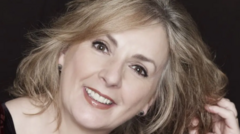
Moya Brennan didn't just sing. She breathed life into a version of Ireland that many of us had forgotten existed before she arrived on the scene. With her passing at the age of 73, we’ve lost more than a vocalist. We’ve lost the First Lady of Celtic Music, the woman who took the misty, haunting sounds of Donegal and turned them into a global phenomenon. It’s a heavy day for anyone who grew up with the ethereal harmonies of Clannad or the cinematic sweep of her solo work.
I’ve spent years listening to the evolution of the Irish folk scene. It’s easy to group everyone together under a generic "trad" label, but Moya was different. She was the bridge. She took the ancient, dusty corners of Irish Gaelic and wrapped them in modern textures that somehow made the music feel both timeless and incredibly current. If you think Irish music is just fiddles and pints in a pub, you’ve been missing the point. Moya proved it could be high art, deeply spiritual, and commercially massive all at once.
The Donegal Roots That Defined a Global Sound
Moya was born Maire Ní Bhraonáin in 1952. She grew up in Gweedore, a place where the Atlantic wind is basically a background instrument. Her father Leo ran Leo’s Tavern, a spot that became the heartbeat of the local music community. This wasn't some manufactured career. It was organic. Along with her brothers Pól and Ciarán and her uncles Noel and Pádraig Duggan, she formed Clannad in 1970.
They started out playing traditional songs in Irish. Back then, that wasn't exactly a ticket to the top of the charts. Most people thought it was niche. They were wrong. The band’s breakthrough didn't happen by trying to be pop stars. It happened because they leaned into their identity. When "Theme from Harry’s Game" hit the airwaves in 1982, it changed everything. It was the first time a song sung entirely in Irish reached the UK Top 5. That wasn't just a win for the band; it was a massive cultural shift for the entire country.
Breaking the Mold of Traditional Folk
Most folk acts at the time were strictly acoustic. Clannad, led by Moya’s unmistakable voice, started experimenting with synthesizers and ambient layers. This is where the "Celtic" genre as we know it today was born. It’s a sound that feels like a landscape. It’s wide. It’s deep.
Moya’s voice was the anchor. It had this breathy, fragile quality that could suddenly turn powerful and resonant. It’s what people call "the voice of Clannad," but it was really the voice of an entire movement. Think about the mood of Robin of Sherwood or the Last of the Mohicans soundtrack. That atmosphere exists because Moya showed the world how to use the Irish language as a melodic instrument rather than just a linguistic one.
She faced criticism from purists, of course. There’s always someone who thinks music should stay trapped in a museum. Moya didn't care. She knew that for a culture to survive, it has to breathe. It has to grow. By mixing the old with the new, she ensured that Irish music wouldn't just be a footnote in history books.
The Enya Connection and the Brennan Dynasty
You can’t talk about Moya without mentioning the rest of the family. Her younger sister Enya started out in Clannad before going on to her own massive solo success. People often try to compare them, but that’s a mistake. While Enya leaned into a highly produced, layered studio sound, Moya always kept a bit of that raw, live energy in her performances.
She was the matriarch of a musical dynasty. Her siblings, her children, and her extended family have all contributed to the arts in ways that are hard to quantify. But Moya was the one who stayed most connected to the live performance circuit. She was a fixture at festivals and cathedrals, always willing to share the stage and mentor younger artists. She understood that being an artist means being part of a lineage.
A Career Beyond the Band
When Clannad took breaks, Moya didn't stop. Her solo career, starting with the album Máire in 1992, allowed her to explore her own spiritual and personal themes. She won a Grammy. She worked with everyone from Bono to Robert Plant.
One of her most significant contributions was her transparency about her faith and her personal struggles. In her autobiography, The Other Side of the Rainbow, she was incredibly honest about the highs and lows of fame. She didn't hide the messy parts. That’s rare in an industry that loves to polish every surface until it’s fake. She was real. That’s why her fans felt such a deep connection to her.
Why Her Voice Still Matters in 2026
In an age where everything is autotuned and processed through a dozen filters, Moya’s work stands out because it’s rooted in something physical. It’s rooted in the soil of Donegal. It’s rooted in a language that carries thousands of years of grief and joy.
Her death marks the end of an era, but the blueprint she left behind is everywhere. You hear it in modern ambient music. You hear it in the scores of epic fantasy films. You hear it every time a young singer picks up a harp and decides to sing a song in Irish. She made it cool to be authentic. She made it possible to be global and local at the same time.
If you really want to honor her memory, don't just read the headlines. Go back and listen to Magical Ring or Banba. Pay attention to the way her voice floats over those synth pads. Listen to the phrasing. She taught us that you don't need to shout to be heard. Sometimes, the most powerful thing you can do is whisper.
The next step for anyone looking to understand the depth of Irish culture is to stop looking at it through a tourist lens. Dive into the lyrics of Clannad. Support the local venues in Donegal that gave Moya her start. The tavern is still there. The music is still there. It's up to us to keep listening.