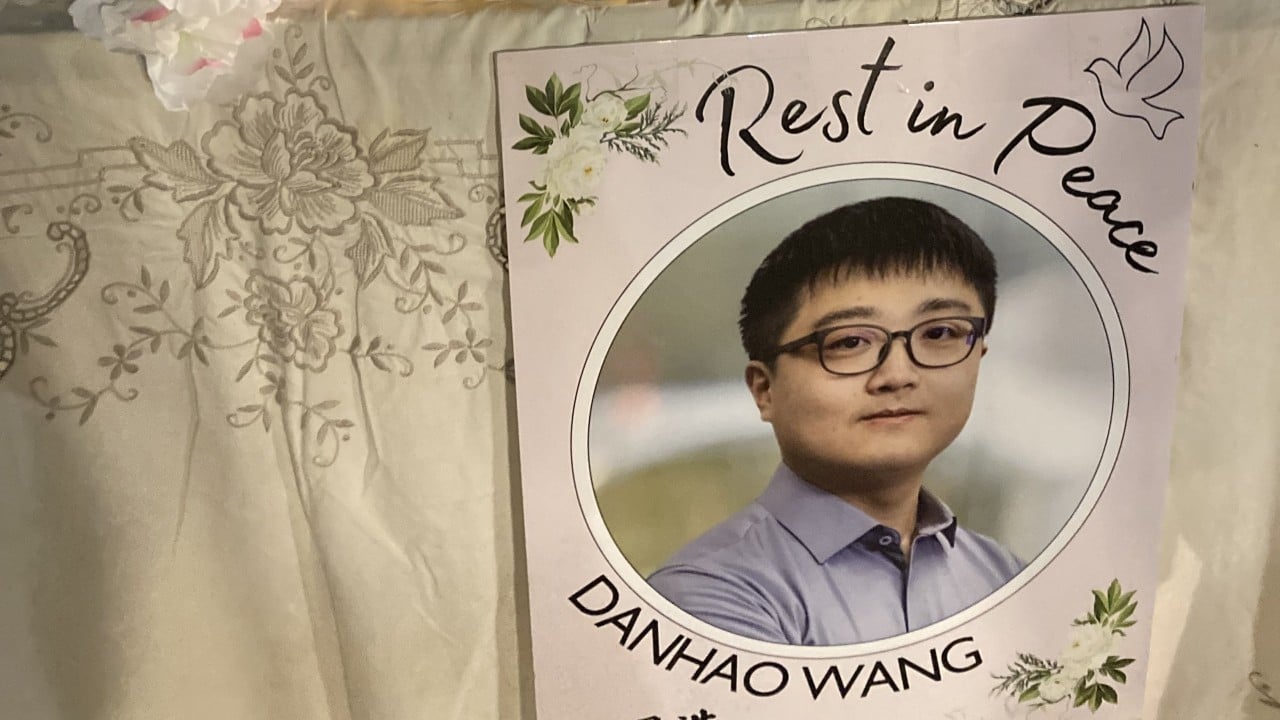
On a frigid morning in March 2026, two Homeland Security agents knocked on the door of a rental house in Ann Arbor, Michigan. They were not looking for a hardened criminal or an international arms dealer. They were looking for Danhao Wang, a thirty-one-year-old postdoctoral research scientist specializing in electrical and computer engineering at the University of Michigan. What followed over the next thirty-six hours culminated in a tragedy that shook the academic community to its core, leaving behind a trail of heavily redacted police documents, unanswered questions, and a chilling reminder of the heavy-handed security state operating inside American universities.
When the campus police report regarding Wang’s death was finally made public months later, it did not provide closure. Instead, it exposed glaring gaps in the official narrative. The document contained bizarre redactions, missing timelines, and unexplained bureaucratic blackouts that invited deep skepticism from investigative reporters, legal experts, and human rights advocates alike. Why did a routine federal interview precede a sudden fatal plunge from an upper floor of the George G. Brown Memorial Laboratories? To understand the weight of this incident, one must look past the bureaucratic euphemisms and examine the machinery of suspicion that currently governs foreign-born academics in the United States.
The Morning at the Coffee Shop
The initial encounter between Wang and federal authorities occurred on March 18, 2026. According to the police logs, two Homeland Security officers arrived at his residence during harsh winter weather. One officer reportedly offered to reschedule the interview given the cold conditions outside. Wang declined the offer. He wanted to clear his name immediately. He agreed to speak with them right then and there.
The trio drove separately to a nearby coffee shop. For roughly thirty minutes, Wang sat across from federal investigators discussing his academic background and research focus. Wang was an electrical engineer with a doctorate from the University of Science and Technology of China, specializing in semiconductor materials, photonics, and nanostructures. His curriculum vitae boasted numerous publications in technical journals, placing him squarely at the intersection of modern electronic development.
In the hyper-charged geopolitical environment surrounding high-tech research, expertise in semiconductor fabrication is treated by federal security agencies as a potential vector for intellectual property theft. Wang’s specific field of study involved III-nitride thin films, components vital for advanced optical and electronic systems. To an academic, these are fundamental building blocks of basic science. To Homeland Security investigators operating under broad national security mandates, they can be viewed through a lens of paranoid suspicion.
The conversation at the coffee shop concluded without an immediate arrest, public indictment, or formal charge. According to colleagues whom Wang spoke with shortly afterward, an attorney or representative had offered reassurance that the interaction was minor or routine. Yet, the psychological weight of being singled out by federal agents weighed heavily on a young scholar thousands of miles away from home.
The Blackout in the Timeline
Transparency is supposed to be the ultimate safeguard against official negligence or misconduct. Yet, the police report released by local authorities regarding Wang’s final days reads less like an investigative accounting and more like a redacted intelligence briefing.
One of the most glaring anomalies in the report centers on the timeline of March 18. While multiple minor movements are logged with precise timestamps, a critical window remains entirely blank. Two distinct events are timestamped to the minute during the morning hours—one at 8:44 AM and another at 11:42 AM—yet the accompanying text for what occurred during those intervals has been entirely scrubbed from the public record.
When official records introduce wholesale redactions into a timeline surrounding a fatal encounter with law enforcement, public trust evaporates. Why would a record of a routine immigration or security inquiry require state-level secrecy? The absence of these details fuels speculation that the scope of the questioning went far beyond a casual administrative check. It suggests a high-pressure interrogation designed to intimidate rather than simply gather facts.
The Precedent of Prosecutorial Overreach
To view Wang’s death as an isolated administrative mishap is to ignore the broader legal landscape that preceded it. For years, federal initiatives ostensibly designed to combat economic espionage have cast an indiscriminate net over university campuses. The results have frequently been devastating for innocent researchers whose careers and lives are upended before due process even begins.
Consider the atmosphere at the University of Michigan and neighboring institutions in the months leading up to Wang’s death. Federal prosecutors had previously targeted other foreign researchers at the university under sweeping, sensationalized allegations of smuggling biological materials or illicit technology transfer. In multiple high-profile instances, those charges quietly evaporated when prosecutors filed abrupt motions to dismiss indictments without offering public explanations or apologies.
Months of detention, ruined reputations, and shattered professional networks were left in the wake of government overreach. When researchers accused of smuggling biological agents were later found to have been carrying harmless plasmid DNA rather than dangerous pathogens—with supervising professors publicly denouncing the prosecutions as politically motivated—it became entirely clear that the system cared more about political optics than scientific accuracy.
Wang was acutely aware of this hostile climate. When foreign scholars watch their peers dragged through the legal grinder based on flimsy or politically motivated suspicions, they learn a devastating lesson. They learn that their universities will not stand up for them. They learn that institutional legal counsel is often more concerned with corporate liability and federal funding retention than with defending individual rights.
By the time Wang returned to his rented house on the night of March 18, the psychological toll was visibly crushing. His landlord later reported seeing him leave through the back door late that evening, visibly distressed and crying. Thirty-six hours later, he entered the George G. Brown Memorial Laboratories and fell from an upper level to his death.
The Chilling Effect on Global Science
Science does not respect national boundaries. Breakthroughs in semiconductor technology, medical research, and clean energy rely on global collaboration, cross-border peer review, and the free movement of brilliant minds. When governments erect walls of suspicion around entire nationalities, the cost is borne not just by the individuals targeted, but by the entire international scientific enterprise.
The diplomatic fallout was immediate. Beijing’s Ministry of Foreign Affairs and its consulate in Chicago issued sharp protests, characterizing the federal interrogation as hostile and demanding a comprehensive, transparent investigation. Spokespersons noted that overstretching the concept of national security for political manipulation creates a severe chilling effect, poisoning the atmosphere of international academic exchanges and infringing upon the legitimate rights of foreign scholars.
Yet, beyond the war of words between Washington and Beijing lies an quieter, more insidious casualty: the confidence of the global academic workforce. When foreign scholars face constant surveillance, arbitrary questioning, and the constant threat of career annihilation based on their country of origin, many simply choose to leave. Talented minds are packing their bags and returning to Asia or Europe, accelerating a brain drain that will damage American technological competitiveness far more effectively than any foreign adversary ever could.
The Search for Real Accountability
Official investigations into deaths involving law enforcement contact often follow a predictable script. Internal reviews clear the officers involved. Reports are filed, heavily redacted, and shelved. Institutions express deep sorrow while quietly changing nothing about the policies that created the crisis in the first place.
This pattern is unacceptable. The family of Danhao Wang, the academic community, and the public deserve a full, unredacted accounting of what transpired during those missing minutes on March 18. The specific instructions given to the Homeland Security agents, the nature of the information requested, and any communications between federal agencies and university administrators must be brought into the light.
Until academic institutions regain the courage to protect their scholars from political grandstanding and federal overreach, the shadow over campus laboratories will only deepen. A university that hands over its researchers to armed federal agents without demanding absolute legal transparency is failing its fundamental mission.
The silence from administrative offices is deafening, punctuated only by the quiet footsteps of researchers packing up their offices, wondering whose door the agents will knock on next.