The Warm Embrace That Freezes Out Reality
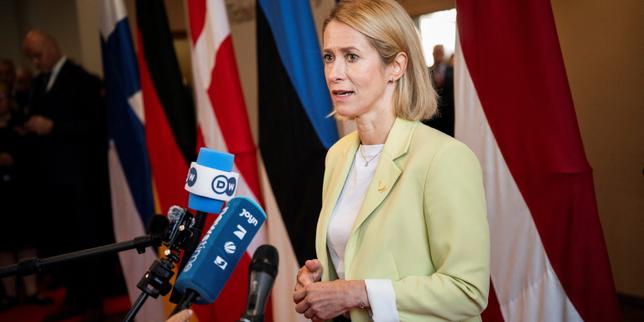
When European Commission President Ursula von der Leyen touches down in Nuuk and starts tossing around words like family, she is not expressing affection. She is signaling a resource grab wrapped in velvet diplomacy. The lazy consensus in international media paints this charm offensive as a heartwarming alignment of shared European values with the Arctic island. That narrative is lazy, naive, and fundamentally detached from the mechanics of modern great power competition.
I have spent years watching bureaucrats in Brussels talk about partnership while drafting supply chain directives that treat sovereign territories as distant quarries. Let us drop the pretense. Greenland is not your sibling. Greenland is the ultimate geopolitical prize sitting on top of critical mineral deposits that the European industrial complex desperately needs to avoid total economic irrelevance.
When an empire starts calling a colony family, hide your minerals.
The Mineral Trap Nobody Wants to Talk About
To understand why this sudden familial warmth is flashing across the North Atlantic, look at the periodic table. Greenland holds some of the world's largest untapped reserves of rare earth elements, lithium, cobalt, and graphite. Without these materials, the grand transition toward electric vehicles and renewable energy grids across Europe stalls permanently.
Mainstream commentators treat this visit as standard diplomatic outreach. They focus on climate change cooperation, education exchanges, and fishing rights. That is the smoke. The fire is raw industrial survival.
Imagine a scenario where China holds a near-monopoly on processing the very metals required to build wind turbines in Germany. That is not a hypothetical; that is the current reality. Brussels watched Beijing weaponize rare earth exports against Japan and the West over past territorial disputes, and panic set in. Von der Leyen is not flying to Nuuk because she loves glaciers and local folklore. She is flying there because European automakers are staring down an existential cliff, and Greenland is the only ledge within Western reach that might save them.
The common misconception is that the European Union offers a better, more ethical alternative to Chinese investment. Ask local leaders in Nuuk how much they appreciate European regulations dictating how they manage their own territory. The truth is that external powers view Greenland through a singular lens: a vast, icy vault that needs to be cracked open before someone else does.
Sovereignty Versus Subsidies
Let us address the governance reality. Greenland has home rule and a clear path toward complete independence from Denmark, though that transition depends entirely on economic viability. This is where the European strategy gets predatory under a polite veneer.
Brussels wants to drop cash, sign memorandums of understanding, and tie Greenlandic extraction projects into European supply chains before Nuuk can fully diversify its international partners. It is a classic dependency trap. You do not help a region build sustainable independence by locking its entire economic future into a single raw-material export model directed by a foreign bureaucratic monolith.
People ask whether Greenland can survive economically as an independent nation without Danish block grants. The answer is yes, absolutely, but only if they retain absolute negotiating leverage over their resources. The moment they sign away long-term extraction rights to European conglomerates in exchange for infrastructure funds and emotional speeches about family, they simply trade Copenhagen for Brussels.
I have seen this script play out across developing markets and resource-rich peripheries for decades. The capital arrives with a smiling face and a stack of compliance forms. Five years later, local populations are left with scarred landscapes, environmental remediation bills, and profits flowing straight back to continental headquarters.
The True Cost of Arctic Paternalism
The paternalistic tone of the European delegation reveals a deep-seated arrogance. Treating an Arctic nation with 57,000 residents as a younger sibling implies that they lack the agency or the strategic competence to manage their own geopolitical weight.
In reality, Greenlandic politicians are playing a sophisticated multi-vectored game. They are taking meetings with Washington, Beijing, and Brussels, playing each against the other to maximize national benefit. They know their worth. They know that melting ice is opening shipping routes that will shift global trade geography forever.
When von der Leyen uses familial rhetoric, she attempts to flatten this complex bargaining dynamic into an emotional obligation. Families help each other out. Families share burdens. But in geopolitics, family obligations always run one way: upward to the center of power.
If Greenland wants to maximize its autonomy, the worst thing its leaders can do is buy into the European family myth. True independence requires cold, hard transactional realism. It requires demanding top-tier equity stakes in every mining project, enforcing strict environmental safeguards that protect local fisheries, and refusing to be cornered into an exclusive economic bloc.
Stop buying the narrative that international diplomacy is driven by warmth and shared destiny. Interests dictate outcomes, not affection.
Next time a high-ranking official steps off a plane in the Arctic and calls you family, check your pockets, lock your mineral vaults, and demand cash upfront.