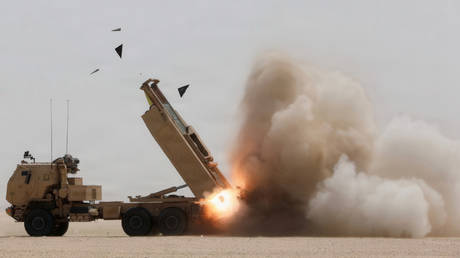
The Pentagon just threw its entire inventory of a specific, untested missile at Iranian targets. It's a move that should make every taxpayer and defense analyst take a hard look at how we're actually conducting high-stakes warfare in 2026. This wasn't a slow burn or a measured rollout. It was an all-in gamble using hardware that had never seen a real-world dogfight.
You'd think a superpower would keep a reserve. Usually, military doctrine dictates keeping a "warm" inventory. You test, you refine, and you hold back enough to handle a second wave or a different front. Not this time. According to senior officials, the US military emptied the shelves. Every single unit of this new, non-combat-proven missile system is now either a pile of scrap in the Iranian desert or a spent casing at the bottom of the Persian Gulf.
It’s bold. It’s also incredibly risky. If those missiles had a software bug or a hardware flaw that only showed up in the heat of a real engagement, the entire mission would've been a catastrophic failure with no Plan B.
Why the military emptied the silos
The decision to burn through the entire stock of untested missiles isn't just about firepower. It’s about a massive shift in how the US views the Iranian threat. For years, the strategy was containment and surgical strikes. This felt different. By launching everything at once, the military basically conducted a live-fire experiment on a national scale.
Military logistics are usually a nightmare of bureaucracy. Getting a new weapon from the factory to the front lines takes years. Then, you usually see a "trickle-in" effect where soldiers get used to the tech. In this Iranian strike, the US skipped the pleasantries. They used the "all-up-round" philosophy. They wanted to see if the tech worked under the most intense pressure imaginable.
Think about the message that sends. It tells Tehran that the US isn't just willing to fight; it's willing to use its most secret, most advanced, and most unpredictable tools to get the job done. But it also reveals a gap. If the US had to empty its stock to hit these targets, what happens if the conflict escalates tomorrow? You can't just 3D print a hypersonic missile in an afternoon.
The gamble of using untested tech in combat
We've seen this before, but rarely at this volume. During the Gulf War, the F-117 Nighthawk was the shiny new toy. It worked. But back then, we didn't use every single one we had in a single night.
Using untested missiles means you're trusting simulations over reality. Software engineers in a lab in Virginia might say the guidance system can handle Iranian jamming, but until that missile is screaming through the air at Mach 5 with a jammer trying to fry its brains, you don't actually know.
- Software glitches. Modern missiles are basically flying computers. A single line of bad code can turn a $20 million weapon into a very expensive lawn dart.
- Environmental variables. Sand, heat, and humidity in the Middle East aren't always perfectly replicated in a test range in New Mexico.
- Countermeasures. We don't know what the Iranians have bought from the Russians or the Chinese lately. Untested tech is vulnerable because it hasn't had to adapt to enemy "fixes" yet.
The fact that the "official" cited by the press specifically mentioned the stock was "untested" suggests there was significant anxiety within the command structure. It wasn't a brag. It was an admission of a supply chain that’s stretched way too thin.
Reality of the US defense industrial base
Here is the part people don't want to hear. The US isn't the "Arsenal of Democracy" it was in 1944. Our manufacturing lines for advanced munitions are slow. We've spent decades focusing on high-tech, low-volume production. That works fine for small skirmishes. It fails miserably in a sustained conflict.
When an official says the stock is "depleted," they aren't saying we're out of all missiles. We still have the old reliable stuff—the Tomahawks and the JDAMs that have been around since the 90s. But the stuff designed to beat modern air defenses? That's the cupboard that’s now bare.
The defense industry is currently struggling with labor shortages and microchip lead times. We're looking at months, maybe a year, to replenish the specific stock used in this Iranian strike. In that window, the US is essentially fighting with its hands tied behind its back regarding its most advanced capabilities.
What this means for the next six months
Iran isn't going to just sit there. They see the same reports we do. They know the US just "showed its hand" and then promptly ran out of cards. This creates a dangerous "window of vulnerability."
If I'm a commander in the IRGC, I'm looking at this as a breather. I know the specific threat that just leveled my radar installations is currently out of production. This is where the psychological game gets messy. The US won the battle, but by emptying the magazine, they might have weakened their long-term deterrent.
The focus now has to shift to the factories. If the Pentagon doesn't find a way to fast-track production, this strike will be remembered as a tactical win that led to a strategic headache.
You need to watch the defense spending bills coming out of Congress next month. Look for "emergency procurement" language. That's the real signal. If you see billions being diverted to "rapid munition replenishment," you know the situation is even tighter than the Pentagon is letting on. Keep an eye on the production rates of companies like Lockheed and Raytheon. Those are the only numbers that matter right now. The strike is over, but the race to reload has just started.