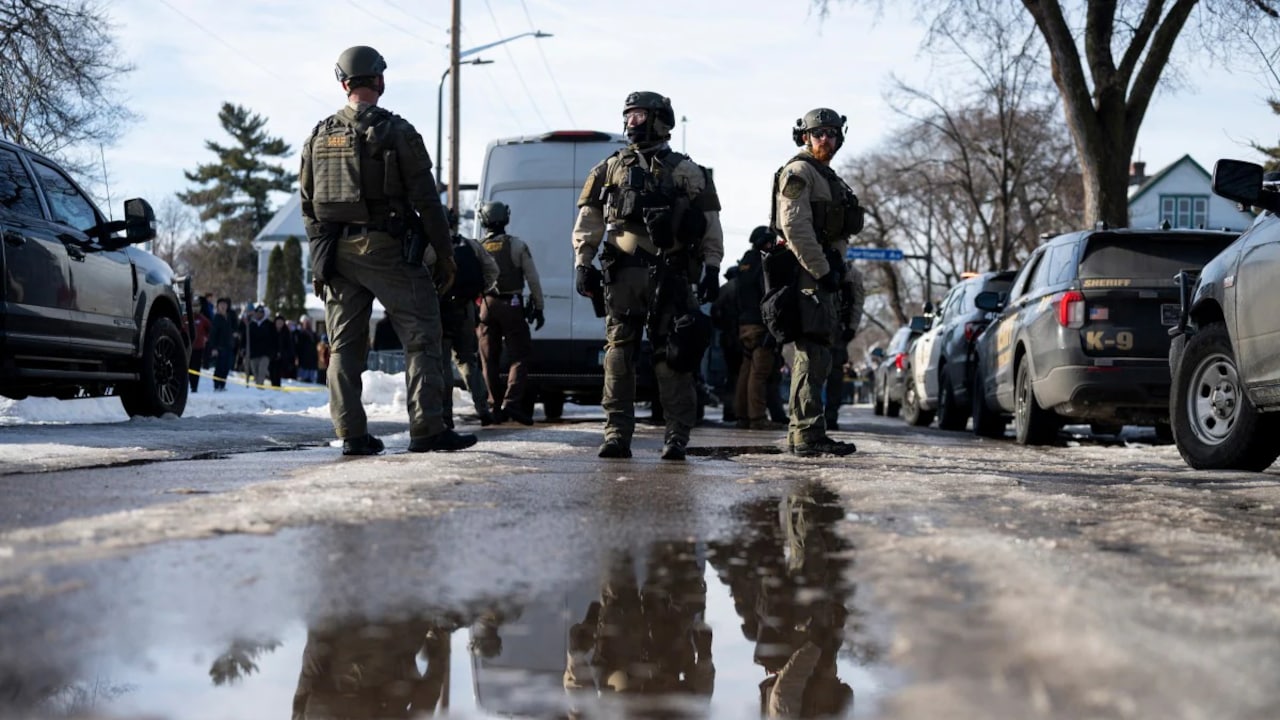
Two fatal shootings in six days changed federal traffic stop policy almost overnight.
When federal immigration agents shot and killed a Mexican national during a vehicle stop in Houston, there was no footage of the encounter. Six days later, when another ICE team fatally shot a Colombian man in Biddeford, Maine, there were no body cameras running either. Neither victim was the intended target of the immigration operations.
Now, the Department of Homeland Security says things have to change.
ICE officers across the country have received new operational guidelines. From now on, no immigration team can execute a vehicle stop unless at least one officer on site is wearing an active body camera.
It sounds like a simple fix. In reality, it exposes years of policy fights, funding delays, and operational chaos inside federal law enforcement.
The Tragic Breaking Point in Houston and Maine
Traffic stops have always been among the most unpredictable scenarios in law enforcement. For immigration agents, they've become increasingly fraught.
In early July 2026, an ICE team in Houston attempted to pull over a vehicle. DHS officials claimed the driver weaponized the vehicle, forcing an agent to open fire. Family members disputed that account immediately. Less than a week later, a similar confrontation played out in Maine with the same fatal result.
In both instances, the public was left with competing stories and zero video evidence.
When news of the Maine shooting broke, civil rights advocates, local officials, and lawmakers demanded answers. Border czar Tom Homan initially announced a nationwide suspension of most ICE vehicle stops while leadership reviewed tactics. Within 24 hours, President Trump overruled the pause, directing agents to keep conducting stops—but only if video recording was active.
That single condition has essentially reshaped how ICE teams operate on the ground.
Why Immigration Officers Weren't Wearing Cameras Already
Many people assume federal agents have worn body cameras for years. That isn't how it happened.
While local police departments widely adopted body-worn technology over the last decade, federal agencies lagged far behind. ICE didn't even launch its first small pilot program until 2024, testing cameras across just five cities: Baltimore, Buffalo, Detroit, Philadelphia, and Washington, D.C.
When the current administration took office, political arguments over DHS spending stalled the rollout completely. Early budgetary proposals sought to scale back camera funding. Later, a monthslong government shutdown paralyzed agency procurement altogether.
DHS officials blamed congressional gridlock for leaving field offices without equipment. Critics pointed out that billions in enforcement dollars were spent while basic accountability tools sat on backorders.
By the time Congress passed a funding package in April with $20 million dedicated to body cameras, the agency was months behind schedule. Half of ICE field offices still lacked cameras when the shootings in Texas and Maine occurred.
How the New Mandatory Camera Rule Works in Practice
The new mandate isn't a total overhaul of field gear yet, but it imposes immediate operational boundaries.
Here is what the directive actually changes for immigration teams right now:
- The One-Camera Minimum: Every arrest team conducting a vehicle stop must have at least one officer equipped with an active body-worn camera. If no officer on the team has a camera, they can't make the stop.
- Immediate Activation Requirements: Agents must turn on their cameras at the start of any enforcement activity or traffic stop and keep them running until the scene is clear.
- Written Explanations for Failures: If an agent fails to record an encounter, they must submit a formal written justification explaining why the device wasn't activated.
- Selective Field Enforcement: Because only about half of ICE field offices currently have full camera inventory, field offices without gear must either borrow equipment or forgo traffic stops until their shipment arrives.
Tom Homan publicly backed the requirement, stating that body cameras exonerate officers far more often than they convict them. He noted that transparency helps the public see exactly what an agent faced in high-stress moments.
The Real Gaps in Federal Oversight
A single camera on an arrest team is better than nothing, but it creates obvious blind spots.
If five agents surround a vehicle and only one wears a camera, key angles will get missed. If the single officer wearing the camera is standing behind a van or securing the perimeter, critical moments at the driver-side window won't be captured on video.
Legal experts and civil rights organizations argue that requiring just one camera per team falls short of standard police reform metrics. Most major metropolitan police departments require every single uniformed officer on scene to wear and activate their own device.
There's also the question of public release. ICE policies dictate when footage gets recorded, but the agency retains broad discretion over when—or if—that footage gets released to the public or independent investigators after a critical incident.
What Happens Next for Drivers and Communities
The Department of Homeland Security claims all remaining ICE field offices will receive their full shipment of body cameras within 60 days. Acting leadership assured lawmakers that every agent in the field will have access to a camera by late summer.
Until that rollout finishes, expect fewer routine traffic stops by immigration officers in regions where camera gear remains scarce.
If you or someone you know interacts with federal immigration agents during a vehicle encounter, keep these practical points in mind:
- Know Your Rights During Vehicle Stops: Drivers have the right to remain silent and the right to refuse consent for a vehicle search unless agents have a warrant or probable cause.
- Document the Incident: Bystanders and passengers have a legal right to record federal agents operating in public spaces, provided they don't physically interfere with the operation.
- Ask About Active Recording: While agents aren't required to answer, asking whether officers are wearing active body cameras creates a clear verbal record on any surrounding audio devices.
- Request Badge Numbers and Field Office Info: In any encounter, note officer badge numbers, vehicle license plates, and the specific location of the stop as soon as it's safe to do so.