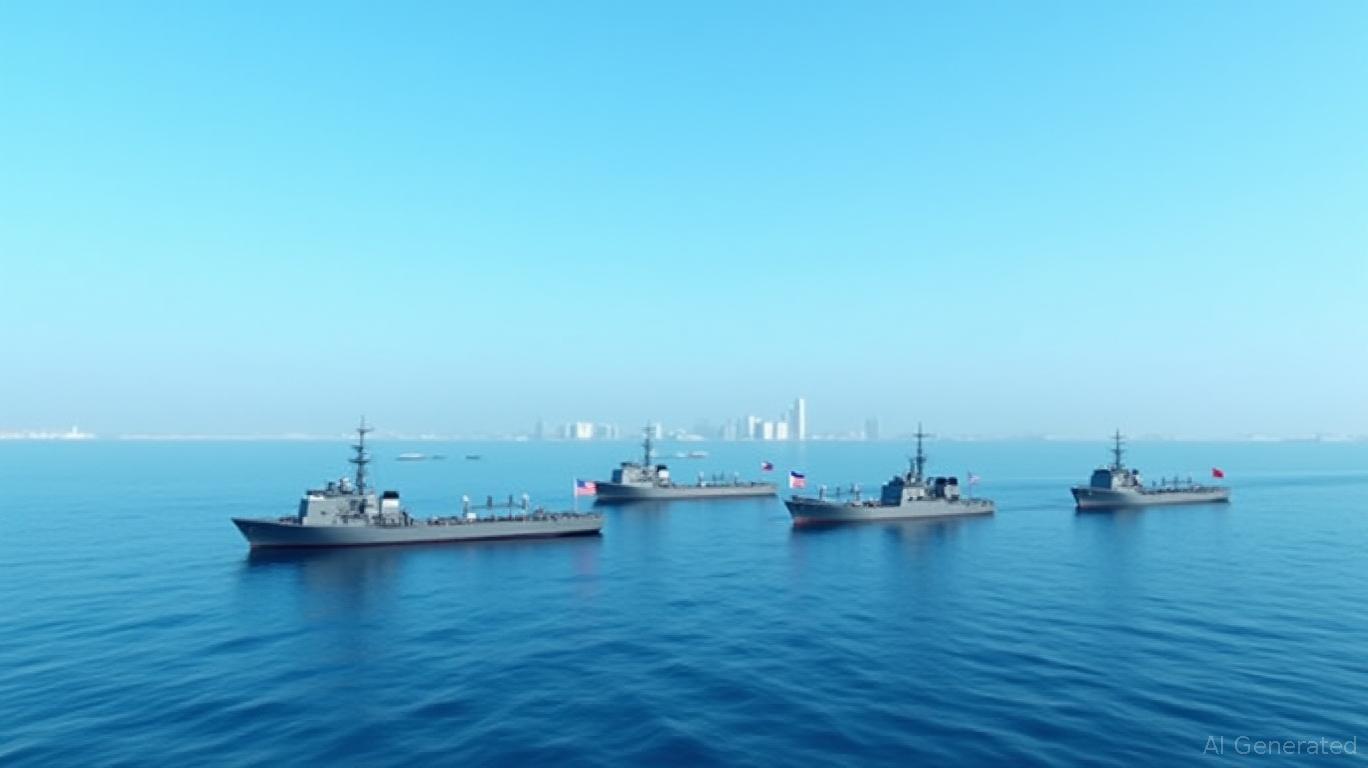
The fragile April ceasefire just shattered in the Gulf of Oman. If you've seen the grainy footage released by CENTCOM today, you know it wasn't just another routine patrol. The U.S. Navy didn't just shadow a ship; they blew a hole in its engine room.
The vessel is the M/V Touska, a massive 965-foot Iranian-flagged container ship. On April 19, 2026, it tried to punch through a week-old U.S. naval blockade. It failed. The resulting video of Marines rappelling onto a smoking deck marks a brutal escalation in a war that many hoped was moving toward a diplomatic exit in Pakistan.
Six Hours of Warnings Before the MK 45 Fired
This wasn't a snap decision. According to U.S. Central Command, the guided-missile destroyer USS Spruance (DDG 111) tracked the Touska for six hours. The ship was hauling toward the Iranian port of Bandar Abbas at high speed.
You can hear the tension in the radio logs. A U.S. sailor's voice is calm but chilling as he gives the final ultimatum: "Motor vessel Touska... vacate your engine room. We're prepared to subject you to disabling fire."
The crew didn't budge. They didn't slow down. When the clock ran out, the Spruance opened up with its 5-inch MK 45 gun. The goal wasn't to sink the ship—it was to kill the propulsion. It worked. The rounds hammered the engine room, rendering the nearly 1,000-foot beast a sitting duck in the Arabian Sea.
The 31st Marine Expeditionary Unit Takes the Deck
Once the Touska was dead in the water, the "visit, board, search, and seizure" (VBSS) operation began. The video shows Marines from the 31st Marine Expeditionary Unit—an elite group usually based out of Okinawa—launching from the amphibious assault ship USS Tripoli (LHA 7).
They didn't come by boat. They came by air. The footage captures the rapid-rope insertion, with Marines sliding down from helicopters onto the deck while the ship still smoked from the shelling. It’s the kind of precision work that takes years to master, and they did it in a live combat zone.
Trump took to social media shortly after, confirming the hit in his typical blunt style. He noted the Navy stopped them "right in their tracks" and confirmed that U.S. forces are currently "seeing what's on board."
Why the Touska Matters More Than a Standard Seizure
You might wonder why the U.S. went to such lengths for a cargo ship. It’s not just about the blockade. The Touska and its owners are already deep in the U.S. Treasury Department's crosshairs.
- Sanction Busting: The vessel has a history of allegedly moving material for Tehran’s ballistic missile program.
- A Floating Point of Pride: At 294 meters long, it's nearly as large as an American aircraft carrier. Taking it is a massive psychological blow to the Iranian navy.
- The "Blockade First": This is the first non-military Iranian ship the U.S. has hit and captured since the naval blockade began on April 13.
The ship was coming from Gaolan, a chemical-storage port in China. While it’s unclear exactly what’s inside those 4,800 containers, the U.S. isn't taking chances. If there are missile components or dual-use chemicals inside, the "piracy" narrative Iran is pushing won't hold much water internationally.
A Ceasefire in Freefall
The timing is a disaster for peace. Negotiators were supposed to meet in Islamabad this week to turn the April 8 ceasefire into something permanent. Now, Tehran says they're out.
Iran’s military command is calling the seizure an act of "maritime piracy." They aren't just talking, either. Reports from the Tasnim news agency suggest Iranian drones were launched at U.S. vessels in the region shortly after the Marines boarded the Touska.
We're seeing oil prices jump 5% overnight because the Strait of Hormuz is effectively a war zone again. This isn't just a "maritime incident." It’s a return to active hostilities.
What Happens Next for Global Shipping
If you're involved in logistics or energy, the "quiet" period of the last two weeks is over. The U.S. blockade is no longer a theoretical threat; it’s a kinetic reality.
Expect insurance premiums for any vessel in the Gulf of Oman to skyrocket. If you have assets moving through the region, you need to be tracking U.S. Navy "Notice to Mariners" (NOTAMs) daily.
The U.S. is currently holding the Touska 30 miles off the Iranian coast. They’re essentially daring the Iranian Revolutionary Guard to come and get it. Until the Islamabad talks are back on the table, the rules of engagement in the Strait have changed. If a ship doesn't stop for the Spruance, it's going to lose its engine. Plain and simple.
Watch the weather and the shipping lanes. The next 48 hours will tell us if this was a one-off enforcement or the start of a much wider naval campaign.