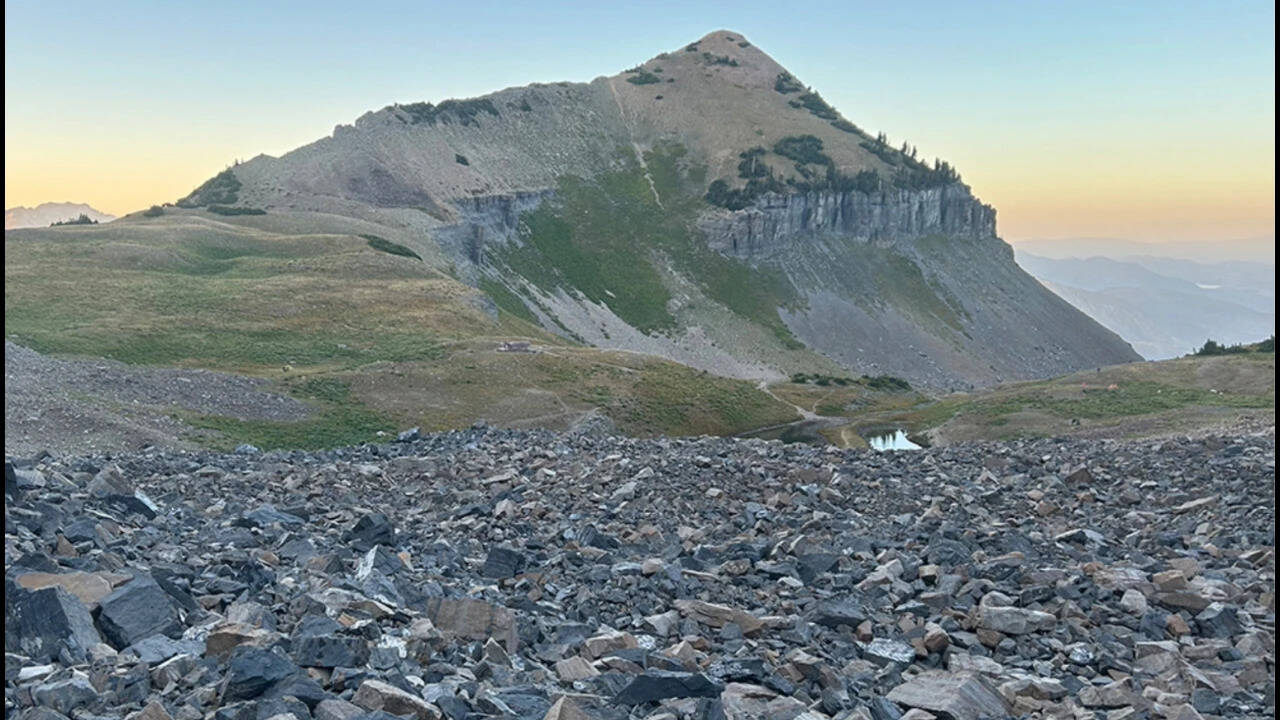
Every time researchers announce they found a million cubic meters of hidden rock glacier ice under an arid peak, the media pops the champagne. Headlines scream about water security, climate buffers, and subterranean reservoirs waiting to save the American West.
It is pure theater.
I have watched hydro-engineers salivate over these sub-surface deposits for decades, and every single time, the reality hits the concrete wall of hydrology and economics. Finding glacial ice tucked under a Utah talus slope does not mean you have a tap you can turn on. It means you have a ticking environmental bomb wrapped in logistical quicksand.
Let us tear down the lazy consensus.
The Mirage of Subsurface Reserves
The narrative goes like this: water is scarce, snowpacks are shrinking, therefore finding millions of cubic meters of rock-protected ice in places like the Wasatch or Uinta ranges is a free bonus.
Nature does not hand out free lunches. Rock glaciers are not underground swimming pools. They are slow-moving mixtures of rock, debris, and ice cemented together, creeping downhill at rates of centimeters per year.
When you look closely at the data from geological surveys, you realize something stark. Extracting that water requires melting it in place or mining the debris matrix. Do you know what happens when you start pumping heat or water into a stabilizing debris slope? You trigger mass wasting events. You turn a stable, frozen rock-ice conglomerate into a mudslide that blocks canyons, destroys reservoirs, and wrecks municipal watersheds.
We are celebrating the discovery of water we cannot legally touch, physically reach, or ethically melt without destroying the very mountain ranges we are trying to protect.
The Physics Problem Nobody Wants to Calculate
Let us look at the math. A million cubic meters sounds massive until you translate it into municipal scale. Salt Lake City alone consumes roughly one hundred thousand acre-feet of water annually. One million cubic meters translates to about eight hundred acre-feet.
That is not a strategic reserve. That is a rounding error.
Yet, politicians and regional planners point to these geological anomalies as proof that we can dodge conservation. They treat underground ice as a get-out-of-jail-free card for over-allocation and unchecked suburban sprawl.
Imagine a scenario where a municipality spends fifty million dollars tunneling into a debris-covered glacier to tap that frozen core. By the time you build the infrastructure, manage the environmental lawsuits, and handle the filtration of sediment-heavy meltwater, the cost per gallon makes Evian look like tap water. Worse, climate shifts mean these rock glaciers are already degrading naturally. They are melting from the inside out due to rising baseline temperatures. We are trying to budget around a melting ice cube on a hot sidewalk.
The Legal Quagmire of Intercepting Mountain Hydrology
Water rights in the West are brutal. Every drop is claimed, metered, and litigated down to the microliter.
When water is bound up in a rock glacier, it is part of the active periglacial hydrological system. It slowly feeds downstream streams late in the summer, acting as a natural, delayed-release buffer. If you capture that ice or force accelerated melting, you disrupt senior water rights holders downstream who rely on that gradual trickle.
You swap a predictable, slow-release natural system for a chaotic, man-made extraction hazard. The legal battles over who owns sub-surface rock ice will dwarf the Colorado River compact disputes.
What We Should Be Doing Instead
Stop hunting for geological Easter eggs.
The obsession with finding hidden ice is a symptom of avoidance behavior. Water managers do not want to tell housing developers to stop building thirsty master-planned communities in the desert, so they fund studies looking for ghost water in the high country.
True expertise means accepting hard limits. We need to upgrade municipal infrastructure to plug twenty percent leakage rates in urban distribution pipes. We need to transition agricultural flood irrigation to drip systems. We need to price water based on scarcity rather than historical subsidies.
Ramping up high-altitude mining operations to chase a million cubic meters of dirty ice is not adaptation. It is desperation dressed up as science.
Leave the mountain ice alone. It is holding the slopes together. If you pull the plug, the mountain comes down with it.