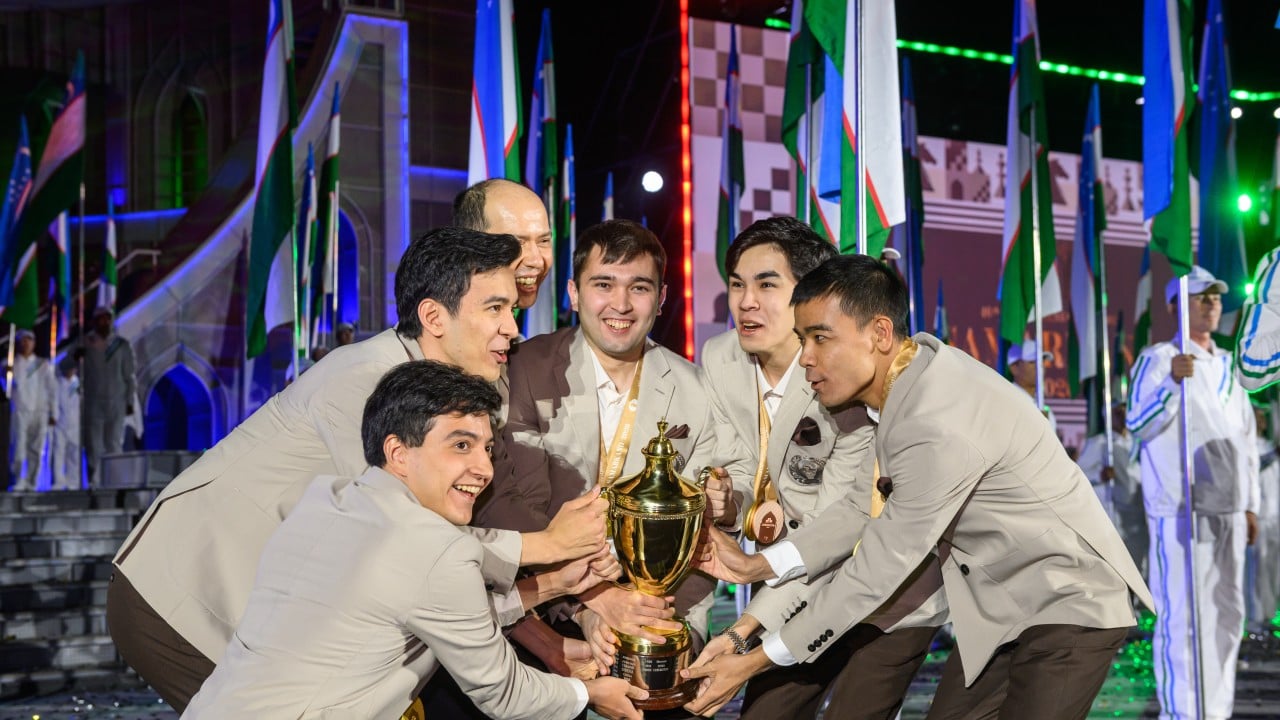
The transformation of Uzbekistan from a regional contender into an elite global chess superpower represents a rare systemic victory in modern sport. When a federation secures a historic international team triumph, casual observers attribute the outcome to generational talent or a sudden influx of capital. A rigorous examination of the underlying mechanics reveals a different reality. National dominance at this scale is the product of long-horizon institutional architecture, early-stage talent filtering, and a state-backed training apparatus that systematically converts raw population potential into elite cognitive output. This structural efficiency is now manifested individually through grandmasters like Javokhir Sindarov, whose trajectory mirrors the operational maturity of the national program. Deconstructing the mechanics behind this ascent provides a blueprint for how state-supported sports science and targeted educational integration can disrupt traditional global hierarchies.
At the core of the Uzbek system lies a three-pillar framework: talent pipeline standardization, intensive analytical feedback loops, and competitive exposure shielding. Unlike nations where chess development relies on fragmented scholastic clubs or private commercial coaching markets, Uzbekistan integrated elite chess into its broader youth development infrastructure. Talented youth are identified not through voluntary tournament participation alone, but through systematic talent screening protocols implemented across regional sports schools. This top-down identification model reduces survivor bias, ensuring that cognitive outliers from outside major urban centers are captured early.
Once identified, players enter a rigorous training environment characterized by high-density coaching and mandatory analytical rigor. The cost function of elite chess development involves balancing opening repertoire breadth with tactical calculation stamina. Traditional training models often suffer from high friction—coaches rely on subjective intuition, and players spend disproportionate hours memorizing static theory without understanding underlying structural positions. The Uzbek model addresses this friction by enforcing computer-assisted data sorting and opening laboratory work at a junior age. Players learn to treat engine evaluations not as absolute truths, but as probabilistic constraints, developing the independent critical thinking required to outmaneuver opponents in unstructured middlegame positions.
The macro-level success of the team Olympiad victory directly informs the individual trajectory of Javokhir Sindarov. Transitioning from a strong team player to a world championship contender requires a fundamental shift in psychological and competitive resource allocation. Team events provide a structural buffer; points scored by teammates can absorb an individual's off-day variance. Individual contention for the world crown strips away this safety net, exposing the player to maximum variance and psychological attrition.
For Sindarov, competing against the absolute upper echelon of the FIDE rating pool requires optimizing three specific performance variables: physical stamina management during classical time controls, precision in deep defensive resources, and psychological resilience under time pressure. Elite classical chess is an endurance sport disguised as a sedentary activity. Heart rate monitoring and cognitive fatigue studies show that players experience physical exhaustion comparable to endurance athletes during high-stakes six-hour matches. Maintaining concentration through the fourth and fifth hours of play separates top-ten players from world-champions-in-waiting. Sindarov's training regimen relies on physical conditioning paired with tactical stress-testing, forcing calculation under conditions of extreme sleep deprivation and cognitive load.
The broader geopolitical shift in chess administration and tournament funding also plays a critical role. Historically, European and Russian federations held a monopoly on high-level secondment, elite sparring partners, and closed-circuit invitation tournaments. The decentralization of global wealth and the deliberate state backing of chess in Central Asia have dismantled this geographic monopoly. Uzbekistan's sports ministry and private corporate sponsors now provide the financial runway necessary for elite players to travel unencumbered, hire second-tier grandmasters as permanent seconds, and access proprietary database and computing infrastructure. This eliminates the opportunity cost that historically forced talented players in developing regions to balance professional chess with subsistence employment.
Despite these structural advancements, significant vulnerabilities remain within the national development model. The primary bottleneck for sustained dominance is the depth of the second tier. While the current cohort of prodigies features world-class talent, the talent pipeline must continuously generate grandmasters rated above 2650 to maintain sparring density within the domestic training camp ecosystem. Relying on a small pool of outliers creates systemic fragility; if key figures experience stagnation, the national team's competitive edge narrows rapidly. Furthermore, the commercial sustainability of the domestic chess infrastructure depends heavily on continued state patronage rather than organic market revenues, exposing the system to macroeconomic and political shifts.
Evaluating Sindarov's pursuit of the world crown requires moving past rating milestones and analyzing his conversion rate against top-five opponents. A contender must demonstrate positive or neutral head-to-head metrics against players who have already mastered the nuances of world championship match play. This demands a shift from broad-spectrum opening preparation to hyper-targeted opponent profiling. A challenger cannot merely be well-rounded; they must possess distinct theoretical landmines or psychological pressure points that disrupt the defensive equilibrium of incumbents.
The strategic play for the Uzbek chess establishment over the next Olympic cycle is institutional export and intellectual property consolidation. Rather than merely importing foreign coaching expertise, the federation must codify its training methodologies into a standardized curriculum that can be scaled across provincial academies. By institutionalizing the exact feedback loops that produced the current generation, Uzbekistan can transition from a transient anomaly into a permanent fixture at the summit of global chess.