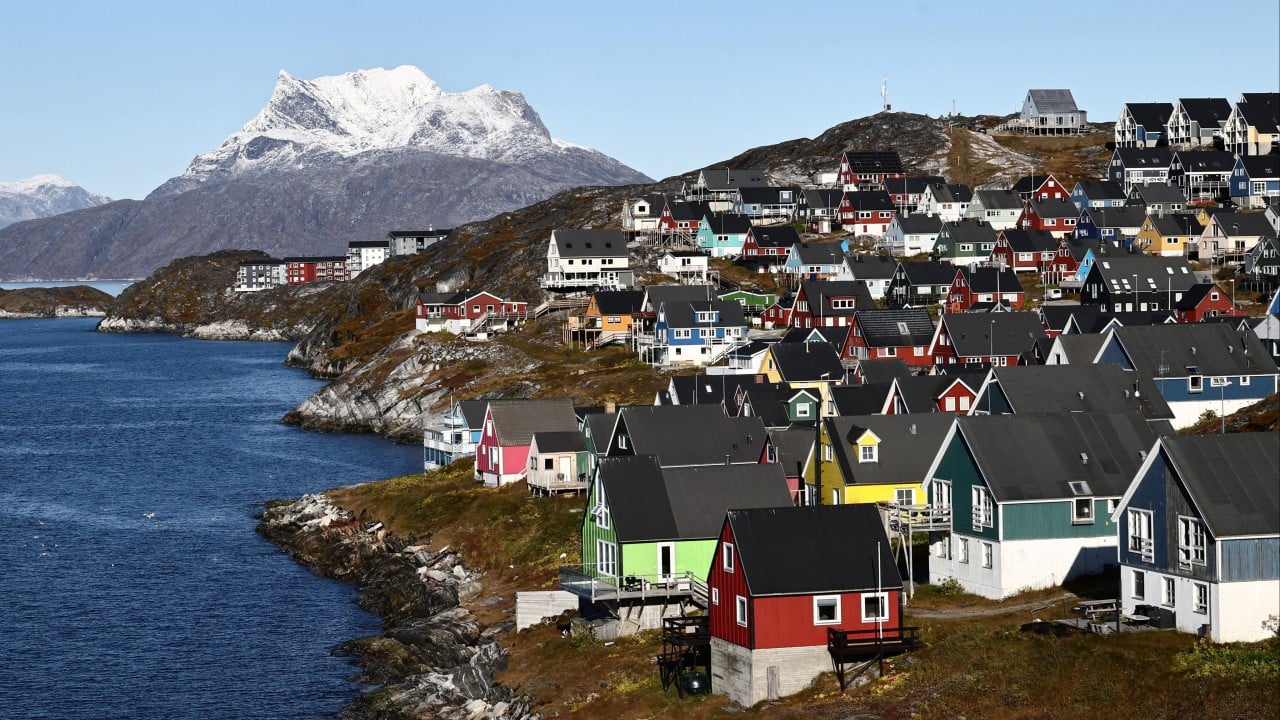
Greenland’s ratification of a bilateral agreement with the Trump administration represents a deliberate substitution of immediate fiscal return for long-term geopolitical optionality. Standard media coverage frames this event as a friction point between sovereign necessity and dubious economic valuation, missing the underlying mechanics of asymmetric statecraft. When a small, resource-rich autonomous territory negotiates directly with a global superpower, traditional net present value calculations fail because the primary asset on the table is not extractable capital, but strategic denial.
To evaluate the structural soundness of this ratification, analysts must separate the immediate economic inputs from the multi-decade security architecture. The decision by Nuuk to formalize ties despite internal skepticism regarding direct monetary yield is not an administrative oversight. It is a calculated hedge against three converging pressures: the fiscal dependency on Danish block grants, the infrastructural deficit required to monetize rare earth deposits, and the escalating militarization of the High North.
The Structural Asymmetry of the Bilateral Framework
In classical international trade theory, bilateral agreements are predicated on comparative advantage and mutual tariff reduction. The Greenland-United States arrangement operates outside this model. Greenland possesses no domestic manufacturing base to protect and negligible consumer market scale to offer. Conversely, the United States possesses excess capital and military projection capability, but lacks sovereign territorial access in the critical Greenland-Iceland-United Kingdom (GIUK) gap without third-party mediation through Copenhagen.
This creates a non-monetary clearinghouse where security guarantees and infrastructure underwriting are traded for territorial access and diplomatic alignment. Critics who question the "value" of the deal are applying a corporate balance-sheet methodology to a sovereign risk-management transaction.
The Three Pillars of Nuuk’s Strategic Calculus
Greenland’s governing coalition ratified the agreement by weighting three distinct variables that do not appear on short-term fiscal ledgers:
- Sovereign Diversification: For decades, Greenland’s political trajectory has been defined by the tension between the desire for full independence from Denmark and the reality that Copenhagen’s annual block grant accounts for roughly half of the territory's public budget. Engaging directly with Washington establishes a secondary diplomatic counterweight, reducing Copenhagen's monopoly over Nuuk's external relations without immediately severing the fiscal lifeline.
- Risk Transfer on Capital-Intensive Infrastructure: Building dual-use aviation, maritime, and telecommunications infrastructure in Arctic permafrost carries prohibitive capital expenditure (CapEx) profiles and multi-decade payback periods. Private equity and standard commercial banks will not underwrite these projects without sovereign guarantees. By binding Washington to the territory's development framework, Nuuk shifts the upfront risk of foundational infrastructure onto the United States defense and diplomatic apparatus.
- Preemptive Regulatory Alignment: As Arctic sea lanes open due to glacial retreat, Greenland faces inevitable pressure from competing state-backed enterprises, particularly from China, seeking minority stakes in mining and port operations. Ratifying a formal framework with the United States establishes a clear regulatory filter, allowing Nuuk to reject predatory foreign direct investment by citing binding bilateral security commitments rather than bearing the diplomatic cost of unilateral refusal.
Deconstructing the Valuation Deficit
The primary critique leveled against the ratification—both within the Inatsisartut (Greenland's parliament) and among external observers—centers on the lack of guaranteed, liquid financial inflows. When the Trump administration initially floated the concept of purchasing Greenland, the market reaction was anchored in real estate valuation logic. Subsequent diplomatic normalization shifted the mechanism from acquisition to a structured compact, leaving local stakeholders questioning whether the revised terms deliver sufficient tangible capital.
This skepticism stems from a misunderstanding of how Arctic resource extraction actually generates state revenue.
The Bottleneck of Rare Earth Monetization
Greenland holds substantial deposits of rare earth elements (REEs), uranium, zinc, and iron ore, notably at sites like Kvanefjeld and Tanbreez. However, the presence of geological reserves does not equate to near-term liquidity. The cost function of Arctic mining is dictated by four severe constraints:
- Lack of Grid Connectivity: Remote mining sites must generate their own power, typically relying on imported diesel, which inflates operating expenses (OpEx) and exposes projects to global energy price volatility.
- Absence of Deep-Water Export Terminals: Extracting ore is irrelevant if it cannot be moved to processing facilities. Constructing ice-capable ports requires billions in sunk costs before a single ton of concentrate is sold.
- Environmental and Social Licensing: Greenlandic politics are heavily influenced by environmental preservation, particularly regarding radioactive tailings associated with rare earth mining. Regulatory halts can freeze capital for years, destroying internal rate of return (IRR) projections.
- Midstream Processing Monopolies: Even if Greenland extracts raw ore, global refining capacity remains heavily concentrated in East Asia. Without Western midstream processing infrastructure, Greenlandic mines remain dependent on the exact supply chains Washington is attempting to bypass.
Because these bottlenecks prevent rapid royalty generation, any agreement promising immediate windfall profits would be structurally fraudulent. The ratified deal instead targets the pre-commercial phase: geological surveying, capacity building, administrative training, and civilian-military infrastructure mapping. To an observer looking for immediate budget relief, this looks like low value. To an infrastructure planner, it is the mandatory prerequisite phase before private capital can enter the market.
The Geopolitical Cost Function for Washington
From the perspective of the United States, the valuation equation is inverted. Washington is not buying a revenue stream; it is purchasing the mitigation of a catastrophic tail risk.
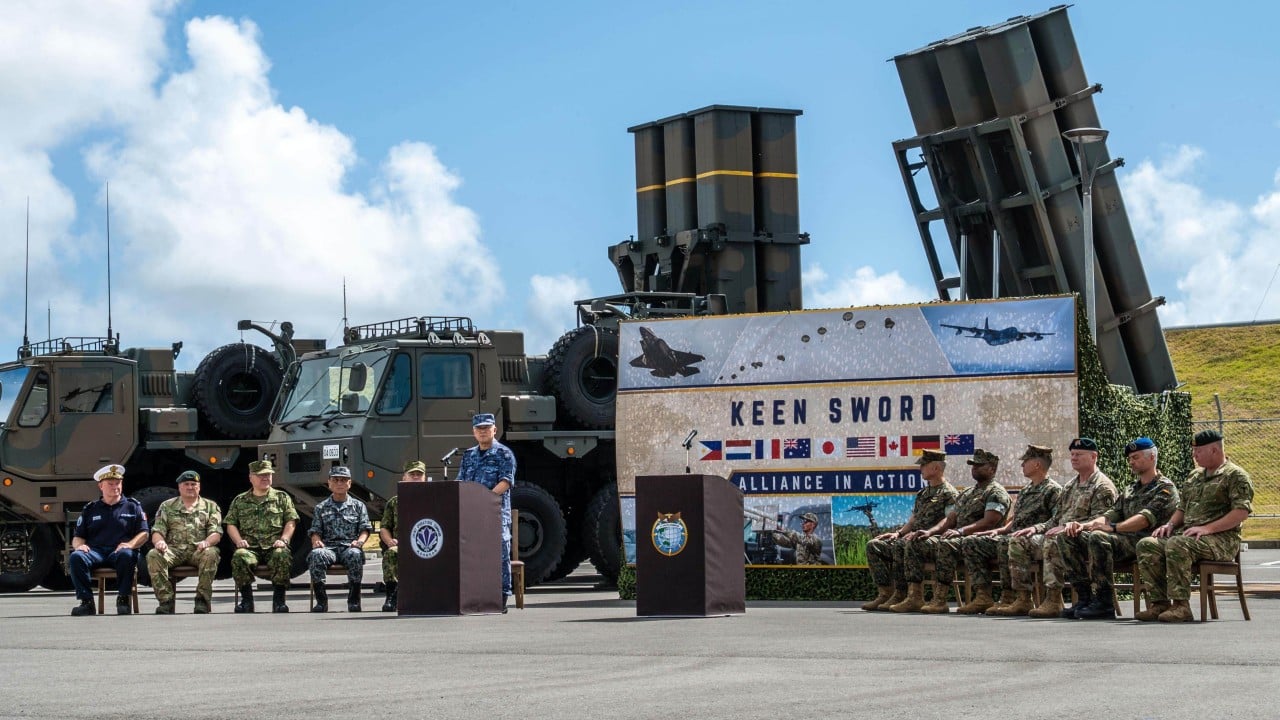
The Thule Air Base (now Pituffik Space Base) in northwestern Greenland is a foundational node in the United States ballistic missile early warning and space surveillance network. As hypersonic glide vehicles and Arctic naval patrols alter the geometry of strategic deterrence, relying on a Cold War-era defense treaty mediated exclusively through a third-party European capital introduces unacceptable latency and political friction.
Direct Engagement vs. The Copenhagen Filter
Historically, Washington’s Arctic posture was routed through the 1951 Defense of Greenland Agreement, negotiated with the Kingdom of Denmark. While effective during the bipolar stability of the late twentieth century, this triangular diplomacy creates operational drag in a multipolar environment:
- Divergent Threat Perceptions: Copenhagen’s defense priorities are anchored in European continental security and Baltic stability. Nuuk’s priorities are anchored in local economic survival and maritime domain awareness. Washington’s priorities are global power projection and homeland missile defense. Routing all three through a single diplomatic channel forces compromises that slow down procurement and base modernization.
- The Chinese Infrastructure Vector: Prior to heightened American intervention, Chinese state-owned enterprises actively pursued contracts to construct and finance three commercial airports in Greenland. Had those contracts closed, Beijing would have gained structural leverage over Greenland's primary transport arteries, sitting directly adjacent to critical North American defense installations. Washington intervened by mobilizing Danish and American financing alternatives, proving that financial outlays in Greenland are defensive expenditures designed to deny strategic terrain to peer competitors.
Therefore, the "value" extracted by the United States is measured in denial of access. If an investment of tens of millions of dollars in administrative aid, consulate operations, and geological mapping prevents a peer adversary from securing a dual-use port lease in the North Atlantic, the return on investment for the Pentagon is effectively infinite relative to the cost of countering that presence militarily after the fact.
Domestic Political Friction and Governance Risk
Ratification does not eliminate execution risk; it merely transfers the conflict from international diplomacy to domestic administration. The internal opposition within Greenland highlights a structural vulnerability in the agreement: the divergence between elite strategic alignment and grassroots economic expectation.
Greenland’s electorate is small, dispersed across coastal settlements, and acutely sensitive to shifts in fishing quotas, social welfare funding, and perceived infringements on local autonomy. The political class in Nuuk must manage three distinct domestic fault lines to prevent the agreement from fracturing during implementation.
The Sovereignty Paradox
Greenlandic nationalism is predicated on reducing external control. Yet, escaping the gravitational pull of Copenhagen requires accepting the gravitational pull of Washington. If the United States footprint—whether through diplomatic personnel, scientific researchers, or defense contractors—expands without visible, localized economic spillovers, domestic opposition parties will frame the ratification as a substitution of one colonial administrator for another.
To mitigate this, the operationalization of the deal relies heavily on "soft" institutional linkages: educational exchanges, fisheries science cooperation, and sustainable tourism development. These mechanisms are intentionally low-cost and high-visibility, designed to build a domestic constituency in Greenland that benefits directly from American engagement before large-scale, controversial industrial projects break ground.
Administrative Absorptive Capacity
A critical, frequently overlooked constraint in small-state diplomacy is administrative bandwidth. Greenland’s civil service is tiny. Negotiating, regulating, and monitoring complex international agreements, environmental impact assessments, and foreign investment screenings strains the human capital of Nuuk’s ministries.
When a superpower engages a micro-polity, the sheer volume of bureaucratic output from Washington can overwhelm local institutions. If Greenlandic ministries lack the technical capacity to audit American proposals or enforce local labor and environmental standards, the resulting power asymmetry will generate political backlash, regardless of the treaty's formal text.
Second-Order Effects on the North Atlantic Security Architecture
The ratification sends an unmistakable market and diplomatic signal across the Arctic Council and NATO. By formalizing a direct bilateral track with Nuuk, Washington has effectively altered the constitutional practice of the Kingdom of Denmark, even without changing its formal legal text.
- Precedent for Sub-National Diplomacy: Other autonomous territories with strategic geography will view Nuuk’s maneuver as a viable blueprint for extracting concessions from both their parent states and external great powers. Copenhagen is now forced to compete for Nuuk’s loyalty not merely through historical ties or passive subsidies, but through active, value-added security and economic partnerships.
- Accelerated Militarization of the High North: Russia’s Northern Fleet and its network of refurbished Soviet-era Arctic bases already dominate the Eurasian side of the Arctic Circle. Formalizing the American presence in Greenland locks in a permanent, modernized Western counter-bastion. This guarantees that the Arctic will not remain a zone of low-tension scientific cooperation; it is now permanently integrated into great-power force posture planning.
- Supply Chain Re-Shoring Incentives: For institutional investors in the mining and energy sectors, the ratification acts as a sovereign risk-reduction signal. While it does not solve the engineering challenges of Arctic extraction, it indicates that the United States government views Greenlandic supply chains as a national security priority. This increases the probability of future off-take agreements, loan guarantees from the U.S. International Development Finance Corporation (DFC), and Defense Production Act (DPA) Title III funding for critical mineral projects in the region.
Operationalizing the Agreement: The Next Phase of Execution
The ratification of the deal is not a terminal event; it is the opening of a high-stakes procurement and institutional-building phase. For stakeholders tracking the tangible manifestation of this agreement, the metrics of success will not be found in immediate GDP growth figures for Greenland, nor in rapid quarterly earnings for junior mining companies.
Instead, analysts and policymakers must monitor specific operational triggers over the next 24 to 36 months:
- Deployment of DFC Capital: Watch for the first direct debt financing or political risk insurance policies issued by the U.S. International Development Finance Corporation for Greenlandic infrastructure or mineral processing projects. Without DFC backing, private Western capital will remain sidelined.
- Dual-Use Infrastructure Tenders: Monitor joint procurement announcements regarding runway extensions, deep-water port dredging, and undersea fiber-optic cable landings. Projects structured with dual civilian-military utility indicate that Pentagon funding is successfully bypassing traditional commercial ROI hurdles.
- Civil Service Secondments: Track the placement of technical advisors within Greenland’s Ministry of Mineral Resources and Labor. The rate at which Washington helps Nuuk build regulatory capacity will determine how quickly mining licenses move from exploration to exploitation.
- Copenhagen’s Counter-Bids: Observe how the Danish government restructures its annual block grant and Arctic defense budget in response to the ratification. Copenhagen will likely increase its own co-financing of Greenlandic infrastructure to prevent total strategic displacement by Washington.
To capitalize on or accurately forecast the trajectory of the High North, institutional actors must abandon traditional emerging-market valuation models. Treat Greenland not as a frontier commodity play, but as a subsidized strategic defense zone where sovereign balance sheets will consistently override commercial market logic to secure long-term geopolitical positioning.