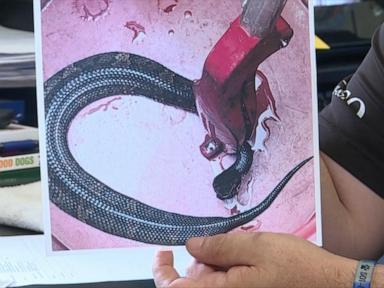
Equipment storage protocols in high-contact sports typically focus on kinetic impact mitigation rather than biological exclusion. When a venomous snake occupies a high school football helmet, the incident exposes a systematic vulnerability at the intersection of environmental management, storage logistics, and athletic safety infrastructure. This scenario moves beyond a localized anomaly. It serves as a stress test for the operational assumptions governing athletic facilities, facility management, and gear maintenance cycles.
The presence of a venomous specimen inside protective gear requires an examination of how ambient wildlife interfaces with human infrastructure. Athletic facilities function as semi-controlled ecosystems. They feature dark, climate-stabilized storage rooms, organic debris accumulation, and frequent structural openings that attract ectothermic vertebrates seeking thermal regulation or shelter. Understanding the risk profile demands a structured breakdown of the variables that allow wildlife to bridge the gap into personal protective equipment.
The Structural Anatomy of Gear Storage Vulnerabilities
Athletic equipment rooms prioritize inventory density over biological isolation. Helmets, shoulder pads, and cleats are stacked in lockers, wire bins, or open shelving units. This creates micro-habitats characterized by three primary conditions: darkness, restricted airflow, and minimal human disturbance during off-peak hours.
Venomous reptiles, particularly pit vipers or other ambush species depending on geographic distribution, select resting sites based on thermal inertia and tactile security. A football helmet, constructed from an outer polycarbonate shell and lined with dense padding or inflatable air bladders, provides an enclosed, thermally insulated cavity.
The physical mechanics of storage facilities compound this vector. Exterior doors left propped open for ventilation during practice sessions create a direct ingress pathway from adjacent turf fields, treelines, or drainage ditches. Ground-level construction common in secondary school athletic complexes frequently features gaps beneath thresholds and unsealed utility penetrations. These architectural flaws permit unhindered movement from surrounding ecological zones directly into the locker room footprint.
[Environmental Ingress] ---> [Facility Boundary Breach] ---> [Micro-Habitat Selection] ---> [Gear Colonization]
When evaluating the risk matrix, facility managers must quantify the probability of colonization against the frequency of equipment audits. In standard athletic operations, helmets remain static in storage for days or weeks between usage cycles. This prolonged stasis provides an undisturbed window for fauna to establish residency. The lack of active deterrents inside storage lockers means the protective gear acts as an unintentional artificial burrow.
Behavioral Mechanics and Zoonotic Interaction Triggers
The transition of a wild animal into a piece of protective equipment is governed by thermoregulatory imperatives. Ectotherms rely on external heat sources to manage metabolic rates. Storage rooms exposed to diurnal temperature fluctuations often retain heat longer than the open air, drawing wildlife inward. Once inside the perimeter of the gear, tactile pressure against the inner padding satisfies the animal's thigmotoxic requirements—the behavioral drive to seek contact with solid surfaces for security.
The interaction sequence shifts from passive co-habitation to active confrontation during the pre-practice staging phase. The operational workflow of distributing equipment relies on speed and mechanical efficiency. Players retrieve gear in low-light conditions, relying on tactile feedback to don helmets rapidly.
- Stasis Phase: Equipment remains unmonitored in a temperature-stable storage environment, allowing biological vectors to select internal cavities.
- Retrieval Phase: The athlete introduces kinetic disturbance by lifting, rotating, or compressing the helmet, triggering a defensive or startle response from the occupant.
- Donning Phase: The spatial compression of the cranium entering the shell forces direct physical contact with the defensive animal, precipitating a strike mechanism.
The strike is a kinetic reflex triggered by perceived predation or entrapment. Because the interior volume of a football helmet is restricted, any movement of the head or hands inside the shell closes the distance threshold instantly. The density of the padding does not serve as a reliable barrier against envenomation. Elapids or vipers can compromise standard textile and foam linings via direct fang penetration, transferring venom directly to the temporal or occipital regions of the scalp.
The Operational Cost Function of Facility Neglect
Allowing biological hazards to infiltrate athletic gear exposes organizations to severe liability and operational paralysis. The cost function of such an event extends far beyond the immediate medical emergency. It encompasses emergency response mobilization, reputational damage, and systemic workflow disruption.
Total Cost = Medical Liability + Operational Downtime + Remediation Capital + Litigation Risk
Institutions often rely on reactive remediation rather than proactive biological exclusion. Reactive measures involve pest control intervention after an incident occurs. This approach fails to address the root systemic causes.
Proactive asset management requires establishing a rigorous biological exclusion protocol. This involves continuous environmental hardening of storage infrastructure. Facilities must eliminate ground-level gaps, install self-closing mechanisms on all exterior access points, and maintain clearing perimeters around building foundations. Vegetation, lumber piles, and unmanaged turf must be pushed back from exterior walls to disrupt the transit lanes used by local fauna.
Furthermore, internal storage architecture requires redesign. Open wire shelving must be replaced or modified with sealed, positive-pressure bin systems or vertical hanging arrays that minimize dark, enclosed micro-cavities at floor level.
Protocol Redesign for Biological Risk Mitigation
Eliminating the vector requires a shift from standard janitorial maintenance to biosecurity management. Athletic departments must treat gear storage spaces with the same rigor applied to equipment sterilization and concussion protocol compliance.
Routine inspection checklists must incorporate visual and tactile audits of all enclosed gear prior to seasonal deployment and daily issuance. These checks cannot be casual. They require systematic illumination of internal helmet cavities using high-output inspection lights.
Training personnel to recognize signs of wildlife intrusion is an essential component of administrative control. Staff must look for secondary indicators of habitation, such as shed skin, biological waste, or unusual structural compression within padding arrays. If a foreign biological presence is suspected, the protocol must mandate immediate quarantine of the asset rather than manual extraction by untrained staff.
The integration of environmental controls must be continuous. Climate-regulated storage rooms must maintain low humidity and consistent barometric barriers to discourage entry. Ultrasonic deterrents and chemical repellents offer limited utility in closed environments compared to physical exclusion barriers like fine-mesh screening over ventilation ducts and heavy-duty rubber sweeps on doors.
Managing the interface between scholastic athletics and regional wildlife demands structural discipline. Protective equipment exists to mitigate predictable physical trauma from sport-specific impacts. Ensuring that this equipment does not simultaneously introduce biological hazards requires an operational pivot toward comprehensive facility hardening, mandatory pre-distribution audits, and the elimination of unmonitored storage micro-habitats. The baseline standard must dictate that any space housing athletic inventory is sealed, monitored, and structurally incapable of sustaining wildlife intrusion.