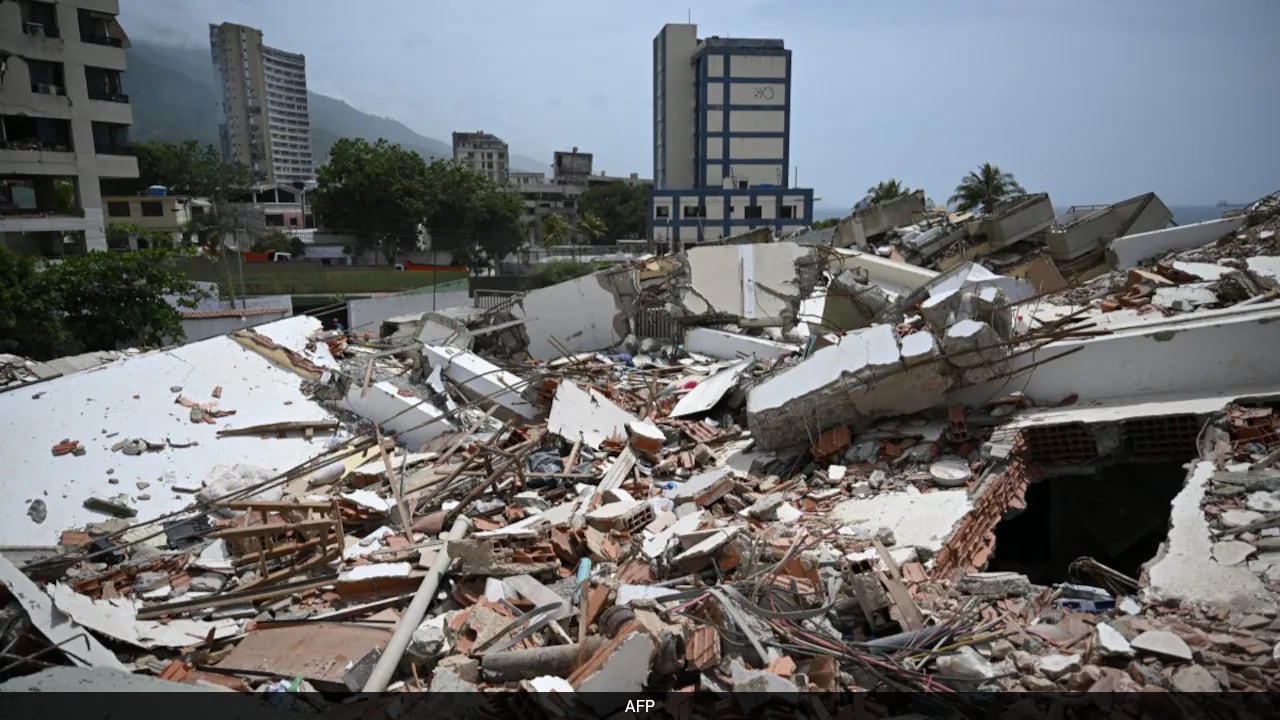
The ground didn't just shake in north-central Venezuela on June 24. It split wide open, swallowing entire neighborhoods in a matter of seconds. Two massive tremors, tracking at 7.2 and 7.5 magnitude, ripped through the coastline and shattered parts of Caracas. It's the most violent seismic event the country has faced since 1900.
Right now, the official data tells a grim story. The information ministry reports 3,342 confirmed dead and over 16,700 injured. But those numbers don't capture the actual scale of this nightmare. The real horror lies in what the government isn't saying, and what international organizations are desperately trying to calculate.
The Disconnect in the Body Count
If you look closely at the updates coming out of Caracas, you'll notice a massive, intentional blind spot. The state details the dead. They tally the injured. They list the 17,345 people left entirely homeless, packed into temporary camps and plazas. But they won't touch the missing count.
The United Nations doesn't have that luxury. UN teams estimate that anywhere between 10,000 and 50,000 people are still missing.
Think about that gap. It's not a minor statistical error. It's an entire population of a small city buried beneath concrete slabs and twisted rebar.
In the coastal district of La Guaira, the epicenter of the destruction, international rescue teams have already packed up their gear. They stopped looking for survivors. The focus has turned entirely to digging mass trenches. At the La Esperanza cemetery, excavators are working around the clock. More than 150 completely unidentified victims were recently buried in a single day, all marked with the exact same date of death.
Families aren't giving up, even if the heavy machinery has stopped moving. Walk through Catia la Mar and you'll see mothers sleeping on park benches next to the ruins of commercial buildings. They're digging with their bare hands because they found a familiar helmet or a crushed motorcycle. For them, the lack of official tracking means they're trapped in a permanent state of limbo.
A Broken Infrastructure Meets a Century-Class Quake
Venezuela was already buckled under economic strain before the fault lines slipped. That's why the 7.5 shock was so uniquely lethal. The structural integrity of buildings in areas like La Guaira and Miranda was already deeply compromised by years of neglected maintenance. When the earth moved, nearly 200 major buildings collapsed completely.
The crisis extends far beyond the immediate debris.
- Water Systems: Main pipelines have ruptured across north-central states, including Aragua, Carabobo, and Falcón. UNICEF reports that 1.8 million people, including 680,000 children, have no access to clean drinking water or safe shelter.
- The Medical Grid: Local hospitals are operating way past capacity. Many medical facilities suffered structural damage themselves, forcing doctors to treat crush injuries and perform amputations in open-air courtyards.
- Grid Blackouts: Power lines and telecommunication towers snapped during the initial 7.5 shock. Large swathes of the country remain in a total communications blackout, meaning the death toll in isolated rural pockets hasn't even been registered yet.
Interim President Delcy Rodriguez used an independence day address to defend the state's mobilization of security forces and the creation of a new military emergency unit. But on the ground, the response feels agonizingly slow. Local Baptist churches and grassroots groups have had to convert micro-breweries and community kitchens into makeshift supply stations because centralized aid isn't reaching the backstreets.
How to Actually Help Right Now
If you want to support relief efforts, sending random goods or clothing doesn't work. Logistics networks are broken, and items get stuck at closed transit hubs. Direct funding to verified organizations on the ground is the only way to get supplies moving.
UNICEF has launched an immediate $52 million emergency appeal specifically for the earthquake zone, which is part of a larger $137.6 million humanitarian drive for the region. Organizations like Concern Worldwide and Send Relief are actively bypassing major bureaucratic bottlenecks to fund local bakeries, clean water distribution points, and field medical clinics. Targeting your donations directly to these groups ensures that money turns into clean water and medical supplies within hours, rather than weeks.