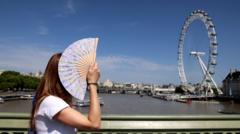
If you still think of British weather as nothing more than a drizzle and a lukewarm summer, you are living in a past that no longer exists. The cozy, damp Britain of the 20th century is gone.
The Met Office’s latest State of the UK Climate report lays it bare: 2025 was the warmest year in the UK since records began in 1884. The last four years are all in the top five warmest years on record. 2026 is already continuing this relentless trend, having reached 35°C in May, June, and July. We are watching our climate literally move north and uphill. The Vale of York and Lancashire now experience the kind of average temperatures Greater London used to have a few decades ago.
But the real crisis is not just that the UK is getting warmer. It is that our entire country was built for a climate that has ceased to exist. Our railways, reservoirs, brick houses, and drainage networks were designed in the Victorian era to handle moderate, predictable weather. Today, they are buckling under a reality they were never meant to survive.
The Brutal Math Behind the Heat
We tend to look at climate change through the lens of averages. A fraction of a degree here, a slight increase there. That is a mistake. The real danger lies in the spikes.
The Met Office notes that while the UK has been warming at roughly 0.25°C per decade since the 1980s, the extreme temperatures are escalating much faster. In a broad stretch of land running from Kent up to Lincolnshire, the hottest day of the year is now a staggering 4.5°C warmer than it was during the 1961–1990 baseline. In Greater London, the number of days topping 30°C and sticky, uncomfortable nights staying above 18°C has more than quadrupled.
You have probably felt this yourself. It is the suffocating humidity during summer nights where your brick house acts like a storage heater, trapping the daytime sun and radiating it back at you while you try to sleep.
The health consequences are immediate. Our bodies can manage during the day if we get a break at night, but we are losing those cool nights. In May and June of this year alone, heatwaves contributed to an estimated 2,700 deaths in England and Wales. The UK Health Security Agency points out that excess heat-related deaths begin to spike in the UK at just 25°C. At 27°C, anyone with compromised health or underdeveloped sweating mechanisms—like infants or the elderly—struggles to cope.
Why Our Infrastructure is Melting
British houses are designed to do one thing exceptionally well: trap heat. For nine months of the year, this is great. In a 38°C summer heatwave, it is a death trap.
Most of our housing stock lacks active cooling or passive ventilation options like external shutters. We live in insulated boxes that absorb solar radiation and refuse to let it go. And it is not just our homes.
- The Railways: Standard British rail tracks are stressed and secured to withstand summer air temperatures of around 27°C. When the air hits 35°C or higher, the rails themselves can heat up to over 50°C because they absorb direct sunlight. At those temperatures, steel expands, buckles, and curves. Trains have to slow down to prevent derailments, crippling the transport system.
- The Roads: The asphalt used on many UK roads starts to soften and melt at around 50°C surface temperature. During intense heatwaves, councils have to send out gritters to dust the roads with sand to keep them from sticking to car tires.
- The Power Grid: Substations and overhead power lines lose efficiency as temperatures climb. Just when everyone plugs in whatever portable air conditioning unit or fan they can find, the grid is at its most fragile.
The Wet Get Wetter and the Dry Get Dryer
It sounds like a paradox, but the UK is experiencing both extreme flooding and severe water shortages at the same time.
Warmer air holds more moisture. For every 1°C of warming, the atmosphere can hold roughly 7% more water vapor. This translates directly into intense, short-duration downpours that overwhelm local drainage networks. The Met Office report shows that the number of exceptionally wet days in the UK has jumped by more than 20% compared to the 1961–1990 period. Our Victorian sewer systems, which combine rainwater and raw sewage, simply cannot handle these sudden volumes, leading to predictable, disgusting overflows into our rivers.
Yet, because our summers are hotter and evaporation rates are higher, we are also facing intense droughts. During the spring of 2025, vast portions of England and Wales received less than half of their average rainfall. River flows in England between March and August of last year were the second lowest on record since 1961.
We are caught in a cycle of whiplash. We swing from parched soils that harden like concrete to torrential downpours that cannot penetrate the dry ground, leading to instant flash flooding.
How to Adapt Your Own Life and Home
Waiting for the government to upgrade the country's water systems, railways, and building regulations will take decades. If you want to protect your family and your property from the shifting climate, you need to take practical steps now.
1. Upgrade Your Home for Heat Deflection
Stop trying to cool your home after it has already heated up. You need to stop the heat from entering in the first place.
- Install external blinds or shutters: Internal blinds let sunlight pass through the glass, trapping the heat inside. External shading blocks the light before it ever hits the window pane.
- Create night-time cross-ventilation: Open windows on opposite sides of the house once the outdoor temperature drops below the indoor temperature, but keep them firmly shut during the peak heat of the day.
2. Manage Water on Your Property
Don't let heavy downpours pool around your foundation or overwhelm local drains.
- Switch to permeable surfaces: If you are repaving a driveway or patio, avoid solid concrete or asphalt. Use gravel, permeable block paving, or grass grids so water can soak directly into the ground.
- Install rainwater harvesting: Get large water butts to collect rainfall from your gutters. You will need this water to keep plants alive during the dry summer months when hosepipe bans are active.
3. Build Personal Climate Resilience
Prepare for disruptions to public services during extreme events.
- Have a backup plan for travel: Assume that trains will be delayed or cancelled when temperatures exceed 32°C.
- Keep vulnerable neighbors in mind: Check on older relatives and neighbors during prolonged hot spells. Often, they do not realize how hot their indoor environments have become until it is too late.
The old British climate is gone. Accepting this new reality is the only way we can begin to build, live, and adapt successfully for the future.
How the Met Office Tracks Changing Climate Trends
This video provides an expert breakdown from the Met Office on how extreme weather has officially transitioned from a rare anomaly to the UK's everyday reality.


