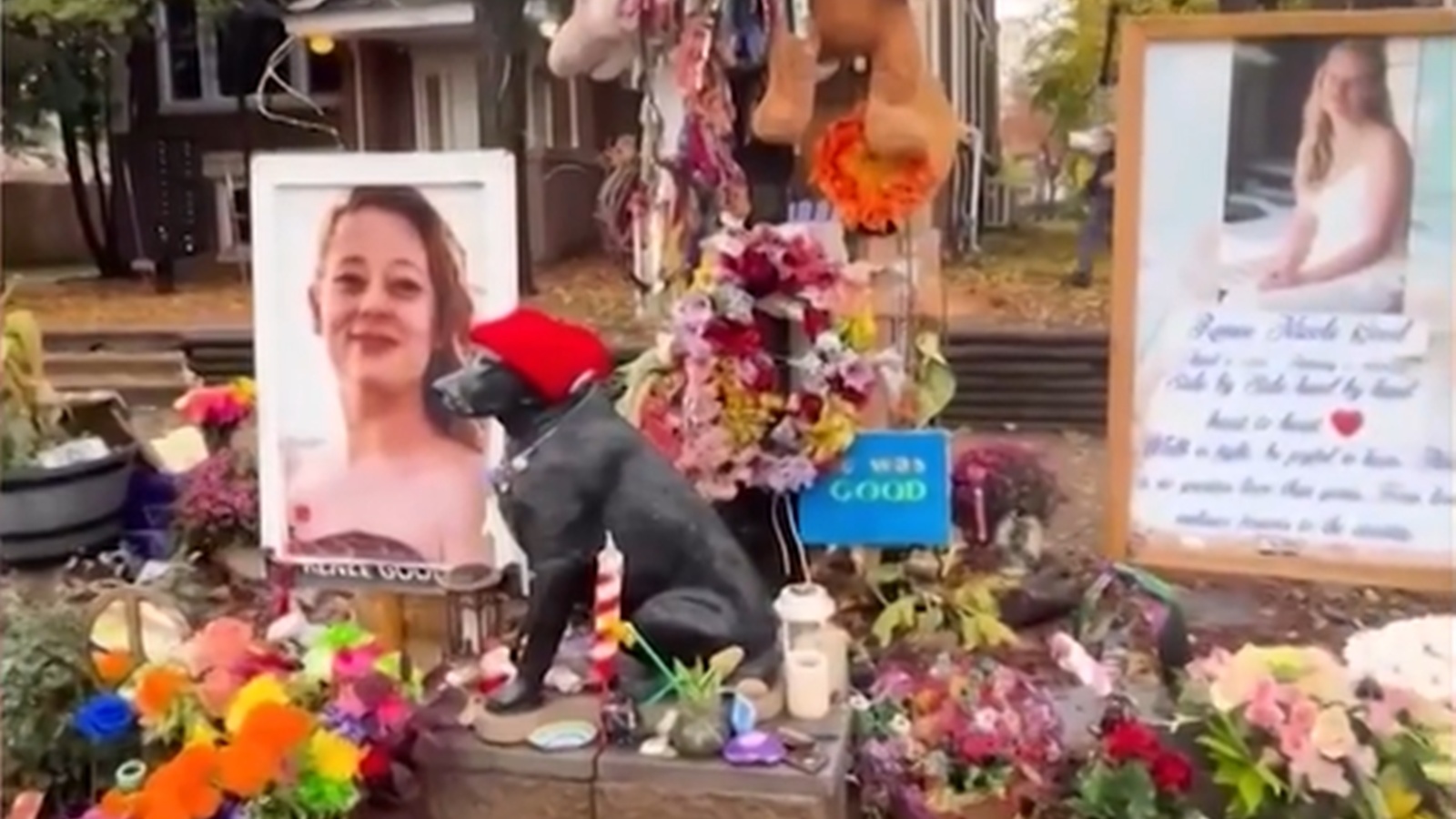
Walk past certain community memorials during the 2026 US midterm elections, and you'll notice something unusual stuck to wooden crosses, laminated photos, and stone markers. Red, white, and blue ovals. Hundreds of them.
Voters are leaving their "I Voted" stickers at memorials for Renee Good and Alex Pretti. On the surface, it looks like a quiet, spontaneous gesture of grief. Look closer, though, and you're seeing a distinct form of civic protest that traditional campaign strategists completely missed. When people feel unheard by standard political messaging, they turn public grief into a public ballot box.
What Actually Happens at Memorial Voting Sites
Most political coverage treats midterm elections like a giant spreadsheet of swing districts, ad buys, and polling averages. That misses the human reality on the ground. In communities affected by tragedy, local memorials become the real town squares.
During the 2026 midterms, residents didn't just cast their ballots and go home to watch cable news returns. They walked or drove straight from their neighborhood precincts to the sites honoring Renee Good and Alex Pretti. Peeling off an "I Voted" sticker and pressing it onto a memorial serves two purposes at once. First, it's a personal promise kept to someone who is no longer here. Second, it's an unmistakable message to local officials that the community hasn't forgotten—and that their memory is actively shaping who holds power.
It's a physical receipt of civic action. Unlike a social media post that disappears from an algorithm in four hours, a sticker weatherproofed onto a memorial plaque stays visible to neighbors, reporters, and passing drivers for weeks.
The History Behind Stickers on Graves and Memorials
This behavior didn't appear out of nowhere in 2026. If you've spent time covering American elections over the past decade, you know this ritual has deep roots in modern US political culture.
The most famous example happens every election cycle in Rochester, New York, at Mount Hope Cemetery. Thousands of voters line up at the grave of suffragist Susan B. Anthony to cover her headstone in "I Voted" stickers. City officials eventually had to place protective barriers around the stone because the adhesive was damaging the marble. Similar scenes have played out at the graves of Ruth Bader Ginsburg in Arlington National Cemetery, John Lewis in Atlanta, and Ida B. Wells in Chicago.
What makes the memorials for Renee Good and Alex Pretti different is the immediacy. Those historical sites honor figures from decades or centuries ago. Leaving a sticker for Good or Pretti connects a recent, raw community loss directly to a current ballot. It bridges the gap between mourning and political accountability.
Why Traditional Political Campaigns Misread These Moments
Campaign operatives love to talk about voter turnout models. They spend millions on targeted text messages and mailers trying to manufacture urgency. Honestly, most of it falls flat because voters can smell consultant-driven messaging a mile away.
Grassroots memorial tributes operate on a completely different frequency. Nobody organized a press conference to tell people to put stickers on memorials for Renee Good and Alex Pretti. One person did it. Someone else saw it, took a photo, and realized it captured exactly how they were feeling about the 2026 midterms. Within hours, a quiet individual act became a collective statement.
Here's why that matters if you're trying to understand modern electorate behavior:
- Grief creates durable motivation. Anger burns hot and fades fast, often before Election Day arrives. Grief and remembrance stick around, driving people to actually show up at precinct doors in off-year elections when turnout usually drops.
- Symbols beat slogans. A three-word campaign tagline doesn't carry a fraction of the emotional weight of a used voting sticker placed next to flowers and candles.
- Local beats national. While national pundits obsess over control of Congress, voters leaving stickers at local memorials are usually thinking about county commissioners, district attorneys, school boards, and state lawmakers—the offices that directly impact daily life in their neighborhoods.
The Practical Reality of Civic Memorials and Public Spaces
If you're participating in a community tribute like this, or documenting one as a local reporter or organizer, there are practical realities worth keeping in mind. Spontaneous memorials exist in a gray area between protected free expression and municipal maintenance rules.
Adhesive stickers, especially vinyl ones used by modern county election boards, don't peel off cleanly. On painted wood, glass frames, or porous stone, strong adhesives can strip finishes or leave permanent residue once the sun bakes them on. When Susan B. Anthony's headstone was overwhelmed with stickers in 2016 and 2020, cemetery staff had to bring in conservationists to safely remove the glue without eroding the stone.
Communities that want these tributes to last usually adapt quickly. Volunteers often set up dedicated poster boards, laminated memory sheets, or plexiglass panels next to the main memorial specifically for stickers and handwritten notes. That keeps the core memorial intact while giving voters a clear place to leave their mark.
What This Tells Us About Voter Engagement in 2026
Pundits love to claim that American voters are checked out, cynical, or purely driven by partisan tribalism. Scenes like the memorials for Renee Good and Alex Pretti prove otherwise. People care deeply, even when they're exhausted by the noise of national politics.
When voters take the time to carry their "I Voted" sticker to a memorial, they're rejecting the idea that casting a ballot is a meaningless chore. They're treating the vote as a tribute. For researchers, journalists, and anyone paying attention to where American democracy actually lives, don't just look at the county-by-county precinct maps this November. Look at the places where people gather after they leave the polls. If you want to understand what truly moved voters in the 2026 midterms, pay attention to the neighborhoods where grief turned into turnout, and document those local stories before the weather washes the stickers away.