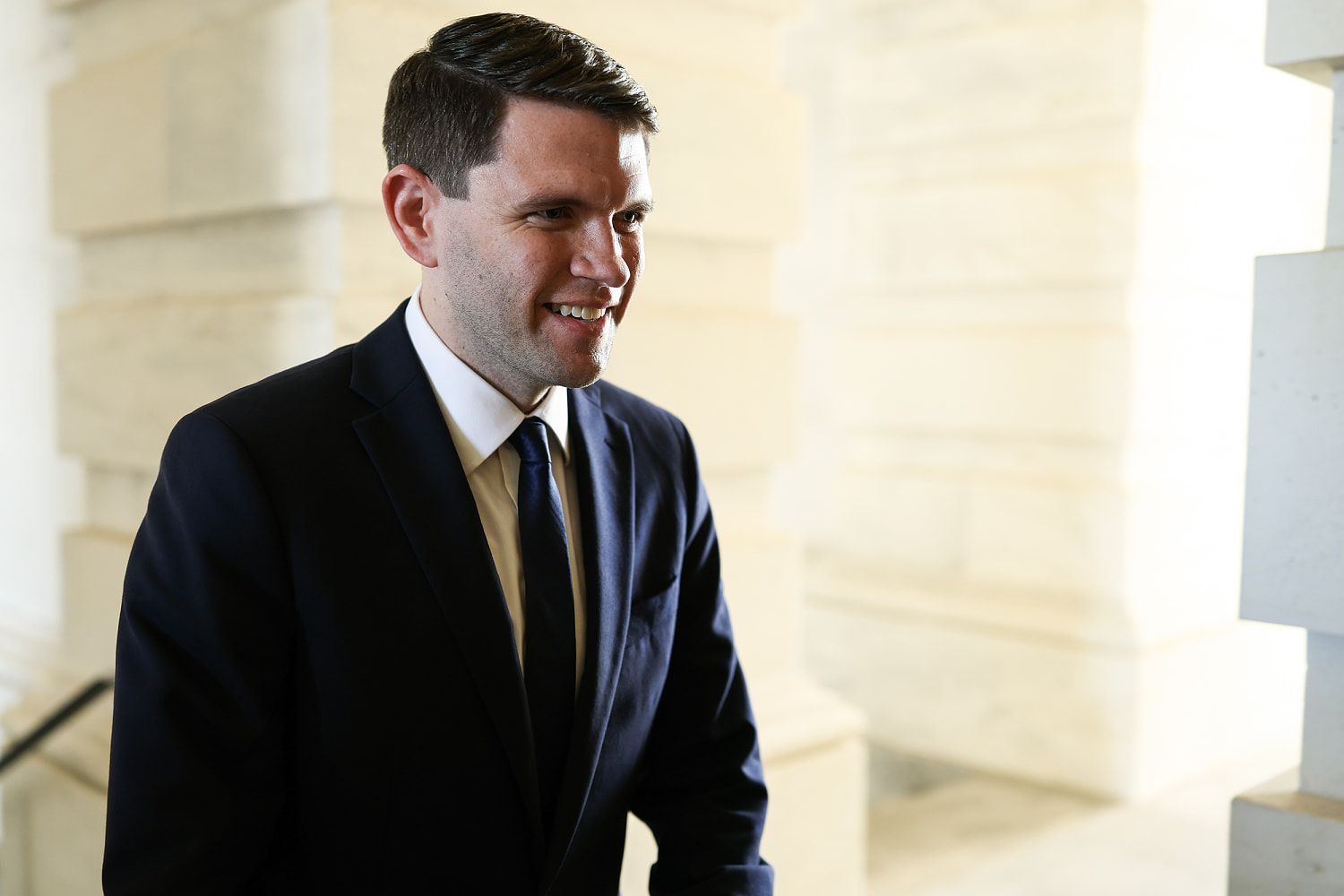
Texas State Representative James Talarico has issued a blunt warning to the Democratic Party. Voters will not reward an opposition party that simply waits for Donald Trump to leave the political stage before delivering tangible economic and policy results.
For years, a prominent wing of Democratic strategy relied on a straightforward theory of political gravity. The assumption was that the controversies, legal battles, and rhetoric surrounding Donald Trump would eventually exhaust the electorate, allowing Democrats to win by default simply by presenting themselves as the stable alternative. Talarico, a Democrat representing a suburban district near Austin and a former public school teacher, argues that this passive posture misunderstands how working-class voters evaluate political power. When groceries cost more, housing remains out of reach, and public schools struggle with funding, voters care less about who is on the ballot in four years and more about who is solving problems right now.
The Trap of Reactive Politics
American political history offers plenty of evidence that running purely against an opponent has a short shelf life. Opposition parties often surge during midterm elections when frustration with the party in power peaks. Yet translating anti-incumbent anger into durable governing majorities requires an affirmative agenda that voters can feel in their daily lives.
When a party defines itself primarily as a counterweight to a single figure, every legislative compromise, local initiative, and messaging campaign gets filtered through national cable news dynamics. Local issues get swallowed by national polarization. In states like Texas, where Democrats have not won a statewide race since 1994, the consequences of this dynamic are particularly visible. Nationalized messaging often alienates swing voters in suburban and rural counties who might otherwise support Democratic proposals on public education funding, healthcare access, or infrastructure investment.
Talarico’s critique points to a structural vulnerability inside the modern Democratic coalition. Over the past decade, the party has gained ground among college-educated suburban professionals while losing significant share among non-college-educated voters across racial lines. Educated, high-propensity voters tend to follow national political news closely and are often motivated by institutional norms and national leadership battles. Working-class voters, by contrast, frequently judge political parties by concrete material outcomes.
If Democrats treat the current political era as a holding pattern until a post-Trump environment arrives, they risk deepening that class divide. Waiting implies that nothing can be fixed until the national alignment changes. To a family struggling with property taxes or medical bills, that message sounds indistinguishable from indifference.
How Minority Parties Actually Build Leverage
Critics of Talarico’s argument often point to a practical reality. In states where Republicans control the governorship and both legislative chambers, or in periods when Republicans hold power in Washington, Democrats lack the votes to pass major progressive legislation on their own. How can a minority party deliver results when it does not hold the gavel?
The answer lies in how legislative leverage actually works at the state and local levels. Even in deeply red legislatures, governing coalitions are rarely monolithic. Rural Republicans, business-aligned conservatives, and populist lawmakers frequently clash over budgets, taxes, and state spending. A disciplined minority party can exploit those fissures to pass targeted bills, block harmful measures, and extract concessions on budget priorities.
Consider how state-level legislative victories are typically won in divided or minority environments:
- Issue-specific alliances: Partnering with conservative lawmakers on shared concerns such as rural hospital closures, broadband expansion, or water infrastructure.
- Budget amendments: Using floor procedures and committee negotiations to steer state funds toward teacher pay raises or local property tax relief rather than corporate subsidies.
- Constituent service: Operating aggressive district offices that help residents navigate state agencies, unemployment claims, and veterans benefits, proving competence through direct service.
- Municipal governance: Demonstrating effective management in Democratic-led cities by addressing housing supply, transit reliability, and public safety without getting bogged down in ideological infighting.
Talarico has leaned heavily into this approach in the Texas House, focusing on public school funding, capping insulin costs, and curbing the influence of corporate money in politics. None of these issues require waiting for a change in the White House. They speak directly to household budgets and community stability.
The Myth of the Inevitable Demographic Shift
For nearly two decades, many Democratic strategists treated demographic change as an automatic path to power. The theory held that as the country—and states like Texas, Georgia, and Arizona—became younger and more diverse, Democratic majorities would naturally materialize.
Recent election cycles dismantled that assumption. Hispanic, Black, and younger voters have shown far greater political fluidity than older models predicted. Many of these voters prioritize economic mobility, small business growth, and cost-of-living relief over partisan loyalty. When Democrats rely on demographic destiny or anti-Trump sentiment instead of concrete economic delivery, they leave those voters open to Republican outreach.
Political realignment rarely happens all at once. It occurs incrementally when voters decide that one party is focused on their practical concerns while the other is preoccupied with internal debates or national personalities. Talarico’s warning is essentially an argument against political complacency. Assuming that time is automatically on your side is one of the fastest ways to lose ground in politics.
Governing Where You Have Power
The credibility of any national party is built from the ground up. Voters form their impressions of what Democrats stand for not only by watching congressional hearings, but by observing how Democratic mayors, county commissioners, school boards, and state legislators govern in their own backyards.
This creates an uncomfortable truth for party leaders. In several major American cities governed by Democrats, high housing costs, slow permitting processes, and visible street disorder have given conservative critics potent ammunition. When voters see dysfunction in places where Democrats already hold total control, promises about what the party would do if only it had more power in Washington ring hollow.
Delivering results right now means tackling administrative bottlenecks in blue cities and states with the same urgency applied to national campaigns. Cutting red tape to build more housing, streamlining small business licensing, and ensuring public transit runs reliably are not glamorous cable news topics. Yet they are the exact indicators voters use to judge whether a party knows how to govern.
The Risk of Over-Indexing on National Drama
Media incentives make Talarico’s prescription difficult to follow. Cable networks, social media algorithms, and small-dollar fundraising platforms reward outrage and confrontation. A lawmaker who delivers a fiery viral clip attacking Donald Trump can raise thousands of dollars overnight. A lawmaker who spends six months negotiating a bipartisan amendment to fund community college workforce programs rarely trends online.
This fundraising ecosystem creates a perverse loop. Candidates and officeholders spend their time performing for a national audience of partisan donors rather than addressing the everyday concerns of local swing voters. Over time, the party’s public identity becomes tethered to national culture wars and personality clashes.
Breaking out of that cycle requires deliberate discipline. It means measuring success not by viral moments, but by bills passed, local economies strengthened, and trust rebuilt with skeptical voters.
What Counter-Arguments Miss
Some Democratic strategists push back on the idea that policy delivery alone can overcome modern polarization. They argue that in an era of fragmented media and hardened partisan identities, voters often fail to credit politicians for legislative achievements. They point to major federal infrastructure and manufacturing investments that struggled to move polling numbers in key battleground states.
That skepticism is grounded in real data. Policy accomplishments do not automatically translate into votes unless they are accompanied by relentless, plainspoken communication that connects the policy to people's lives. Passing a bill is only half the job; explaining why it matters in language that resonates outside political circles is the other half.
Still, the alternative—offering no tangible results while waiting for the political weather to change—is far worse. Voters may not immediately reward every legislative win, but they reliably punish parties that appear passive or disconnected from economic reality.
Talarico’s message strips away the comforting excuses that often dominate post-election autopsies. Democracy does not pause between presidential cycles, and working families cannot put their bills on hold until the next political era begins.