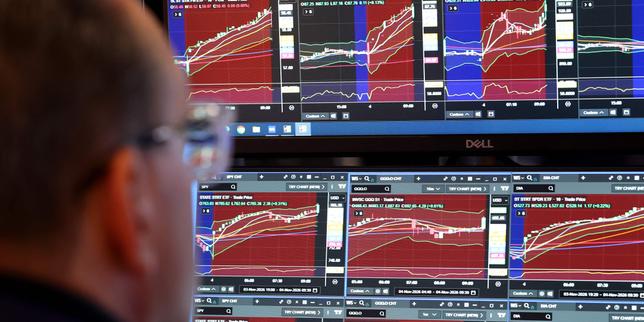
The trading floors of Lower Manhattan spent years pricing in a specific set of assumptions. When the political pendulum swings violently, capital does not merely adjust; it scrambles. The market shock following the recent political turnover sent shockwaves through banking halls, asset management firms, and corporate boardrooms alike. Financial institutions thought they had hedged every conceivable outcome. They were wrong.
To understand the current posture of institutional finance, one must look past the daily index fluctuations and examine the structural realignment underway. Traders are no longer asking simply who wins or loses an election cycle. They are dissecting how regulatory bodies, tax codes, and international trade postures will shift under a administration armed with a fresh mandate. The initial panic has given way to a calculated, albeit nervous, recalibration of risk.
The Regulatory Overhaul Nobody Priced In
For the past four years, major financial houses operated under a predictable, if sometimes cumbersome, regulatory regime. Compliance departments were staffed to handle predictable oversight, and anti-trust scrutiny was a known variable. The sudden shift in political power shattered those models.
Banking executives are suddenly staring down the barrel of sweeping leadership changes at the Securities and Exchange Commission and the Federal Trade Commission. The assumption that aggressive merger and acquisition blocks would remain the baseline policy has dissolved overnight. Law firms specializing in corporate consolidation are working around the clock, advising clients on whether to pull shelved merger blueprints back off the shelf.
At the same time, regional lenders and alternative asset managers face an entirely different calculus. Capital requirements that seemed locked in stone are suddenly subject to legislative review. Some market participants celebrate the prospect of lowered compliance costs. Others worry that a sudden bonfire of regulations could sow the seeds for the next systemic imbalance. Markets detest a vacuum, and right now, the regulatory rulebook is being rewritten in real time.
Energy Markets and the Capital Flight Paradox
Nowhere is the whiplash more acute than in the energy sector. Wall Street capital has spent the better part of a decade publicly aligning with transition mandates, channeling billions into green infrastructure to satisfy institutional ESG criteria.
The political realignment threatens to pull the rug out from under heavily subsidized clean-tech projects while throwing a massive lifeline to traditional fossil fuel extractors. Portfolio managers are caught in a brutal bind. Do they abandon long-term climate commitments to chase the immediate, high-yield windfalls promised by a deregulated oil and gas sector? Or do they hold the line, betting that global supply chains and international partner commitments will keep the energy transition moving regardless of Washington's temporary occupants?
A prominent energy analyst at a top-tier brokerage noted off the record that their phone hasn't stopped ringing. Institutional investors are quietly shifting allocations back toward conventional hydrocarbons, hedging against a prolonged period of high domestic energy production. Yet, long-term capital allocators know that ignoring technological shifts in global power generation is a fatal mistake. The result is a fractured market strategy where short-term greed battles long-term survival instinct.
The Debt Ceiling and Bond Vigilantes
Beyond equities and sector bets, the macroeconomic plumbing is straining under the weight of political transition. The federal deficit is not a partisan talking point on Wall Street anymore; it is an existential threat priced into the long end of the yield curve.
Bond vigilantes have returned with a vengeance. When political leaders signal an intent to pursue aggressive fiscal expansion paired with tax cuts, the Treasury market reacts. Yields on benchmark ten-year notes have climbed as investors demand a higher risk premium to hold government debt. The federal government's cost of borrowing is skyrocketing right as debt servicing costs eclipse traditional budget items.
This creates a severe headache for the Federal Reserve. Central bankers are attempting to navigate a soft landing while fiscal policy threatens to keep inflationary pressures hot. If the central bank caves to political pressure to lower rates prematurely to ease government borrowing costs, credibility vanishes. If they keep rates elevated to crush inflation, they risk breaking the federal budget and triggering a liquidity crisis in regional banks holding underwater bonds.
Defense Contractors and the Geopolitical Risk Premium
While commercial sectors puzzle over tax policy and regulatory hurdles, defense and aerospace equities tell a different story of anxiety and opportunity. The anti-establishment wave that fueled the political upset often carries isolationist undercurrents. For decades, Wall Street could reliably bet on bipartisan consensus regarding global defense spending and foreign entanglements.
That consensus is fracturing. Defense contractors are evaluating scenarios where foreign military aid packages are drastically restructured or curtailed. At the same time, geopolitical hot spots continue to simmer, ensuring that demand for advanced hardware remains robust globally, even if the primary patron shifts its priorities.
Venture capital and private equity firms are redirecting funds toward dual-use technologies. Artificial intelligence, cybersecurity, and autonomous systems are receiving unprecedented inflows as investors realize that future conflicts will be fought with code and silicon just as much as steel.
The Myth of the Omniscient Market
Financial media loves to paint Wall Street as an all-knowing oracle that prices in every future event with cold, mathematical precision. The reality is far messier. Wall Street is a collection of anxious humans trying to forecast a chaotic future using incomplete data and tribal psychology.
The anti-establishment tsunami caught the financial elite flat-footed because they mistook their own preference for stability as an economic law. They built models based on continuity, failing to account for the deep-seated public fury that drives political disruption.
As the dust settles on the trading floors, the prevailing sentiment is not triumphant mastery, but defensive pragmatism. Portfolios are being restructured not out of shared ideological vision, but out of a desperate need to survive whatever policy shock comes next. The smart money isn't trying to guess the next headline anymore. It is building resilience against a world where the only constant is volatility.