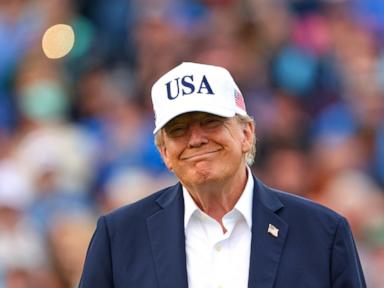
Donald Trump wants the brakes ripped off American artificial intelligence. In recent public statements, the former president dismissed calls to slow down AI development, arguing that aggressive regulatory checks would hand the technological crown directly to China. The core premise of this stance is blunt. If Washington forces domestic tech giants to pause, audit, or limit their models for safety, Beijing will simply ignore those rules and sprint ahead. That framing turns a complex debate over algorithmic safety and corporate accountability into a binary geopolitical race, forcing voters and industry leaders to choose between unchecked innovation and national security vulnerability.
It sounds simple on a campaign stage. In practice, the reality inside Silicon Valley and Washington is far messier.
For decades, technology policy in the United States followed a familiar script. Innovate first, regulate after the damage becomes undeniable. We saw it with social media platforms, data privacy, and telecommunications monopolies. Now, that exact playbook is being applied to generative AI and frontier models, but the stakes involve autonomous weapons, mass labor displacement, and critical infrastructure. By framing safety guardrails as an automatic surrender to the Chinese Communist Party, political leaders are tapping into a deep-seated fear in Washington. Nobody wants to be the politician who regulated America into second place.
The Geopolitical Trap Behind AI Deregulation
The argument that regulation equals capitulation relies on a specific reading of how technological races work. Proponents of rapid, unchecked scaling—often aligned with the effective accelerationism movement in Silicon Valley—argue that compute power and data scale are the only metrics that matter. According to Trump's stated position, imposing federal oversight creates bureaucratic drag. Compliance teams grow while engineering teams stall. Meanwhile, state-backed labs in China face no comparable public pushback or environmental review boards when building massive data centers.
This perspective has found an eager audience among venture capitalists and tech executives who chafed under the Biden administration's October 2023 executive order on artificial intelligence. That order invoked the Defense Production Act to require developers of powerful dual-use foundation models to share safety test results with the federal government before public release. Critics labeled those reporting mandates a chokehold on open-source development and smaller startups. By promising to dismantle such frameworks, Trump aligns himself directly with investors who view federal oversight as an existential threat to their portfolios.
Yet national security analysts point out a glaring contradiction in the "speed over safety" doctrine. Rushing unverified, unstable AI models into critical infrastructure creates massive vulnerabilities that foreign adversaries can exploit. If a domestic utility company or defense contractor deploys an unvetted model riddled with prompt-injection flaws or hallucination loops, Beijing does not need a better model to win. They only need to break ours.
The Illusion of a Binary Choice
Treating safety and speed as mutually exclusive opposites is a false dichotomy. In aviation, strict safety testing by the Federal Aviation Administration did not destroy American dominance in aerospace; it built global trust in Boeing and commercial flight. Only when corporate leadership prioritized speed and stock buybacks over engineering rigor did that dominance collapse.
Consider a hypothetical example of how this plays out in software. Imagine two rival financial firms building automated trading algorithms. Firm A skips stress-testing its code to launch three months early, capturing immediate market share. Firm B spends those three months running adversarial simulations to ensure the algorithm does not spiral into a feedback loop during a market dip. On day one, Firm A looks like the winner. Six months later, during a routine currency fluctuation, Firm A's unvetted algorithm liquidates billions in assets by mistake, wiping out the company. Speed without structural integrity is not a competitive advantage. It is just a faster way to crash.
What Actually Slows Down American AI
If federal safety rules are not the primary bottleneck holding back American AI labs, what is? Talk to any data center architect or semiconductor engineer, and they will give you an answer that rarely makes it into political soundbites. The real constraints are physical, not regulatory.
- The Power Grid Bottleneck: Training frontier models requires gigawatts of continuous electricity. Local utilities across Virginia, Texas, and the Midwest are already warning that aging transmission lines cannot handle the sudden spike in demand from hyperscale data centers.
- Semiconductor Supply Chains: While American firms like Nvidia design the chips, the physical manufacturing relies heavily on fabrication plants in Taiwan and specialized lithography machines from the Netherlands. No executive order in Washington can magically double wafer output overnight.
- Transformer Lead Times: High-voltage electrical transformers needed to step down power for server farms currently face multi-year backlogs due to global copper shortages and manufacturing limits.
Dismantling AI safety boards does not generate a single megawatt of electricity. Repealing algorithmic transparency rules does not speed up the construction of a nuclear reactor or a high-voltage transmission line. When politicians focus entirely on deregulation, they ignore the hard infrastructure deficits that actually determine whether the United States can maintain its compute lead over China.
China's Two-Faced Approach to AI Control
The narrative that Beijing operates in a lawless, anything-goes environment is also factually inaccurate. China actually passed some of the world's earliest and strictest regulations on generative AI. The Cyberspace Administration of China requires domestic tech giants like Baidu, Alibaba, and Tencent to submit their algorithms for government review before public deployment. Models must adhere strictly to core socialist values, avoid generating politically sensitive content, and pass rigorous censorship evaluations.
| Regulatory Dimension | United States Approach | China Approach |
|---|---|---|
| Primary Focus | National security, biosecurity, and intellectual property | Political stability, content censorship, and social control |
| Enforcement Mechanism | Executive orders, voluntary commitments, and agency guidelines | Mandatory pre-deployment licensing and state registry |
| Hardware Access | Unrestricted domestic access; strict export controls on rivals | Severely restricted access to advanced EUV lithography and high-end GPUs |
| Open Source Stance | Largely permitted, though heavily debated in Congress | Encouraged domestically to bypass Western proprietary bottlenecks |
Beijing applies a dual-track strategy. For consumer-facing applications, the state enforces tight ideological guardrails to prevent social unrest. For military, surveillance, and industrial applications, the state pours billions of yuan into unrestricted research and development. At the same time, Chinese engineers have become remarkably adept at algorithmic efficiency precisely because American export controls cut off their access to top-tier Nvidia H100 and Blackwell chips. Forced to do more with less compute, Chinese labs have pioneered aggressive model compression and mixture-of-experts architectures that rival Western performance at a fraction of the hardware cost.
By assuming China wins simply because they ignore safety, American policymakers risk misunderstanding their rival's actual strengths. Beijing is not winning because it lacks rules. It is competing because it coordinates industrial policy, energy infrastructure, and state-backed capital toward long-term hardware self-sufficiency.
The Corporate Lobbying Machine Behind the Curtain
Follow the money in Washington, and the sudden consensus against AI guardrails makes far more sense. Over the past two years, lobbying expenditures by major technology firms and AI startups have surged. The rhetoric around national security provides a convenient shield for corporate self-interest.
When tech executives testify before Congress, they frequently warn that over-regulation will hand the future to authoritarian regimes. Behind closed doors, their lobbyists are fighting against much more mundane legal threats. They want immunity from copyright infringement lawsuits brought by authors, musicians, and news publishers whose work was scraped without permission to train commercial models. They want to avoid strict product liability laws that would hold software makers financially responsible when an AI tool gives dangerous medical advice or causes a self-driving vehicle crash.
Wrapping corporate liability shields in the American flag is a masterclass in political branding. If a lawmaker proposes requiring AI companies to disclose the copyrighted material in their training sets, industry lobbyists immediately frame it as a gift to Beijing. If a state legislature passes a bill requiring independent third-party audits for high-risk models—such as California's vetoed SB 1047—venture capital firms claim it will destroy the startup ecosystem.
Who Bears the Cost of Unchecked Scaling
When guardrails disappear, the risks do not evaporate. They simply shift from the balance sheets of trillion-dollar corporations onto the public.
Without clear federal standards on deepfakes and synthetic media, election officials and local police departments are left scrambling to manage fraud and disinformation campaigns. Without baseline cybersecurity requirements for AI-integrated software, hospitals and municipal water systems face heightened ransomware risks. And without transparency around how automated hiring or lending algorithms make decisions, everyday workers and borrowers lose any meaningful recourse when discriminated against by a black-box system.
The market alone cannot fix these externalities. A startup racing to capture enterprise contracts has zero financial incentive to spend millions on edge-case safety testing if its closest competitor is shipping unverified code every Friday. That is the classic collective action problem. When everyone is forced to sprint in the dark, nobody dares to slow down to turn on the lights.
The Hardware Chokepoint Remains Washington's Real Leverage
If Washington genuinely wants to maintain its edge over China in artificial intelligence, gutting domestic safety standards is the wrong lever to pull. The United States already holds the most powerful structural advantage in the global AI supply chain, and it sits in the physical layer of computing.
Through multilateral export controls negotiated with Japan and the Netherlands, Washington has successfully prevented China's largest chipmaker, SMIC, from acquiring extreme ultraviolet lithography machines. Without those machines, mass-producing chips at the 3-nanometer or 2-nanometer node remains extraordinarily difficult and expensive. Even when Chinese firms manage to produce advanced chips using older deep ultraviolet equipment through multi-patterning techniques, their production yields suffer, driving up costs and limiting total volume.
Maintaining that hardware advantage requires relentless diplomatic enforcement to close smuggling loopholes, steady funding for domestic fabrication facilities under the CHIPS and Science Act, and massive investment in grid modernization. None of those priorities require abandoning basic consumer protections or safety evaluations for frontier AI models.
The Dangerous Comfort of False Urgency
Political rhetoric thrives on existential deadlines. Telling voters that any hesitation will result in immediate foreign domination creates a sense of urgency that shuts down nuanced policy debate. Yet technology history rarely moves along the clean, dramatic timelines that politicians describe.
The rollout of artificial intelligence across the broader economy is proving to be far slower and more uneven than the hype cycle suggests. While chatbots and code assistants have seen rapid adoption, integrating generative AI into regulated industries like healthcare, banking, and manufacturing takes years of validation, workflow redesign, and human oversight. Corporate buyers are actually demanding stronger guardrails, audit trails, and reliability guarantees before they trust these tools with sensitive customer data.
In a strange twist, the market itself is beginning to punish the reckless approach that deregulatory advocates champion. Enterprise customers do not want an unchecked, unpredictable model that hallucinates contract terms or leaks proprietary source code. They want predictable, verifiable tools that pass compliance audits. By stripping away federal standards and validation frameworks, Washington risks slowing down real-world commercial adoption rather than accelerating it. Trust is the currency of enterprise software, and right now, American AI is running a massive trust deficit.