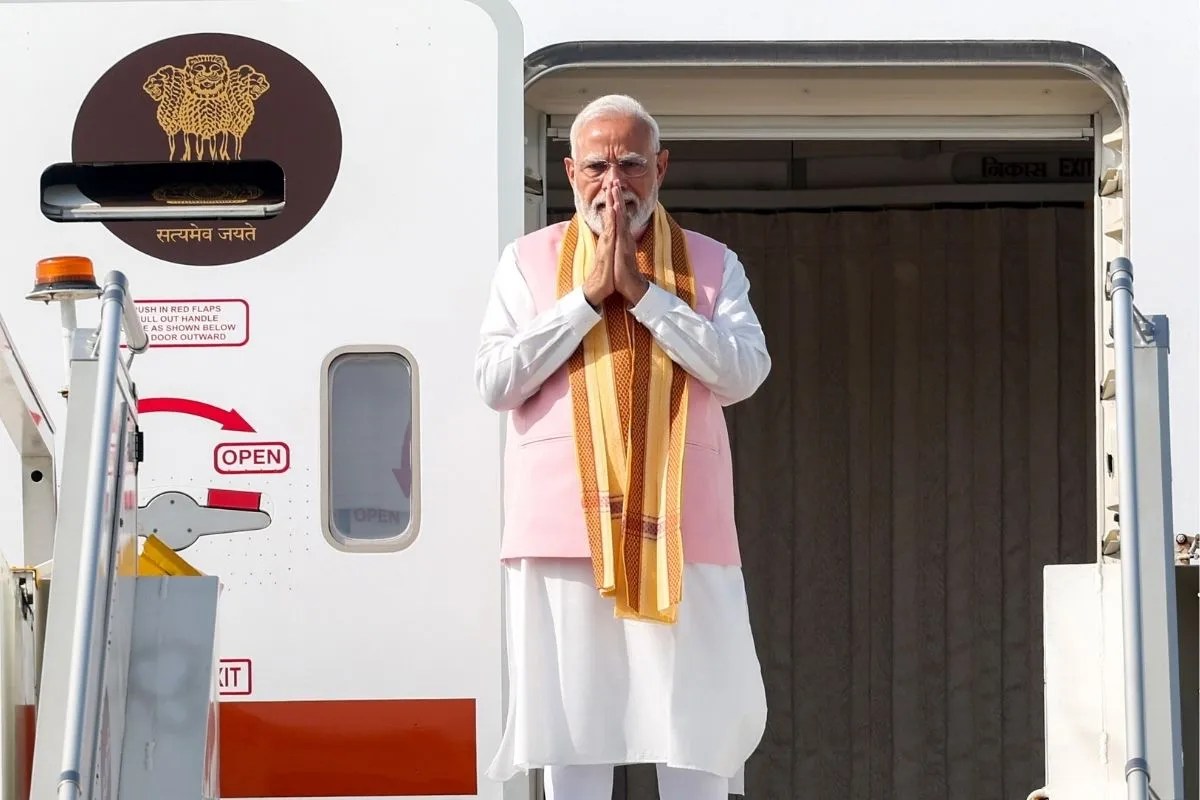
Mohan Bhagwat holds zero government portfolios, commands no military divisions, and cannot sign a single piece of legislation into law. Yet when he flies to New York to speak at Madison Square Garden or dine with elite policy forums, American foreign policy analysts scramble to decode every syllable.
If you want to understand where nearly 1.5 billion people are heading, looking exclusively at elected officeholders is a rookie mistake. Bhagwat leads the Rashtriya Swayamsevak Sangh (RSS), a century-old Hindu nationalist volunteer organisation that has deeply shaped India's political and cultural backbone—including producing Prime Minister Narendra Modi. His American tour isn't just a cultural exchange; it's a calculated civilisational pitch to Washington that demands a serious look. Discover more on a connected topic: this related article.
Why Washington Misreads the RSS Blueprint
Western diplomats often suffer from a rigid institutional bias. They assume power only looks like state departments, parliaments, and executive branch briefings.
The RSS operates entirely outside that traditional framework. Founded in 1925, it functions as an ideological bedrock rather than a standard political party. Millions of cadres, known as swayamsevaks, pass through its local branches, carrying its ethos into media, judiciary, corporate boardrooms, and government ministries. More reporting by NPR delves into related perspectives on the subject.
When Bhagwat steps onto international stages talking about Vasudhaiva Kutumbakam (the world is one family) and Vishwaguru (India as a guide to the world), critics back home and abroad call it a public relations veneer masking majoritarian ambitions. They point to human rights concerns and minority anxieties, arguing that a movement championing Hindu identity cannot simultaneously safeguard a pluralistic democracy.
You can't understand modern India by ignoring either side of this fierce debate. The organisation represents both a massive revival of indigenous civilisational pride and a profound point of contention over secularism and minority rights.
The Long Game on U.S.-India Relations
Despite domestic friction and vocal pushback from groups like the Indian Overseas Congress, Bhagwat's messaging to American business and political figures carries a pragmatic core. He views a long-term strategic partnership between Washington and New Delhi as vital for India's trajectory.
Governments come and go. Prime ministers shift, tariffs change, and diplomatic spats flare up over trade or regional policies. But the underlying geopolitical logic connecting the two nations remains bulletproof. Both capitals face a rapidly changing China. Both are scrambling to master the artificial intelligence revolution and secure critical supply chains.
Bhagwat's presence in New York signals an intent to normalize this worldview within Western mainstream discourse. He wants American decision-makers to realize that India's rise isn't a temporary administrative phase tied to one political party. It's a structural realignment driven by deep cultural confidence.
What You Should Watch Next
Don't wait for state department communiqués to tell you how ties between the two democracies are evolving. Watch how civil society, tech founders, and diaspora networks engage with these ideological pipelines.
If you're tracking international affairs or cross-border investments, stop viewing India solely through the narrow lens of electoral politics. Pay attention to the deep-seated cultural institutions shaping voter sentiment from the ground up. True bilateral longevity won't be secured by presidential handshakes alone; it requires navigating the complex, often noisy societal currents running beneath them.