The roar begins in the bones before it reaches the ears.
Up there, where the air thins until it feels like glass and the peaks of the Himalayas bite into the blue, silence is supposed to be the permanent state of things. Ice ages old as thought. Glaciers holding the sky up. But on a Tuesday that started like any other, the mountain cleared its throat.
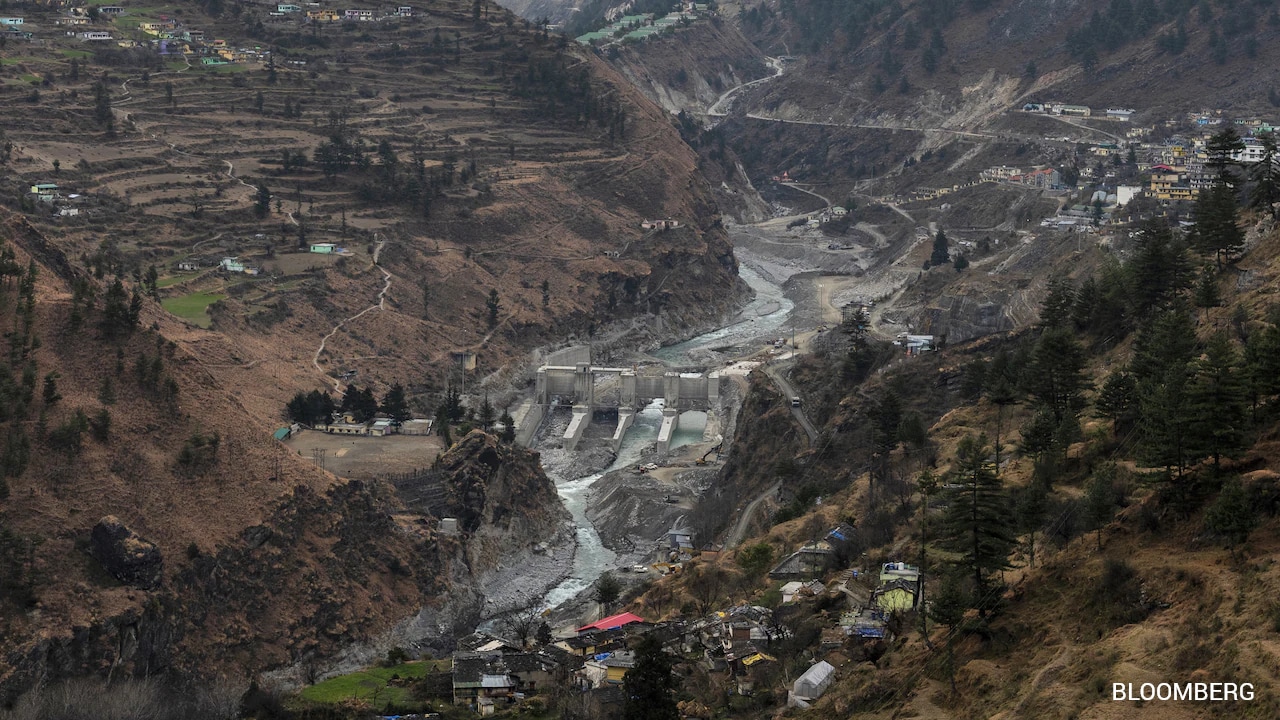
Subash stood on a concrete platform overlooking a roaring ribbon of milky-gray fury that used to be a steady, predictable river. He had spent twenty years tending to the iron veins and copper nerves of Nepal’s hydroelectric grid—a network of turbines and penstocks hacked into sheer rock faces, designed to harvest the raw, vertical violence of melting snow and turn it into light for millions.
Today, that same verticality was an executioner's drop.
"You don't fight it," Subash had told me years ago, gesturing toward a mountain slope scarred by ancient landslides. We were drinking sweet, cardamom-spiked tea from tin cups while a turbine hummed a low, sub-audible vibration beneath our boots. "You just make a bet with the gods. You build your wall, you spin your wheel, and every single morning you look up to see if the roof is still holding."
The roof is leaking.
To understand what happened when the floods came, washing away access roads, burying construction camps under millions of tons of mud, and snapping steel pylons like dry twigs, you have to look past the casualty counts on the evening news. You have to understand what it means to build an entire nation's economic future on the edge of a melting ice cube.
Nepal is perched on the roof of the world, and that roof is sliding. For decades, policymakers looked at the country’s steep topography and saw a battery. Rivers plunging thousands of feet from the high Himalaya represent one of the densest theoretical reserves of hydroelectric power on Earth. It is clean energy. It is renewable. It is supposed to be the engine that lifts a landlocked economy out of poverty, exporting megawatts to energy-hungry neighbors like India and Bangladesh.
Paper calculations are clean. Gravity is messy.
Climate change does not arrive with a warning klaxon. It arrives as an invisible whisper in the high-altitude basins, where ancient glaciers are turning into swollen lakes held back only by loose piles of debris called moraines. Imagine a bathtub filled to the brim with water and silt, sitting on a high shelf, with a crumbling wall of loose gravel keeping it from spilling into the living room below. That is a glacial lake outburst flood, or GLOF, waiting to happen. When a section of ice calves off or an earthquake rattles the ridge, the dam bursts.
Water does not negotiate. It accelerates.
When the catastrophic floods tore through valleys like the Melamchi and the Tamakoshi, they did not just rise; they arrived as walls of slurry. This is the detail that economic forecasters miss when they look at spreadsheets projecting gigawatt-hours and return on investment. This is not water as we know it, clear and blue. This is a moving mountain of boulders, uprooted pine trees, and thick, suffocating silt that weighs more than concrete.
Consider what happens when that slurry hits a multi-million-dollar intake facility.
The engineering is brilliant, on paper. Desander basins are built to let heavy sand settle out of the water before it hits the turbine blades. But how do you design a desander for a million tons of mud and boulders the size of delivery trucks? You cannot. The intake tunnels choke. The powerhouse floors fill up with gray muck that hardens like cement around the control panels. Workers scramble up cliff faces in the middle of the night, guided only by the strobe-flash of exploding transformers.
Subash was one of the lucky ones. His station was far enough up a secondary ridge that the worst of the surge missed the main turbine hall, but he watched three bridges he had crossed since childhood vanish in the blink of an eye.
"We are building our future out of glass and steel," he said later, his voice flat with exhaustion, staring at the brown wasteland where a thriving village had stood forty-eight hours prior. "And the mountain is made of time."
The vulnerability of Himalayan hydropower exposes a deeper paradox of the green transition. As the world scrambles to decarbonize, desperate for renewable energy sources to feed urban centers and data centers thousands of miles away, the infrastructure required to capture that energy is being built in the most rapidly destabilizing environments on the planet. The Himalayas are warming at a rate well above the global average. The permafrost is thawing. The slopes are losing their anchor.
Every kilowatt-hour generated in these high valleys carries a hidden tax paid in blood, displacement, and financial ruin. When a major plant goes offline for six months due to flood damage, the economic shockwaves ripple across entire regional grids. Power shortages spike. Industrial production stutters. The cost of reconstruction eats away at the very capital the projects were supposed to generate.
Yet, stopping is not an option. Without this energy, communities remain dependent on imported fossil fuels, locking them into a different kind of vulnerability. The question is not whether Nepal should harness its rivers. The question is how to build something permanent in a place determined to keep moving.
Engineers are learning, slowly and painfully. They are moving intake structures higher, designing wider spillways, and installing early-warning sensor networks upstream—acoustic monitors that listen for the deep, low-frequency rumble of an impending avalanche or debris flow before human eyes can spot it. They are learning to build with the mountain rather than trying to conquer it, acknowledging that concrete walls are mere suggestions when confronted with millions of tons of kinetic energy.
Back on the ridge, the mist is rolling in through the pine trees, blurring the line between earth and sky. The river below has quieted down to a sullen, muddy growl, carrying the debris of the upper valleys toward the plains far below.
Down there, the lights in the cities are still burning, powered by the grid that survived, or perhaps by the memory of the one that didn't. Somewhere in the dark, a turbine is spinning, drawing life from the thaw, while overhead, the high peaks watch in cold, patient silence.