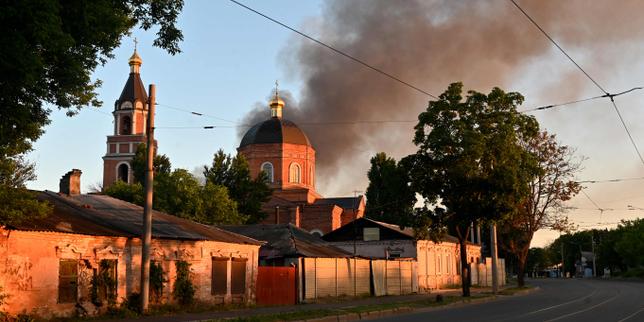
Mainstream media outlets love a predictable script. When a headline flashes that 50,000 people are without power in Zaporizhzhia due to ongoing military conflict, the narrative machine immediately churns out the standard copy. They treat the electrical grid like a fragile victim of collateral damage. They frame a blackout as an isolated humanitarian tragedy caused by stray kinetic strikes.
They are looking at the problem completely backward.
The electrical infrastructure in modern warfare is not a passive victim. It is an active, kinetic instrument of strategic leverage. The obsession with raw numbers—tracking whether 50,000 or 500,000 civilians are in the dark—misses the entire structural reality of how modern states project power through infrastructure. The true story isn't that the grid is breaking. The true story is that the grid is being integrated into the frontline combat space in a way that conventional military analysts fail to comprehend.
The Fragility Illusion
Western defense analysts have spent decades treating energy security as a logistical math problem. They calculate megawatts, substations, and redundant transformers. When a regional grid collapses, the immediate consensus is to label it a failure of defense or a symptom of indiscriminate bombing.
This is fundamentally wrong.
Large-scale electrical grids are inherently designed to survive immense shock. They are built with systemic redundancies, automatic trip-switches, and islanding capabilities meant to isolate damage. When a massive blackout occurs in a strategic hub like Zaporizhzhia, it is rarely the result of a lucky artillery shell hitting a random wire. It is the result of highly targeted, deliberate cyber-physical coordination designed to test the operational threshold of an entire state's engineering corps.
I have spent years analyzing critical infrastructure vulnerabilities. I have watched energy syndicates and state actors run red-team simulations on Western European and North American grids. The public assumes a blackout means the system failed. In reality, a blackout is often the grid doing exactly what it was programmed to do: shutting down to prevent the total, catastrophic frying of high-voltage transformers that take years to replace.
By hyper-focusing on the immediate civilian discomfort, the standard news report completely obscures the technical warfare happening beneath the surface. The real battle isn't for the current flowing through the lines today; it is for the survival of the physical machinery required to transmit power five years from now.
The Myth of the "Collateral" Power Failure
Let us dismantle the premise of the standard "People Also Ask" query regarding war-zone blackouts. The public routinely asks: Why cannot armies avoid hitting civilian power infrastructure?
The question itself is flawed because it assumes a clear separation between a civilian grid and a military grid. There is no separation.
- Dual-Use Reality: The same transmission lines that illuminate a high-rise apartment building power the rail networks transporting heavy armor to the front lines.
- Command and Control: Localized command centers, drone repair shops, and secure communication nodes draw from the exact same regional substations as the local bakery.
- The Interdependent Loop: Water treatment facilities require massive electrical loads to operate. Shutting down power is a highly effective, non-chemical method to force tactical retreats by rendering an entire sector logistically unviable for occupying or defending forces.
When a competitor article laments that thousands of citizens are without power, they are reporting on the surface ripples of a deep tactical decision. Targeting these nodes isn't a deviation from military strategy; it is the textbook execution of operational isolation.
Imagine a scenario where an advancing force faces a heavily fortified urban center. Direct assault means high casualties and prolonged urban combat. By systematically destabilizing the surrounding energy nodes, you force the defending force to divert valuable personnel, fuel, and transport assets away from the front line just to keep basic backup generators running for their own communication gear. The blackout is a force multiplier that never fires a single bullet at a soldier.
The True Cost of Tactical Quick Fixes
The conventional response to these blackouts is an international rush to supply mobile diesel generators and temporary transformers. Governments and NGOs boast about shipping thousands of small-scale power units to conflict zones, framing it as a triumph of humanitarian logistics.
It is a band-aid on an amputated limb. Worse, it creates a dangerous secondary dependency.
High-power mobile generators run on fuel. In a conflict zone, fuel is the most precious, heavily contested resource on the planet. By flooding a region with thousands of decentralized generators, you create an insatiable, fragmented demand for diesel. Every gallon of fuel used to keep a civilian sector warm is a gallon of fuel diverted from tactical logistics, medical transport, or supply chains.
Furthermore, these temporary fixes completely ignore the structural degradation of the primary grid. When you patch a high-voltage system with sub-standard, non-matching components scraped together from international donations, you introduce massive phase imbalances and harmonic distortions into the network. You are essentially setting up the entire regional grid for a systemic, catastrophic failure the moment you try to bring it back to full capacity.
The downside to acknowledging this reality is grim: it means admitting that long-term infrastructure stability must be sacrificed for short-term survival. But pretending that shipping container-sized generators solves the underlying crisis is a delusion that only serves political public relations.
Stop Looking at the Numbers, Look at the Architecture
If you want to understand the true state of the conflict in Ukraine, stop reading the daily tallies of how many homes are dark. Those numbers fluctuate based on weather, maintenance shifts, and temporary rerouting.
Instead, look at the architecture of the transmission lines.
The Soviet-era grid was built with massive over-capacity and extreme centralization. It was designed to withstand a hypothetical nuclear confrontation with NATO, featuring giant, heavily armored substations. This architectural legacy is the only reason the system hasn't completely dissolved into irrecoverable scrap metal.
The real metric of success in this hidden war is the repair-to-destruction ratio of 750kV and 330kV autotransformers. These machines weigh hundreds of tons. They cannot be built quickly, they cannot be flown in on a cargo plane, and they require highly specialized manufacturing facilities that take months to produce a single unit.
When an attack successfully takes out a 750kV transformer, it doesn't just turn off the lights in a neighborhood for an evening. It permanently alters the geopolitical energy map of eastern Europe. It forces the entire nation to rely on lower-voltage, less efficient distribution lines, choking economic productivity and making long-term reconstruction exponentially more expensive.
The mainstream press reports on the 50,000 people today because it fits into a neat, easily digestible human interest frame. They completely ignore the fact that the systematic destruction of the high-voltage backbone is designed to render the entire region economically uninhabitable for the next decade, regardless of where the eventual borders are drawn.
The Failure of International Humanitarian Law on Infrastructure
International treaties explicitly forbid the intentional destruction of civilian infrastructure necessary for survival. Yet, every major global power looks the way because the definition of a "legitimate military target" has been stretched to the point of irrelevance.
Because modern military operations are fully digital and integrated into civilian telecommunications networks, any energy node can be retroactively justified as a valid target. If a military drone operator plugs their control station into a civilian outlet, that entire building complex and the substation feeding it become, under modern operational doctrine, a legitimate target.
The legal frameworks designed in the mid-20th century are completely useless against the realities of contemporary hybrid warfare. They assume a world where armies fight in open fields and power plants only serve cities. That world has ceased to exist.
Stop expecting international pressure or legal declarations to protect energy grids in modern conflicts. The grid is the theater of war. The lines are the trenches. The transformers are the high-value targets.
The next time you see a headline detailing a sudden blackout in a conflict zone, do not ask how long it will take to flip the switch back on. Demand to know which specific high-voltage nodes were compromised, what the phase stability of the regional network looks like, and how many heavy transport assets are being diverted to sustain the illusion of functionality. Everything else is just noise designed to keep you staring at the dark instead of understanding the system that controls the light.


