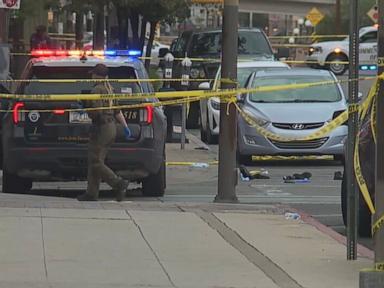
Every Monday morning, headline writers across the nation piece together the exact same story. They tally up the casualties, group disparate incidents across multiple states into a single tragic figure, and run headlines like "9 Separate Mass Shootings Across US Leave 9 Dead and 60 Injured Over the Weekend."
It feels like a relentless drumbeat. But when we package localized violence into a monolithic national headline, we actually obscure what is really happening on American streets. For an alternative perspective, consider: this related article.
Understanding gun violence requires looking past the breathless weekend totals. You have to break down what actually occurred, where the system failed, and why treating wildly different crimes as one big stat gets us nowhere.
What the Weekend Tally Actually Tells Us
The Gun Violence Archive defines a mass shooting as any single incident where four or more people are shot, not including the shooter. Under this standard metric, a gang dispute outside a late-night venue, a botched robbery in a parking lot, a domestic dispute in a residential home, and a targeted hate crime at a place of worship all get lumped into the exact same bucket. Further coverage on this matter has been published by Reuters.
Look at the breakdown from recent high-casualty weekends across the country:
- Public gatherings and nightlife: A sudden fight breaking out on Bourbon Street in New Orleans, killing a 33-year-old bystander visiting from Chicago, alongside multiple injuries.
- Targeted domestic or neighborhood disputes: A neighborhood clash in Idaho that escalated until four people were found fatally shot behind a local church.
- Unregulated party venues: An early-morning shooting at a makeshift office space party in St. Louis that left a teenager dead and 11 others wounded or trampled in the panic.
- Faith community attacks: A gunman ramming his truck into a church in Michigan before opening fire on worshippers and setting the building alight.
Grouping these incidents into one terrifying figure generates clicks, but it blurs crucial distinctions. A street corner conflict driven by illegal handguns requires an entirely different public safety response than a premeditated ideological attack or a neighbor dispute gone wrong.
The Real Drivers Behind the Spike in Weekend Numbers
Why do these spates of violence cluster around Friday through Sunday? It isn't random chance, and it isn't a sudden shift in human nature. Criminal justice researchers point to a few persistent factors that spike crime rates during specific windows.
First, consider community gathering points. Weekends bring higher density in nightlife districts, house parties, and pop-up events. When alcohol, illegal firearms, and personal disputes intersect in crowded spaces, the risk of multi-victim incidents jumps exponentially. Police departments in cities like Chicago, Philadelphia, and New Orleans routinely report that small personal conflicts rapidly escalate into multi-victim shootings simply because high-capacity handguns are present in those crowded settings.
Second, local law enforcement deployment strategy often lags behind shifting activity. While cities routinely flood downtown entertainment strips with patrols, violence frequently shifts to unmonitored suburban parking lots, short-term rentals, or commercial office spaces rented out for unauthorized late-night parties.
Third, legal loopholes around firearm access remain a localized issue with national consequences. In Louisiana, police leaders explicitly cited lax gun laws as a factor when handguns turned a crowded night spot into a crime scene. When carrying a concealed weapon requires minimal permitting or background scrutiny, the barrier between a verbal argument and a fatal shooting practically vanishes.
How Local Communities Are Actually Curbing the Casualties
National news outlets like to focus on the shock value of the body count. But if you look at cities that have managed to break this cycle, you find specific, targeted interventions rather than sweeping political talking points.
Violence interruption programs stand out as one of the most effective tools available. Groups like Targeted Violence Intervention Programs employ credible messengers—people from the neighborhood who know the dynamics on the ground—to mediate personal beefs before anyone reaches for a weapon. When implemented alongside focused deterrence, where law enforcement directly communicates with high-risk individuals about the immediate consequences of violent acts, cities see measurable drops in retaliatory shootings.
Another proven strategy centers on commercial site accountability. Cities that strictly enforce code violations on illegal party venues and hold property owners liable for violent incidents happening in unpermitted spaces cut off the venue pipeline where many off-hours mass shootings occur.
Finally, Red Flag laws—or Extreme Risk Protection Orders—allow courts to temporarily remove firearms from individuals displaying clear warning signs of self-harm or violence toward others. In domestic and neighborhood cases, like the tragedy in Idaho, family members or neighbors often notice red flags long before a shot is fired.
Actionable Steps to Improve Personal Safety and Community Awareness
Sitting around feeling helpless about national headlines doesn't accomplish anything. You can take concrete steps to protect yourself in public spaces and help make your own neighborhood safer.
- Identify exits immediately in crowded venues: Whether you're at a concert, a club, or a street festival, take two seconds to spot at least two exit routes that aren't the main entrance. Most casualties in crowded incidents occur near primary chokepoints during a panic.
- Report unpermitted high-risk gatherings: If an abandoned commercial building or short-term rental down your street is hosting massive late-night parties with no security, report it to local code enforcement immediately. Unregulated venues are prime locations for spontaneous violence.
- Know your state's Red Flag procedures: Check if your state has Extreme Risk Protection Orders on the books. Knowing how to file a petition if a family member or acquaintance exhibits dangerous behavior can stop a tragedy before it makes the news.
- Support local community violence intervention: Instead of donating to national political PACs that churn out outrage, fund local groups doing direct street-level mediation in your city. They are the ones actually stopping shootings on Friday night.