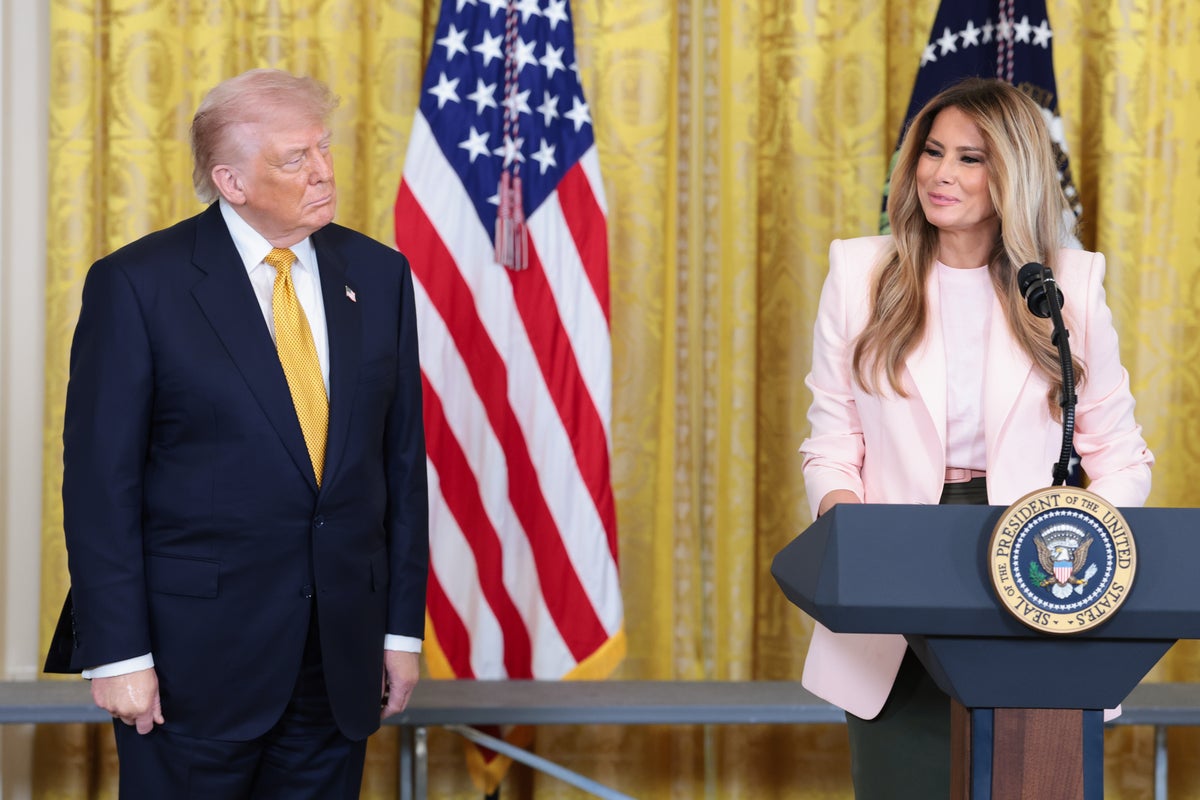
The air inside the East Room of the White House usually carries a specific kind of stillness. It is the silence of heavy velvet curtains, polished floorboards, and the crushing weight of history. But when military families gather there, the silence changes. It becomes a living thing. You can hear it in the stiff rustle of a dress uniform or the way a mother grips her handbag just a little too tightly.
Melania Trump stood before a room filled with these families on a Mother’s Day tribute that should have been defined by soft platitudes. In the world of political stagecraft, these events are often scripted to be painless. They are meant to be sunlight and gratitude.
But the reality of a Gold Star mother is never painless.
The Empty Chair at the Table
Consider a woman we will call Sarah. She isn’t a headline. She is a schoolteacher from a small town in Ohio. On Mother’s Day, her house doesn't smell like brunch or lilies. It smells like the cedar chest where she keeps a folded flag. For Sarah, and thousands like her, the geopolitical shifts in Washington D.C. aren't abstract policy debates. They are the reason her son’s boots are still sitting by the back door, gathering dust.
When the former First Lady began to speak, she did something that deviated from the standard celebratory script. She didn't just thank the mothers for their service. She acknowledged the void. She spoke directly to the families of those who had fallen during the recent escalations in the Middle East.
The room shifted.
Politics often treats soldiers like chess pieces. We move them across a map, debate the cost of the oil they protect, and argue over the "strategic necessity" of a strike in the Iranian desert. We talk about "surgical precision" and "proactive defense."
Sarah doesn't care about surgical precision. She cares about the fact that her son will never walk through the front door again.
The Cost of a Command
The tension between the White House and Iran had reached a fever pitch in the months leading up to that tribute. It was a summer of drones, tankers, and whispered threats. To the pundits on cable news, it was a high-stakes game of chicken. To the women in the East Room, it was the sound of a doorbell ringing at 3:00 AM.
Melania Trump’s decision to center the deaths resulting from the conflict was a rare moment of narrative collision. It forced a connection between the Commander-in-Chief’s executive orders and the grief of the women sitting three feet away from him.
The human heart is not designed to process "collateral damage."
It processes the loss of a laugh. It processes the silence of a phone that no longer rings. By naming the fallen, the First Lady stopped treating the casualties as a statistic and started treating them as a debt. It was an admission that every "victory" on the global stage is paid for in the currency of someone’s child.
The Invisible Stakes
Why does this matter now? Because we are prone to forgetting.
We live in a cycle of outrage that moves so fast we rarely stop to look at the wreckage left behind. We see a headline about a drone strike and we move on to the next scandal before the smoke has even cleared. But for the military mother, the clock stops the moment the casualty officer walks up the driveway.
Life becomes a series of "befores" and "afters."
Before the Iran escalation, there were plans for law school. There were conversations about marriage. There were simple, mundane Sunday dinners. After the escalation, there is only the memorial.
The East Room tribute was a reminder that the decisions made in the Oval Office have a physical weight. They aren't just ink on paper. They are the reason a mother has to learn how to live with a hole in her chest that never quite heals.
A Different Kind of Bravery
There is a specific kind of courage required to stand in a room full of people whose lives have been shattered by your own administration’s policies. It is a quiet, uncomfortable bravery.
The First Lady’s words weren't a political defense. They were a recognition of a shared, heavy truth. She spoke of the "selfless sacrifice" and the "unwavering grace" of these women. But grace is often just the mask we wear when the pain is too loud to scream.
We often think of the military as an institution of iron and steel. We think of the hardware, the jets, and the budget. We forget that the foundation of the entire structure is built on the backs of mothers who said goodbye and hoped for the best.
The Echo in the Hallway
As the event concluded, the guests began to filter out. The cameras were packed away. The bright lights dimmed. The "tribute" was over, but the reality remained.
The mothers walked out into the Washington afternoon, back to their lives, back to their empty chairs. They carried with them the recognition they had received, but recognition doesn't bring back a heartbeat.
The real story of that Mother’s Day wasn't about the speech or the flowers. It was about the fact that in the highest corridors of power, someone finally stopped to say the names of those who were gone. It was a brief, flickering moment where the human cost of war was allowed to take up space in the room where the wars are planned.
The flag in Sarah’s cedar chest remains folded. The boots by her back door remain still.
The silence returns to the East Room. But for one afternoon, that silence was filled with the names of the sons and daughters who paid the price for a world that can’t stop fighting itself.
A mother’s grief is the only thing more permanent than a president’s legacy.