The Breath Before the Plunge
The air in the back of a taxi idling in Karachi heat is thick, smelling of exhaust and salt from the Arabian Sea. For the man behind the wheel, a father of three named Ahmed (a stand-in for millions just like him), the dashboard isn't just plastic and wires. It is a ticking clock. Every jump in the price of fuel is a meal smaller at home. Every dip in the national currency makes the imported medicine his mother needs a little more out of reach.
Ahmed doesn't read the balance sheets of the State Bank of Pakistan. He doesn't need to. He feels the macroeconomics in his bones. When a nation’s foreign exchange reserves dwindle to the point where they can barely cover a few weeks of imports, the pressure doesn’t stay in the marble halls of Islamabad. It trickles down, turning into a crushing weight on the shoulders of the working class.
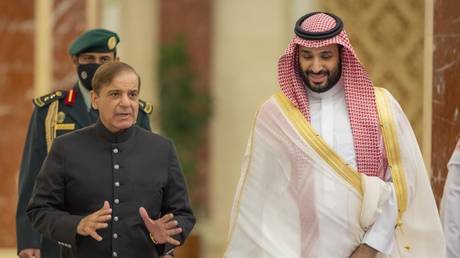
This is the silent backdrop to a headline that, on its surface, looks like a dry accounting entry: Saudi Arabia has pledged an additional US$ 3 billion in financial support to Pakistan.
To the casual observer, it is a line item. To a country teetering on the edge of a sovereign default, it is oxygen.
The Chemistry of a Special Relationship
International diplomacy often mimics the cold transactions of a boardroom, but the bond between Riyadh and Islamabad operates on a different frequency. It is a connection forged over decades, built on shared faith, strategic necessity, and a history of mutual reliance.
When the Saudi Kingdom moves to deposit billions into the central bank of another nation, it isn't just an act of charity. It is a calculated vote of confidence. Pakistan’s economy has been navigating a storm of biblical proportions—historic floods, political upheaval, and a global energy crisis that sent prices screaming upward. Without a floor to catch the fall, the country risked a total collapse of its currency.
Think of this US$ 3 billion as a stabilizer on a ship caught in a Category 5 hurricane. It doesn't stop the rain, and it doesn't quiet the wind, but it keeps the vessel from capsizing. It provides the liquidity necessary to reassure international markets that the lights will stay on. This isn't the first time the Kingdom has stepped in, and the recurring nature of this support tells a story of a deep-seated regional brotherhood that defies simple "business" logic.
The Invisible Strings and the IMF
Money at this scale never travels alone. It carries expectations. For Pakistan, the Saudi pledge is a crucial piece of a much larger, more complex puzzle involving the International Monetary Fund (IMF).
The IMF is like a stern doctor. Before it prescribes the heavy-duty medicine of a bailout package, it demands that the patient show they have other friends willing to help. They want to see "external financing assurances." By committing this US$ 3 billion, Saudi Arabia isn't just giving Pakistan cash; they are giving them a letter of recommendation. They are telling the global financial community that Pakistan is a bet worth making.
But for the person on the street, this "confidence" feels abstract. They see the government removing subsidies on electricity and fuel to meet IMF demands. They see inflation hitting levels that make the weekly grocery run a source of genuine anxiety.
The paradox of the US$ 3 billion is that while it saves the country from a total blackout, it doesn't immediately lower the price of milk. It buys time. It buys the space to breathe, to negotiate, and to hopefully implement the structural reforms that have been kicked down the road for far too long.
The High Stakes of the Energy Ledger
A significant portion of Pakistan’s economic struggle is tied to what it buys from the outside world. Oil and gas are the lifeblood of its industry and the source of its greatest debt. The Saudi support often takes multiple forms—sometimes it is a direct cash deposit to shore up reserves, and other times it is a deferred payment facility for oil.
Imagine being able to run your business today but not having to pay for the electricity until next year. That is the essence of a deferred payment. It allows Pakistan to keep its factories running and its transport networks moving without an immediate, catastrophic drain on its remaining US dollar holdings.
This isn't a permanent solution, and everyone involved knows it. It is a bridge. The question that haunts the policymakers in Islamabad is what happens when they reach the other side of that bridge. The Saudi Kingdom is transitioning its own economy through "Vision 2030," moving away from being a simple oil provider to becoming a global investment powerhouse. They want partners, not just dependents.
The Human Cost of the Macro
While the numbers are staggering, the reality is found in the small details. It’s found in the textile mills of Faisalabad, where thousands of workers depend on a stable exchange rate so their employers can buy the chemicals and dyes needed for export. If the currency crashes, the factory gates close.
When the Saudi deposit hits the accounts, the "spread" on Pakistan’s international bonds narrows. Investors breathe a sigh of relief. The threat of a "Sri Lanka-style" collapse recedes into the distance.
But we have to be honest about the fragility of this moment. Relying on the generosity of a neighbor is a testament to a strong friendship, but it is also a mirror held up to a nation’s internal struggles. The real story isn't the US$ 3 billion itself; it is what Pakistan chooses to do with the seconds, minutes, and months that money has purchased.
Beyond the Ledger
The relationship is more than just a series of wire transfers. There are millions of Pakistanis living and working in Saudi Arabia. They are the construction workers building the glass towers of Neom, the doctors in Riyadh hospitals, and the engineers maintaining the infrastructure of the Holy Cities.
Every month, they send a portion of their paychecks back home. These remittances are the true heartbeat of the Pakistani economy, often totaling more than the country’s entire export revenue. When the Saudi government pledges billions at the state level, they are also protecting the ecosystem that allows those millions of individuals to support their families back in Lahore, Peshawar, and Quetta.
It is a symbiotic loop. Stability in Pakistan ensures a steady, skilled workforce for Saudi expansion. Saudi liquidity ensures that the homes those workers are building back in Pakistan have a functioning economy to return to.
The Unspoken Reality
We often talk about these deals as if they are settled in an afternoon. In reality, they are the result of grueling negotiations and a delicate dance of sovereignty. For Pakistan, accepting such massive aid requires a humble admission of need. For Saudi Arabia, providing it requires a long-term commitment to a region that is often volatile.
There is a tiredness in the eyes of the public. They have seen bailouts before. They have seen "record-breaking" pledges. The skepticism is a defense mechanism against a cycle of crisis and rescue that never seems to end.
The true measure of this US$ 3 billion won't be found in a press release six months from now. It will be found in whether the Pakistani state can use this window of stability to fix its tax collection, modernize its energy grid, and finally break the habit of living from one rescue to the next.
Ahmed, the taxi driver in Karachi, doesn't care about the geopolitics of the IMF or the nuances of the Saudi Vision 2030. He cares that the price of petrol didn't go up again this morning. He cares that the lights stayed on long enough for his daughter to finish her homework.
For now, the bridge is holding. The water is still high, the wind is still biting, but the planks beneath his feet are a little more solid than they were yesterday. The handshake across the Red Sea has held firm, buying another day of survival in a world that rarely offers second chances.
The money has arrived. The clock is still ticking.