The sea is never just water. To a sailor, it is a road. To a child on a beach, it is a playground. But for those aboard the metal hulls of a humanitarian flotilla, the Mediterranean is a thick, shimmering wall. It is a space defined not by miles, but by the mounting pressure of what happens when a ship’s engine is cut by a foreign hand in the dead of night.
The recent interception of Gaza-bound vessels near the coast of Cyprus was not merely a maritime maneuver. It was a collision of two irreconcilable realities. On one side, there is the clinical, strategic logic of a naval blockade—a world of radar sweeps, exclusion zones, and the cold mathematics of security. On the other, there is the visceral, human desperation of the cargo: flour, medicine, and the stubborn hope that a boat can bridge a gap that diplomacy has left wide open for decades. Meanwhile, you can find similar events here: The Real Reason India is Betting Big on Swedish Tech.
Consider the rhythm of life on a protest vessel. It is a strange, suspended existence. You wake to the smell of diesel and brine. You drink lukewarm coffee while watching the horizon, waiting for the silhouette of a gray hull to break the line between sky and sea. There is a specific kind of silence that settles over a deck when the radio crackles with a command to halt. It is the sound of a world shrinking.
The Geography of the Blockade
To understand why a few ships in the vast blue of the Mediterranean matter, we have to look at the map Gaza lives by. It is a narrow strip of land, thirty-six miles long, hemmed in by concrete walls and the restless sea. Since 2007, the maritime blockade has turned that water into a fence. For the people living there, the Mediterranean is a constant, cruel irony. They can smell the salt, they can hear the waves, but they cannot cross them. To explore the complete picture, we recommend the excellent analysis by The New York Times.
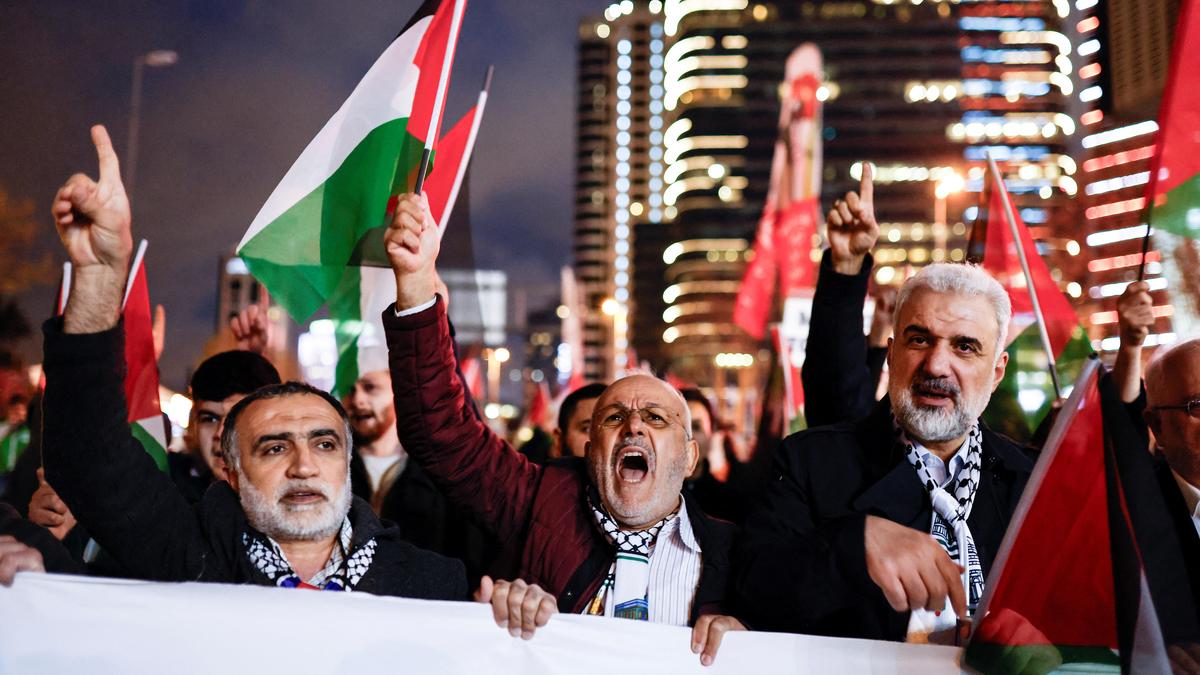
The organizers of these flotillas are rarely professional sailors. They are doctors, activists, and students. They carry cameras as often as they carry crates of supplies. Their goal is rarely just the delivery of goods—a single ship can only carry so much—but the shattering of a narrative. They want to prove that the sea is still a common resource, a gateway rather than a cage.
But the Israeli Navy views these waters through a different lens. To them, every unvetted hull is a potential threat. They cite the need to prevent the smuggling of weapons and materials that could be used by militant groups. In their eyes, the flotilla is not a mission of mercy, but a provocation wrapped in a humanitarian flag. When the two meet, the result is a tense, high-stakes standoff where the rules of engagement are written in real-time.
The Ghost of the Mavi Marmara
Every time a new fleet sets sail, the shadow of 2010 looms over the deck. That was the year of the Mavi Marmara, a tragedy that turned a political protest into a bloodbath. Nine activists died when Israeli commandos boarded the ship. It is a memory that sits in the stomach of every person who signs up for these missions. They know that a peaceful intent does not guarantee a peaceful outcome.
This history creates a psychological pressure cooker. Imagine standing on a deck in the pitch black. The lights of the intercepting naval ships are blinding, designed to disorient. You hear the thrum of helicopters overhead. You are unarmed, holding nothing but a banner or a cell phone, facing elite soldiers trained for boarding operations. The fear is not abstract. It is a physical weight in the chest.
The recent interception near Cyprus followed a familiar, grim script. The vessels were shadowed, warned, and eventually boarded. There was no loss of life this time, but the result was the same: the ships were diverted, the cargo was seized for "inspection," and the activists were detained.
The Invisible Stakes of a Cargo Hold
We often talk about humanitarian aid in terms of tons and liters. Five hundred tons of flour. Ten thousand liters of fuel. These numbers are easy to track, but they fail to capture the reality of what it means to be without them.
Imagine a hospital in Gaza. It is not the gleaming, high-tech facility you might find in London or New York. It is a place where the lights flicker because the generators are running on fumes. It is a place where a surgeon might have to prioritize which child gets the last of the clean bandages. When a flotilla is stopped, it isn't just a political defeat. It is a direct blow to that hospital’s ability to function.
The blockade creates a forced scarcity that ripples through every aspect of life. It affects the price of bread, the quality of drinking water, and the very hope of a future. When a ship is intercepted, that scarcity is reinforced. The message sent to the people on the shore is clear: the world can see you, but it cannot reach you.
The Politics of the Horizon
There is a deep, agonizing complexity to the international laws governing these waters. Israel maintains that the blockade is a legal necessity under the laws of armed conflict. The United Nations and various human rights organizations have argued that the collective punishment of a civilian population is a violation of international law.
This is where the human element gets lost in the thicket of legal jargon. We argue about "San Remo Manuals" and "maritime zones" while forgetting that at the center of this conflict is a human being who just wants to fish more than three miles from the shore without being shot at.
The activists on these ships are trying to force a choice. They are forcing the international community to look at the blockade and decide if it is a justifiable security measure or a moral failure. By placing their bodies in the path of a naval superpower, they are betting that the world’s conscience is more powerful than a torpedo boat.
The Long Walk Back to Port
When the ships are towed into the port of Ashdod, the cameras eventually stop clicking. The activists are processed and deported. The cargo sits in a warehouse, waiting for a bureaucratic green light that may never come. On the surface, nothing has changed. The blockade remains. The tensions persist.
But the impact of these missions is felt in the long, slow erosion of the status quo. Each voyage brings the eyes of the world back to a corner of the map that many would rather forget. Each interception creates a new set of headlines, a new round of debates in the halls of power, and a new generation of people who realize that the sea should not be a prison.
There is a specific kind of weariness that comes with this cycle. For the people of Gaza, watching these ships approach and then vanish is a form of emotional whiplash. It is the arrival of a friend who is stopped at the gate.
Yet, they keep watching the horizon.
They watch because the alternative is to accept that the wall is permanent. They watch because as long as there are people willing to sail into the teeth of a blockade, the possibility of an open sea remains alive. The ships may be intercepted, the flour may be seized, and the activists may be sent home, but the idea that a shore can be reached is something that no navy can sink.
The Mediterranean continues to churn, indifferent to the borders drawn upon its surface. The salt stays in the wounds, but the water keeps moving, always pushing against the hulls of those who refuse to believe that the map is the final word.