Silence.
That is the first thing you notice when a cabin loses its casual rhythm, when the clink of plastic coffee stirrers stops and the low, continuous hum of air conditioning suddenly sounds like a warning instead of white noise. You might also find this similar story useful: Inside the CFB Wainwright Fire Crisis Nobody Is Talking About.
At thirty thousand feet, a commercial airliner is a sealed aluminum tube hurtling through thin, freezing air at more than five hundred miles an hour. Outside, nothing is forgiving. Inside, people hold onto small, ordinary comforts: a half-finished crossword puzzle, a neck pillow shaped like a tiny horseshoe, a toddler's sticky fingers pressing against a scratched polycarbonate window. None of them bought a ticket to confront mortality over eastern Europe.
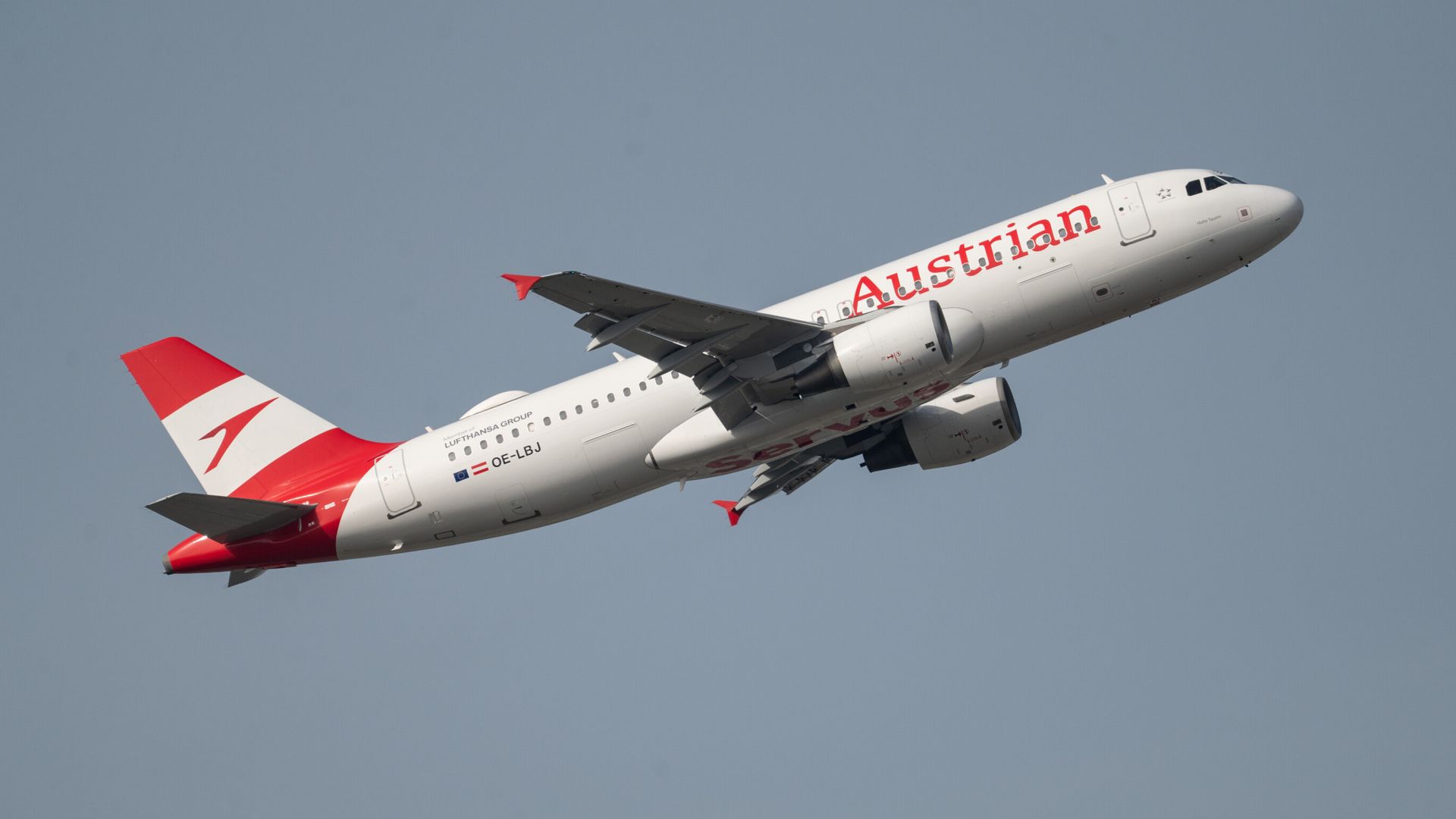
Yet that is precisely what happens when a flight bound from Tel Aviv to Vienna is forced to divert and make an emergency landing after a bomb threat. As highlighted in detailed articles by Al Jazeera, the implications are widespread.
On paper, a dry news wire reduces the entire ordeal to a neat, bloodless summary. Departure point. Destination. Threat reported. Diversion executed. Passengers screened. Aircraft cleared. Move along to the next headline.
Dry facts are tidy. Fear is not.
The Architecture of a Threat
To understand what ripples through an aircraft when a bomb threat surfaces mid-flight, we have to look past the metal fuselage and examine the invisible architecture of modern aviation security.
A threat rarely arrives like a movie script, complete with a ticking clock visible on a screen. More often, it enters through a phone call to an airport switchboard, an encrypted message flagged by ground control, an anonymous tip relayed across borders, or an unsettling note or remark inside the cabin itself. Once that signal reaches the people responsible for keeping hundreds of lives intact, ambiguity evaporates.
You cannot gamble with a ninety-nine percent probability that a threat is a hoax. Not when the remaining one percent carries a catastrophic price tag.
Think of aviation protocols like a fire door in a crowded theater. Most nights, the door stays wedged open or sits quietly in its frame, unnoticed by anyone finding their seat. Nobody applauds the heavy steel hinge or the smoke sensor tucked into the ceiling. The system only reveals its value the moment someone smells burning fabric. Even if the smoke turns out to be burnt popcorn in the lobby, you still clear the room.
When a flight traveling from Tel Aviv to Vienna receives a bomb threat and diverts for an emergency landing, ground controllers, airline operations centers, and security agencies trigger a chain reaction designed around a single non-negotiable rule: get the aircraft safely on the ground, separate it from crowded terminals, and treat every variable as real until proven otherwise.
To see how that feels from inside the cabin, let us construct a hypothetical scenario grounded in standard airline procedures and human stress responses. Picture Maya, a violin restorer flying from Tel Aviv to Vienna for an autumn exhibition, sitting in seat 14A with her instrument case strapped carefully beside her. Across the aisle sits David, a grandfather heading to Austria to meet a newborn grandson he has only seen through pixelated video calls.
For the first hour, the flight feels routine. Flight attendants move down the aisle with drinks. The Mediterranean gives way to coastline, sea, and shifting cloud banks. Maya closes her eyes, mentally running through varnish formulas.
Then comes the subtle shift.
A flight attendant walks briskly toward the forward galley, speaking into an intercom with a tight, practiced calm. The captain's voice comes over the public address system—not panicked, never dramatic, yet carrying a clipped precision that makes seasoned travelers sit up straighter. A change in routing. An unscheduled descent toward a nearby diversion airport.
Notice what happens next. Human beings are terrible at sitting inside a vacuum of uncertainty. When official announcements are necessarily guarded—because crews are trained not to spark stampedes or panic at altitude—our minds rush in to fill the silence.
Maya looks at David. David looks at the little blue line on the seatback map, watching it bend away from its straight shot toward Vienna. Neither of them knows for sure what is happening. Both of them feel the sudden tightness in their chests.
That is the hidden cost of a mid-air bomb threat. Even if no explosive device exists anywhere near the plane—and the overwhelming majority of threats turn out to be hoaxes or false alarms—the psychological shockwave is real. Adrenaline floods the bloodstream. Hearts hammer against ribs. Every creak of the airframe sounds louder. Every overhead bin latch feels suspect.
Why This Route Carries Heavy Echoes
A flight between Tel Aviv and Vienna does not exist in a geopolitical vacuum. Even when passengers are simply traveling for work, family, study, or leisure, the corridor itself sits near regions where security anxieties run deep and headlines rarely stay quiet for long.
Travelers flying out of Ben Gurion Airport are already accustomed to rigorous pre-departure screening. Long lines, pointed questions about luggage, secondary checks—it is part of the rhythm of departure. Many passengers develop a kind of armor against routine security theater. You pack light, keep documents handy, answer questions briskly, and assume that once you clear the gate and settle into your seat, the hard part is over.
An in-flight emergency landing shatters that illusion.
Suddenly, the boundary between "safe inside the cabin" and "exposed to danger" blurs. Even seasoned flyers who treat commercial aviation like taking a bus across town feel a jolt of vulnerability. You are buckled into a seat with nowhere to walk away, relying entirely on pilots, air traffic controllers, and emergency responders on the ground.
History has taught aviation authorities why they cannot afford complacency. Over decades, commercial flight has become one of the safest modes of transportation ever invented precisely because regulators and airlines treat past tragedies as permanent lessons. Every security wand, every reinforced cockpit door, every diversion checklist exists because someone once underestimated a risk.
Yet there is an uncomfortable paradox here. The very vigilance that keeps passengers alive also gives hoaxes and false threats immense leverage. A single caller or sender thousands of miles away can force a multi-ton aircraft to alter course, burn extra fuel, tie up emergency runways, delay hundreds of travelers, and send shockwaves through families waiting at arrival gates.
It is an asymmetric disruption. One voice can rattle two hundred lives.
What Happens When the Wheels Touch Down
Imagine the moment the diversion airport comes into view through the window.
In our hypothetical scenario, Maya watches the runway lights stretch out below. Instead of pulling straight up to a bustling passenger gate surrounded by jet bridges and baggage carts, the aircraft is guided toward a remote apron or designated security zone away from main terminals.
Flashing blue and amber lights line the perimeter. Fire trucks and emergency vehicles sit poised on standby. To someone watching from an airport terminal or reading a brief alert on a phone, those vehicles look like dramatic proof of crisis. Inside the cabin, they represent a safety net—trained professionals ready in case the worst happens, while hoping for the best.
Once the plane comes to a full stop, the tension does not vanish in a single breath. It lingers in the quiet hum of the engines winding down.
Passengers wait for instructions. Security teams and bomb disposal specialists follow strict protocols to clear the aircraft, luggage, and passengers systematically. Hours can pass between touchdown and release into a terminal building. Phones light up with frantic texts from spouses, parents, and colleagues who saw a breaking news alert before the plane even landed.
Think about the people on the ground for a moment.
A mother in Vienna refreshing her flight tracker every two minutes. A partner in Tel Aviv staring at a screen that suddenly reads Diverted. When a flight makes an emergency landing after a bomb threat, the emotional aftermath stretches far beyond the cabin door. Loved ones spend agonizing hours piecing together fragments of information while official updates move slowly to protect operational security.
And what happens to the passengers once they are finally cleared?
Most walk away physically unharmed. Relief washes over them in waves—nervous laughter in the terminal, long hugs, deep sighs that feel like they have been held since thirty thousand feet.
Yet something subtle often stays behind. For some, the next boarding pass feels heavier. A sudden chime on a phone near an airport gate triggers a brief spike of dread. A routine announcement from a flight crew makes them listen a little closer.
We talk a lot about physical safety in travel—seatbelt signs, oxygen masks, emergency exits, screening machines. We talk far less about the emotional residue left when ordinary travel is hijacked by fear.
A Question Worth Asking About How We Read the News
When you scroll past a headline about a flight from Tel Aviv to Vienna making an emergency landing after a bomb threat, it is easy to treat it like a fleeting item in an endless stream of alerts. Another day, another disruption, another update before dinner.
Consider what happens next: within an hour or two, the story either escalates into major breaking news or quiets down once authorities confirm the aircraft is safe. Most readers move on without lingering on the people inside row fourteen or the families waiting at arrivals.
I will admit something candidly: writing about aviation security scares me a little, too, because flying asks us to place extraordinary trust in invisible systems and strangers' competence. When something goes sideways mid-air, even from afar, it reminds us how tightly our daily routines are woven into fragile threads.
That is why stories like this deserve more than a thirty-second skim. They remind us of two truths at once. First, modern aviation protocols are remarkably resilient—built to absorb shocks, isolate risks, and bring people down safely even under intense pressure. Second, behind every operational headline are real human beings carrying real hopes across borders.
Not diplomats or generals or statistics. Just people trying to get home, get to work, hold a baby, or play a concert.
The next time you hear about an emergency diversion or a security alert in the sky, listen past the jargon. Picture the quiet inside the cabin when the engines shift tone. Remember the hands gripping armrests in the dark.
Because in the end, a threat in the air is never just an aviation event.
It is a test of nerve, trust, and how gently we hold onto one another when the ground feels far away.