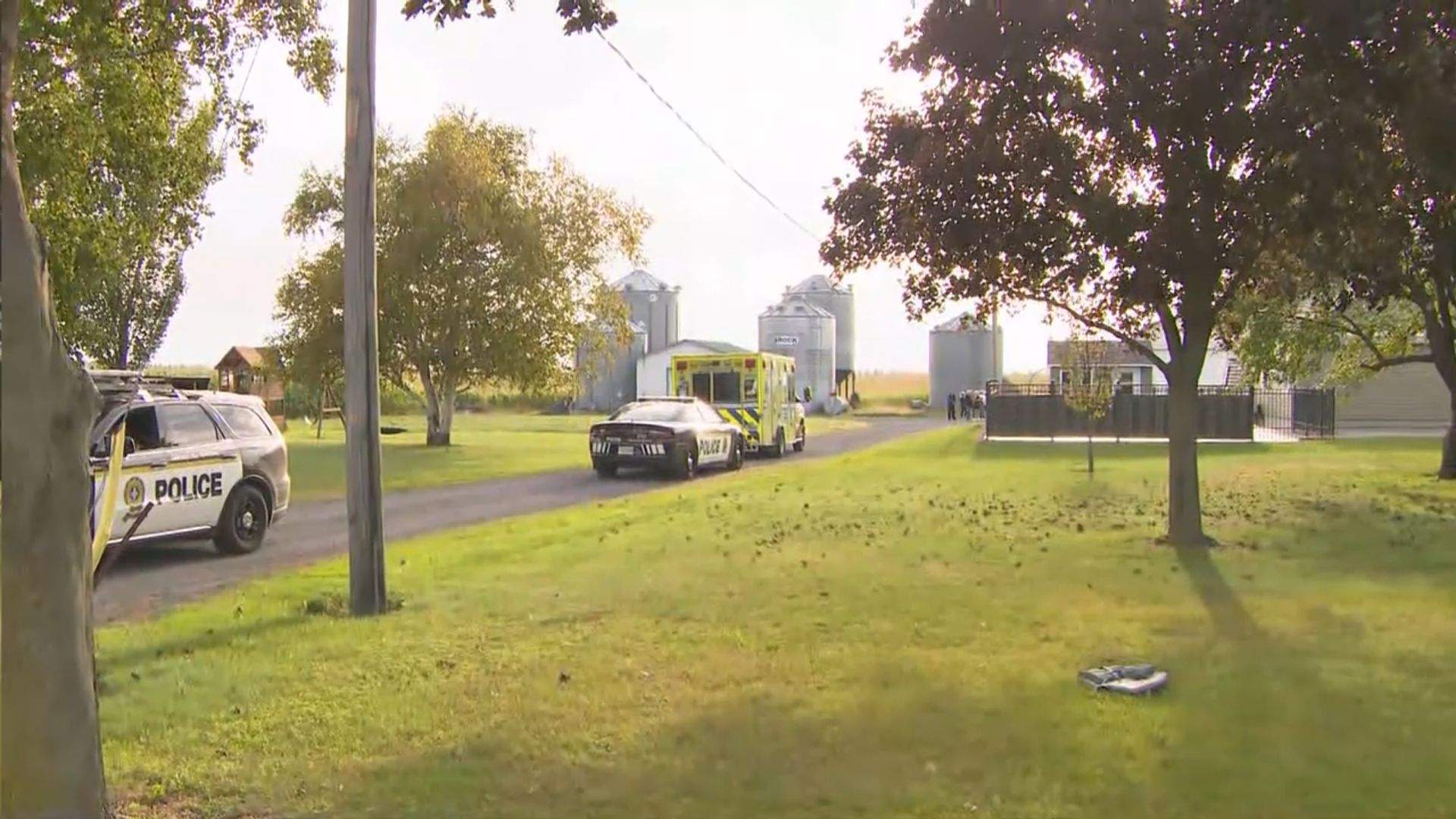
A quiet Saturday afternoon in Quebec turned into an absolute nightmare when a private helicopter plummeted into a farm field in Sainte-Brigide-d'Iberville, killing all four people on board.
What was supposed to be a celebratory birthday outing—a short scenic flight over the Montérégie agricultural region just southeast of Montreal—ended in a catastrophic fire. Whenever aviation accidents happen this close to departure, investigators immediately look at a narrow window of flight variables. Let's break down what actually happened, who is investigating, and why low-altitude aviation incidents are so devastatingly unforgiving. You might also find this similar story useful: Why the Meskel Holiday Matters More Than Ever Right Now.
The Timeline and Scene on the South Shore
The crash unfolded just after 2:30 p.m. on a Saturday. The aircraft came down in an open field near the Rang des Écossais, just off Highway 10 in Sainte-Brigide-d'Iberville, roughly 50 kilometers southeast of Montreal.
According to reports from the Sûreté du Québec (SQ), the chopper burst into flames upon impact. Local fire crews managed to bring the blaze under control within an hour, but the intensity of the fire left the wreckage severely compromised. All four occupants—the pilot and three family members celebrating a relative's birthday—were pronounced dead at the scene. As reported in recent coverage by Associated Press, the results are notable.
Initial police statements indicated that the private aircraft ran into severe trouble shortly after taking off. Because the flight barely had time to establish a cruising altitude, aviation safety experts know that the margins for error were razor-thin.
Understanding the Investigation Protocol in Canada
When a fatal aviation incident like this occurs in Quebec, a multi-agency response kicks into gear immediately. You don't just get local police on site; federal authorities step in to dissect every mechanical, environmental, and human factor.
The Sûreté du Québec initially secured the perimeter, and their major crimes unit took charge of the preliminary scene evaluation—a standard protocol when multiple fatalities occur, just to rule out external foul play or criminal negligence, though accidents are the baseline assumption.
Simultaneously, the Transportation Safety Board of Canada (TSB) deployed a team of investigators to gather debris, map the flight path, and examine the charred remains of the engine and rotor systems. Transport Canada also appointed a minister's observer to monitor the federal investigation and ensure that any regulatory flags are addressed.
The burning question everyone wants answered is whether the fire started mid-air or sparked instantly upon hitting the dirt field. Investigators will rely on forensic pathology, witness statements from rural residents who heard the engine sputter, and telemetry data if any onboard electronic flight bags or GPS units survived the blaze.
The Physics of Low-Altitude Flight Risks
People often ask why helicopter accidents close to takeoff are so frequently fatal. Unlike commercial jets that have altitude and distance to glide or troubleshoot engine failures, helicopters operating at low speeds and low heights face a severe physical constraint known in aviation as the height-velocity diagram—commonly called the "dead man's curve".
If an engine fails or a critical control linkage snaps right after takeoff, the pilot has very few options:
- Height deficit: There isn't enough altitude to convert potential energy into the rotor RPM required to execute a safe autorotation.
- Speed deficit: Forward airspeed might be too low to establish a stable glide path.
- Time constraint: Seconds feel like milliseconds when you are dropping out of the sky from a few hundred feet.
The pilot at the controls was a familiar face in the local aviation community, widely regarded as experienced and passionate about flying. Friends and festival organizers who worked with her over the years described a dedicated aviator who loved sharing the sky. That human element makes the tragedy sting even harder for the tight-knit Montérégie community.
Where the Industry Goes From Here
As the TSB continues sifting through the wreckage in Sainte-Brigide-d'Iberville, the aviation community awaits a detailed technical report. These investigations take months, sometimes over a year, to piece together metallurgical failures, weather anomalies, or sudden mechanical binds.
Families are left mourning a birthday celebration turned upside down, while local residents are reminded of how quickly the open skies above rural Quebec can turn perilous. Strict regulatory oversight and transparent findings from the TSB are the only ways to ensure accountability and prevent similar heartbreak in the future.