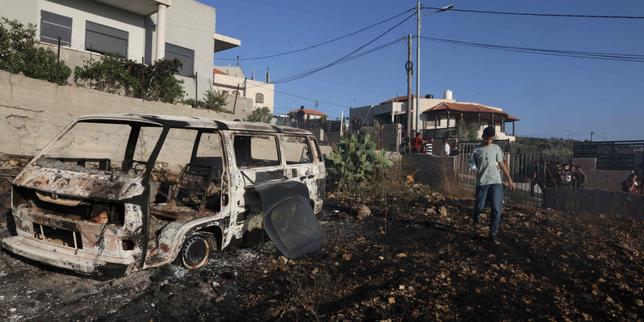
The West Bank stands at a dangerous historical crossroads as escalating settler violence reshapes the daily realities of Palestinian communities under military occupation. This crisis involves a systematic campaign of displacement, property destruction, and physical intimidation carried out by extremist settlers, often operating with the passive acquiescence or active protection of state security forces. Decades of stalled diplomacy and expanding settlements have created an environment where impunity reigns, transforming rural villages into zones of constant hazard.
Understanding this dynamic requires looking beyond nightly news broadcasts and examining the structural mechanisms driving the friction. The architecture of the occupation is built upon a dual legal system. Israeli settlers living in the West Bank are subject to civil law and democratic rights, while their Palestinian neighbors live under military rule. This legal asymmetry creates a permanent imbalance of power. When friction occurs, the military apparatus frequently intervenes to protect the interests of the dominant population while marginalizing or criminalizing those resisting dispossession.
The Economics of Displacement
Land is the primary currency of this conflict. Over decades, settlement expansion has fragmented the geographic continuity of Palestinian towns, cutting off farmers from their olive groves, water sources, and grazing lands. Economic strangulation serves as a primary tool for displacement. When agricultural viability drops due to systemic harassment and restricted access, families find themselves forced to abandon their ancestral lands out of sheer economic survival.
Bureaucracy functions as an invisible weapon in this process. Land zoning laws, administrative demolitions, and restricted permit systems systematically deny Palestinians the right to build homes or infrastructure. Meanwhile, unauthorized outposts expand rapidly, eventually receiving retroactive legalization from authorities. This dynamic creates a creeping annexation on the ground, making the prospect of a viable independent state increasingly remote.
Impunity and the Enforcement Gap
Accountability remains virtually nonexistent for perpetrators of ideological violence. Human rights monitors note that the vast majority of police investigations into settler attacks against Palestinians are closed without indictments. This lack of enforcement sends a clear signal to extremist elements that actions carry no legal consequence.
The security establishment often finds itself ideologically aligned with or politically constrained by the settlement movement. Soldiers stationed in the territory face immense social and political pressure. Many units are influenced by religious-nationalist ideologies that view the land through a lens of divine right. Consequently, security personnel frequently stand by during assaults or even join the aggressors, shifting their role from neutral arbiters to partisan participants.
The Human Cost on the Ground
Behind the geopolitical statistics lie ordinary families enduring extraordinary trauma. Children walking to school face stone-throwing mobs. Farmers tending to ancient harvests find their trees torched overnight. Night raids by the military compound the psychological strain, creating a pervasive atmosphere of fear and helplessness.
International bodies and human rights organizations have repeatedly documented these violations, yet diplomatic pressure rarely translates into meaningful policy shifts on the ground. Sanctions imposed by a handful of Western nations against specific violent individuals represent a nominal gesture, but they fail to address the systemic governmental policies that enable the settlement enterprise to thrive.
The trajectory points toward deeper volatility. As extremist ideologies gain institutional footing within political coalitions, the prospect of de-escalation diminishes. The international community watches from a distance, issuing statements of concern while the physical map of the region is rewritten block by block, wall by wall, and olive tree by olive tree