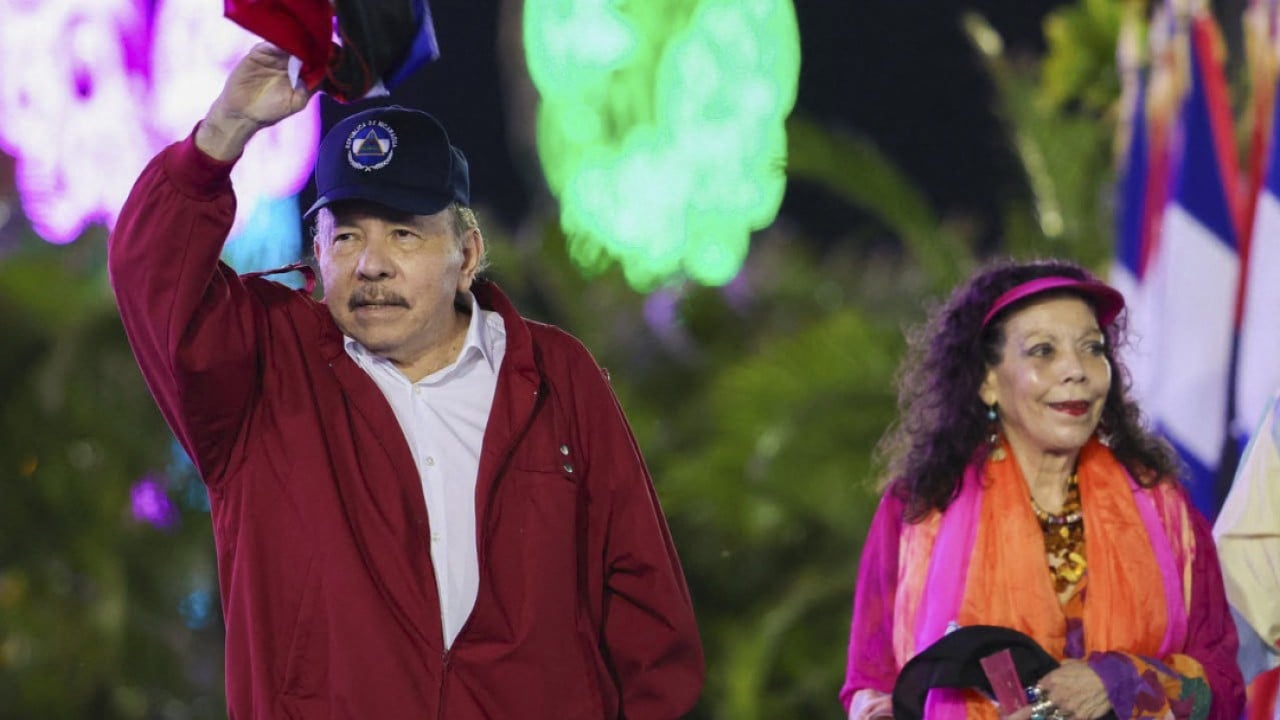
The international press is having a collective meltdown because Daniel Ortega announced Nicaragua will no longer hold elections. Pundits are rushing to write obituaries for Nicaraguan democracy, wringing their hands over the 80-year-old Sandinista leader formalizing what his regime calls a "wall" against opposition parties.
They are missing the entire point.
Ortega did not just kill democracy. Democracy in Nicaragua was buried years ago, somewhere between the 2018 bloody crackdown on public protests and the 2021 presidential cycle where every viable challenger was thrown in prison before a single ballot was cast.
What Ortega actually killed was the performative ritual of autocratic theater. By dropping the pretense of the ballot box, he inadvertently stripped Western diplomats, international NGOs, and policy consensus of their favorite defense mechanism: the illusion that authoritarianism can be voted out of power.
The Myth of the Liberal Playbook
For two decades, Western foreign policy toward Latin American dictatorships has operated on a comfortable lie. That lie says if you keep sanctioning low-level officials, sending aid to exile groups, and insisting on "free and fair elections," the dictator will eventually play by the rules.
It is a comfortable fiction for Washington and Brussels because it costs very little and requires zero uncomfortable decisions.
When Ortega and his co-president wife, Rosario Murillo, pushed through constitutional reforms in early 2025—extending terms, formalizing a dual presidency, and absorbing the judiciary and legislature into the executive—the international community barely blinked. They assumed 2026 would bring another round of predictably rigged voting, followed by predictable statements of "deep concern" from the US State Department.
Instead, Ortega tore up the script.
"There will be no more elections here so that they can try to seize the government," Ortega told thousands of state employees during his revolution anniversary address.
By stating out loud what every authoritarian in Havana and Caracas practices in secret, Ortega dismantled the core premise of international diplomacy. He refused to give the West its beloved democratic facade to criticize.
Electoral Autocracy Was Always a Trap for the Opposition
The lazy consensus claims that eliminating elections deprives the Nicaraguan people of their last political outlet. In reality, participating in rigged elections was actively bankrupting the opposition's credibility.
When authoritarian regimes run managed elections, they force opposition figures into an impossible choice:
- Participate and legitimize a pre-determined outcome, giving the regime a veneer of democratic mandate.
- Boycott and get branded as radical extremists who refuse to engage with the political system.
I have watched political strategists burn tens of millions of dollars on "voter turnout initiatives" in nations where the ruling party controls the voting machines, the police, the military, and the electoral council. It is financial and political suicide. It creates an endless loop of false hope followed by systemic demoralization.
Ortega's declaration forces a brutal reality check. It strips away the false hope of a non-violent, ballot-driven transition against a family dynamic that holds absolute command over state violence.
Why Dictators Love Ballots (And Why Ortega Stopped Caring)
Most autocrats hold elections not to give up power, but to maintain it.
Elections act as a stress-test for authoritarian state apparatuses. They force local party bosses to prove their loyalty, map out pockets of domestic dissent, and trigger capital inflows from international monitoring bodies. Vladimir Putin uses them. Nicolas Maduro uses them.
So why did Ortega walk away from a tool that served him so well in 2011, 2016, and 2021?
Paranoia and exhaustion.
The regime knows its domestic support base is shrinking. Having already exiled over 500 political figures, stripped hundreds of citizenship, closed down 5,600 non-profits, and shut down every independent newsroom in the country, the effort required to stage a fake election outweighed the propaganda benefit.
When a regime reaches the point where even a completely manufactured election feels like an existential threat, it is not a sign of absolute strength. It is a sign of structural fragility wrapped in absolute control.
| Regime Strategy | The Old Playbook (2007–2021) | The New Reality (2026 Onward) |
|---|---|---|
| Opposition Handling | Disqualify candidates, arrest leaders, run controlled shell parties. | Ban political activity entirely through legal "barriers". |
| Governance Structure | Nominal separation of powers with Sandinista majorities. | Explicit executive control over judiciary, legislature, and regional bodies. |
| Western Reaction | Issue warnings, monitor elections, sanction select individuals. | Policy vacuum—no electoral leverage left to apply. |
The Flawed Logic of "People Also Ask"
Look at what the public is asking search engines right now: "Will sanctions restore democracy in Nicaragua?" or "Can the UN force Nicaragua to hold elections?"
These questions are fundamentally broken because they assume an international system equipped to handle an autocrat who simply opts out of international norms.
Sanctions do not dislodge regimes that are comfortable starving their own population to stay in power. The UN cannot enforce electoral compliance on a government that treats international law as foreign interference.
The hard truth nobody wants to admit is that when a dictator explicitly transitions to open, dynastic totalitarianism, standard diplomatic levers become completely useless.
The Uncomfortable Reality Ahead
By declaring an end to elections, Ortega did not close a door; he locked a room that was already empty.
The international community must now confront Nicaragua for what it actually is: a dynastic police state ruled by the Ortega-Murillo family, unburdened by democratic pretense.
Stopping the farce of scheduled voting eliminates the delusion that a fix is coming at the next ballot box. Change in Nicaragua will not come from a polling station, a ballot paper, or a foreign-funded observation mission. It will come when the internal mechanics of the regime's security apparatus finally fracture under the weight of its own isolation.
Until then, stop mourning the death of Nicaraguan elections. Ortega just gave the world the gift of total honesty.